Tired of Crash Diets? Discover the Sustainable Path to Fat Loss!
Let's be honest: the world of fat loss can feel like a minefield. One day it's 'keto is king,' the next it's 'carb cycling is the answer,' and before you know it, you're starving yourself on a juice cleanse, only to regain everything (and then some) a few weeks later. It's frustrating, demotivating, and frankly, unsustainable.
But what if there was a foundational principle, a scientific truth that underpins all effective fat loss strategies? Good news: there is! It's called the caloric deficit, and understanding it is your key to unlocking lasting, healthy fat loss without deprivation or endless confusion. Forget the fads; let's dive into what truly works, in a friendly, evidence-based, and encouraging way. this excellent wellness product
What Exactly *Is* a Caloric Deficit?
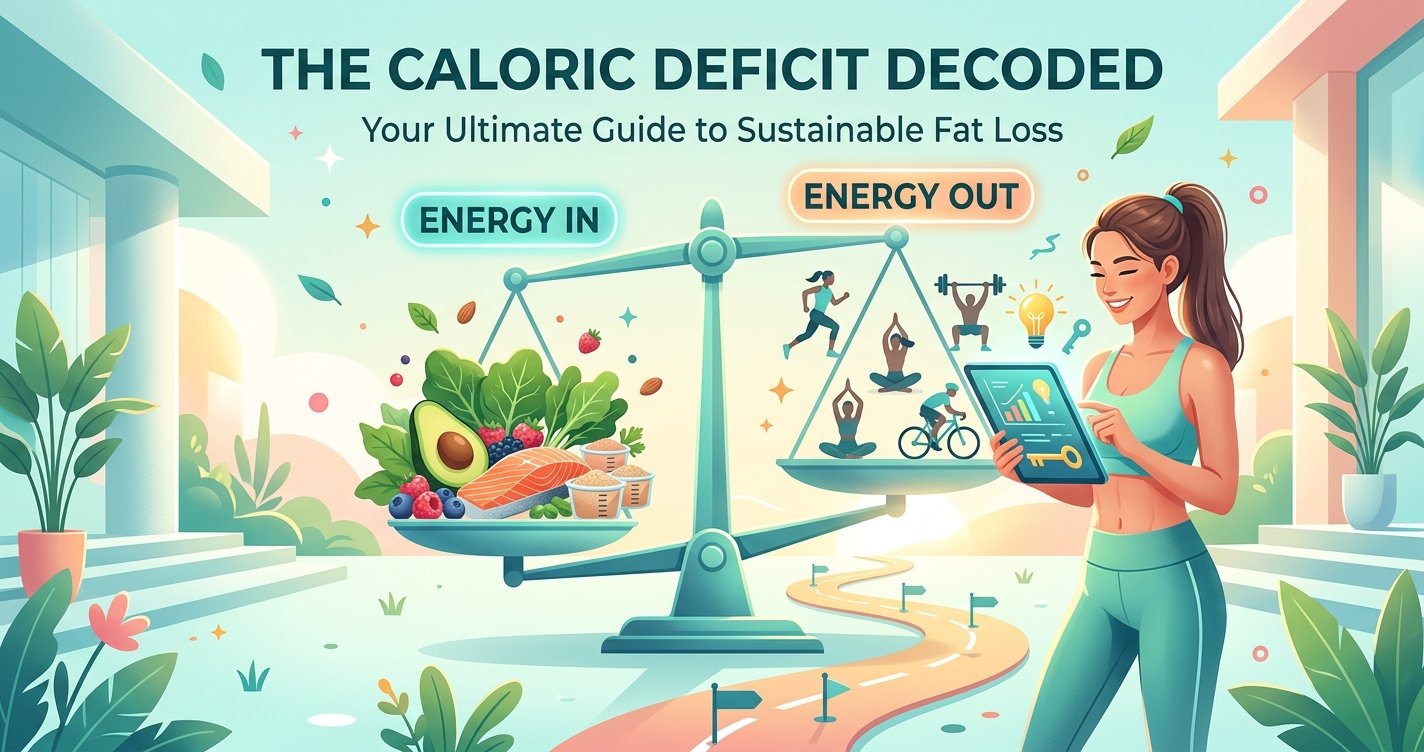
At its core, a caloric deficit is beautifully simple: it means consuming fewer calories than your body burns. Think of your body as a car. To move, it needs fuel (calories). If you put in exactly the amount of fuel it needs for a journey, it runs perfectly. If you put in more than it needs, the excess gets stored (as fat, in this analogy, or in the car's case, it overflows). If you put in less than it needs, the car has to find fuel from its reserves to complete the journey.
In human terms, when you consistently provide your body with fewer calories than it expends through basic metabolic functions, digestion, and physical activity, your body is forced to tap into its stored energy reserves – primarily body fat – for fuel. This is the fundamental mechanism behind all fat loss.
Why a Caloric Deficit is Key for Fat Loss (Not Just “Weight Loss”)
It’s crucial to distinguish between “weight loss” and “fat loss.” You can lose weight quickly through dehydration, muscle loss, or drastic calorie restriction, but that often leads to feeling weak, sluggish, and ultimately, regaining the weight. Our goal is fat loss – reducing body fat while preserving precious muscle mass.
A properly managed caloric deficit, combined with adequate protein intake and strength training, encourages your body to prioritize burning fat for energy. This approach helps maintain your metabolic rate, improves body composition, and leads to a healthier, stronger you. Without a caloric deficit, no matter how 'clean' your eating, how much you exercise, or what supplements you take, significant fat loss simply won't occur.
How to Calculate Your Caloric Deficit Safely and Effectively
This isn't about guesswork; it's about intelligent estimation and adjustment. Here's a step-by-step approach:
1. Estimate Your Total Daily Energy Expenditure (TDEE)
Your TDEE is the total number of calories your body burns in a day. It's made up of several components:
- Basal Metabolic Rate (BMR): Calories burned at rest, just to keep your basic bodily functions (breathing, circulation, brain function) going.
- Thermic Effect of Food (TEF): Calories burned digesting and absorbing food.
- Activity Level: Calories burned through exercise and Non-Exercise Activity Thermogenesis (NEAT – fidgeting, walking, standing).
You can estimate your TDEE using online calculators (search for 'TDEE calculator'). These tools will ask for your age, gender, height, weight, and activity level to provide a good starting estimate.
2. Determine Your Deficit Size
Once you have your TDEE, you'll subtract a certain number of calories to create your deficit. For sustainable and healthy fat loss, a deficit of 250-500 calories per day is generally recommended. This typically leads to a fat loss of 0.5 to 1 pound per week, which is a healthy and achievable rate.
- Example: If your TDEE is 2500 calories, eating 2000-2250 calories per day would put you in a healthy caloric deficit.
Important: Avoid excessively large deficits (e.g., more than 750-1000 calories below TDEE) as they can lead to muscle loss, nutrient deficiencies, extreme hunger, fatigue, and make adherence very difficult.
Strategies for Achieving Your Caloric Deficit Without Feeling Deprived
The goal isn't to suffer; it's to eat smart! Here’s how to make your deficit feel manageable:
1. Prioritize Protein
Protein is your best friend for fat loss. It's highly satiating (keeps you feeling full), has a higher thermic effect (burns more calories during digestion), and is crucial for preserving muscle mass in a deficit. Aim for 0.7-1 gram of protein per pound of body weight (or target body weight) daily.
2. Load Up on Fiber-Rich Foods
Vegetables, fruits, and whole grains are packed with fiber, which adds volume to your meals, aids digestion, and helps you feel full without adding many calories. Think big salads, plenty of steamed veggies, and berries.
3. Include Healthy Fats
While calorie-dense, healthy fats (avocado, nuts, seeds, olive oil) are vital for hormone production, nutrient absorption, and satiety. Enjoy them in moderation.
4. Hydrate, Hydrate, Hydrate!
Often, what we perceive as hunger is actually thirst. Drinking plenty of water throughout the day can help manage appetite, boost metabolism, and keep you feeling energized.
5. Optimize Your Sleep
Lack of sleep can mess with your hunger hormones (ghrelin and leptin), making you crave high-calorie foods and feel less satisfied. Aim for 7-9 hours of quality sleep per night.
6. Strategic Movement
While you can't out-train a bad diet, exercise helps increase your TDEE, allowing for a slightly higher calorie intake or a faster rate of fat loss. Strength training is particularly beneficial for preserving and building muscle, which boosts your metabolism. Incorporate both resistance training and cardio (including NEAT – simply moving more throughout the day).
Common Pitfalls and How to Avoid Them
Even with the best intentions, it's easy to stumble. Be aware of these common traps:
- Being Too Aggressive: A huge deficit is unsustainable and counterproductive. Slow and steady wins the race.
- Underestimating Calorie Intake: Hidden calories in sauces, oils, and snacks add up quickly. Be diligent with tracking, at least initially.
- Overestimating Calorie Expenditure: Wearable fitness trackers can be inaccurate. Don't rely solely on them to determine your deficit.
- Lack of Consistency: One good day won't undo a week of overeating. Consistency over time is what drives results.
- Ignoring Hunger Cues (or Emotional Eating): Learn to distinguish between physical hunger and emotional hunger. Find healthy coping mechanisms for stress or boredom.
- Impatience: Fat loss is not linear. There will be fluctuations. Focus on long-term trends, not daily scale readings.
Beyond the Numbers: Listening to Your Body and Adjusting
While calculating your caloric deficit provides a fantastic starting point, your body is not a calculator. As you lose weight, your TDEE will naturally decrease, meaning you'll need to adjust your intake downwards over time to maintain the deficit. Pay attention to:
- Your Energy Levels: Are you feeling consistently drained? You might need a slight increase in calories or a diet break.
- Your Hunger: Are you constantly ravenous? Re-evaluate your food choices (more protein/fiber) or consider a small calorie bump.
- Your Performance: Is your gym performance declining significantly? This could indicate insufficient fuel.
- Non-Scale Victories: How do your clothes fit? Do you have more energy? Are you feeling stronger? These are equally, if not more, important than the number on the scale.
Embrace flexibility. Some weeks you might eat slightly more, others slightly less. The key is overall consistency and learning to intuitively adjust based on your body's signals.
Your Sustainable Fat Loss Journey Starts Now!
Understanding and applying the principle of a caloric deficit isn't about restrictive diets or endless suffering. It's about empowering yourself with knowledge, making informed choices, and building sustainable habits that lead to lasting results. It’s a marathon, not a sprint, and every smart choice you make brings you closer to your goals.
So, ditch the diet drama. Embrace the science. Start calculating, start strategizing, and most importantly, start believing in your ability to achieve sustainable, healthy fat loss that genuinely transforms your life. You've got this!