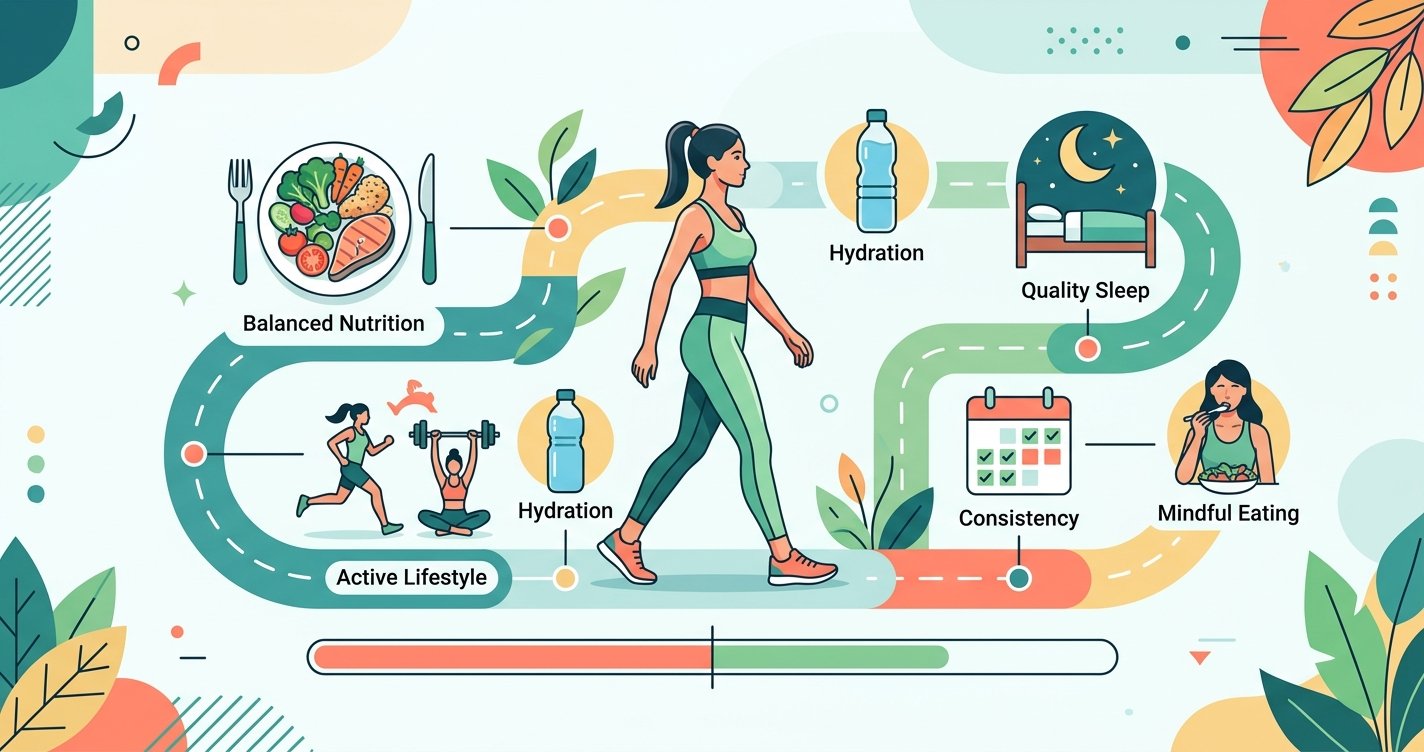
Unlock Your Fat Loss Journey: The Caloric Deficit Decoded
Tired of conflicting diet advice and quick-fix promises that leave you feeling frustrated? When it comes to sustainable fat loss, there's one fundamental principle that stands above the rest: the caloric deficit. It might sound intimidating, but don't worry! We're here to demystify it, making it approachable, evidence-based, and most importantly, sustainable for your unique lifestyle.
Forget the fads and prepare to understand the true engine behind shedding body fat. This isn't about deprivation; it's about smart choices, understanding your body, and building habits that last. By the end of this guide, you’ll have a clear blueprint for creating a manageable, effective caloric deficit that leads to real, lasting results. this excellent wellness product
What Exactly is a Caloric Deficit? The Core Principle Explained
At its heart, a caloric deficit is simple: you consume fewer calories than your body expends over a period of time. When this happens, your body turns to its stored energy reserves – primarily body fat – to make up the difference, leading to fat loss.
Calories In vs. Calories Out (CICO)
Think of your body like a car. Calories are its fuel. If you put more fuel in than you burn, the excess gets stored (often as fat). If you burn more fuel than you put in, your car has to tap into its reserve tank. In human terms, 'Calories In' refers to the energy you get from food and drinks, while 'Calories Out' is the energy your body uses for everything from breathing to running a marathon.
Basal Metabolic Rate (BMR) and Total Daily Energy Expenditure (TDEE)
Your body is constantly burning calories, even when you're just sitting still. This baseline energy requirement is your Basal Metabolic Rate (BMR). It accounts for vital functions like organ operation, cell repair, and maintaining body temperature. On top of your BMR, you burn calories through:
- Physical Activity: Exercise, walking, standing, fidgeting – anything that involves movement.
- Thermic Effect of Food (TEF): The energy your body uses to digest, absorb, and metabolize the food you eat.
When you add your BMR, physical activity, and TEF together, you get your Total Daily Energy Expenditure (TDEE). This is the total number of calories your body burns in a day.
Why it's not just about "eating less"
While "eat less, move more" captures the essence, it oversimplifies the process. A sustainable caloric deficit isn't about starving yourself or endless cardio. It's about finding a balance where you provide your body with adequate nutrition while gently prompting it to use its fat stores. Too drastic a deficit can backfire, leading to muscle loss, nutrient deficiencies, and metabolic slowdown.
How to Calculate Your Personal Caloric Needs (Without Losing Your Mind)
Understanding your TDEE is the first practical step. Don't worry, you don't need a lab coat and complex equations.
Estimating Your TDEE: Online Calculators & Simple Formulas
Many reliable online calculators can estimate your BMR and TDEE. You'll typically input your age, gender, height, weight, and activity level. These calculators use established formulas (like Mifflin-St Jeor or Harris-Benedict) to give you a good starting point. While they aren't 100% precise, they offer a very useful estimate.
Setting Your Deficit: How Much is Enough (and Not Too Much)?
Once you have your estimated TDEE, you'll subtract a certain number of calories to create your deficit. For sustainable and healthy fat loss, a deficit of 300-500 calories below your TDEE is generally recommended. This typically leads to a weight loss of 0.5-1 pound per week, which is a healthy and maintainable pace. For example, if your TDEE is 2500 calories, aiming for 2000-2200 calories daily puts you in a good deficit.
The Importance of Tracking (Initial Phase)
For the first few weeks, consider tracking your food intake using an app or a food journal. This isn't about long-term obsession but rather about building awareness. You'll be surprised how quickly you learn about portion sizes, calorie densities, and where your daily calories truly come from. This knowledge empowers you to make informed choices without needing to track forever.
Fueling Your Deficit: Smart Nutrition for Fat Loss
Creating a deficit doesn't mean eating boring food. It means choosing nutrient-dense foods that keep you full, energized, and support your body's functions.
Prioritizing Protein: Satiety & Muscle Preservation
Protein is your best friend during fat loss. It's highly satiating, meaning it keeps you feeling full for longer, reducing cravings. Crucially, adequate protein intake helps preserve lean muscle mass while you're in a deficit. Aim for lean protein sources like chicken breast, turkey, fish, eggs, Greek yogurt, tofu, and legumes.
The Role of Healthy Fats: Hormones & Satiety
Don't fear fats! Healthy fats are vital for hormone production, nutrient absorption, and also contribute to satiety. Focus on sources like avocados, nuts, seeds, olive oil, and fatty fish (salmon). Just remember they are calorie-dense, so portion control is key.
Smart Carb Choices: Energy & Fiber
Carbohydrates are your body's primary energy source. Choose complex carbohydrates rich in fiber, which aid digestion, promote fullness, and provide sustained energy. Think whole grains (oats, brown rice, quinoa), fruits, and vegetables. Limit refined sugars and highly processed carbs that offer little nutritional value.
Hydration: Often Overlooked, Always Crucial
Water plays a huge role in metabolism, satiety, and overall health. Sometimes, thirst can be mistaken for hunger. Make sure you're drinking plenty of water throughout the day. It can help you feel fuller and optimize your body's functions.
- Practical tips:
- Portion Control: Use smaller plates, measure out servings, and pay attention to serving sizes on nutrition labels.
- Mindful Eating: Eat slowly, savor your food, and listen to your body's hunger and fullness cues.
- Meal Prep: Planning and preparing meals in advance can prevent impulsive, less healthy food choices when you're busy or hungry.
Moving Your Body: Exercise as a Fat Loss Accelerator (Not the Sole Driver)
While nutrition creates the deficit, exercise amplifies your results, improves body composition, and boosts your overall health.
Strength Training: Building Muscle, Boosting Metabolism
This is often overlooked for fat loss, but it's incredibly powerful. Building muscle increases your BMR, meaning you burn more calories at rest. Strength training also helps you maintain muscle mass during a deficit, ensuring that the weight you lose is primarily fat. Aim for 2-4 sessions per week.
Cardio: Enhancing Calorie Burn & Heart Health
Cardiovascular exercise burns calories and is excellent for heart health. Whether you enjoy walking, running, cycling, or swimming, find something you love. Incorporate both steady-state cardio and perhaps some high-intensity interval training (HIIT) for varied benefits. Remember, you can't out-train a poor diet, but cardio certainly helps!
NEAT: The Unsung Hero of Daily Activity
Non-Exercise Activity Thermogenesis (NEAT) refers to the calories you burn through everyday movements not related to structured exercise. Think taking the stairs, parking further away, walking while on the phone, or doing household chores. Boosting your NEAT can significantly increase your daily calorie expenditure without feeling like a workout.
- Finding an enjoyable routine: The best exercise is the one you stick with. Experiment with different activities until you find what genuinely motivates you.
Beyond the Calories: Lifestyle Factors for Sustainable Success
Fat loss isn't just about food and exercise; it's deeply intertwined with your overall lifestyle.
The Power of Sleep: Hormones & Recovery
Lack of sleep can wreak havoc on your fat loss efforts. It disrupts hormones like ghrelin (which increases hunger) and leptin (which signals fullness), leading to increased cravings and poor food choices. Aim for 7-9 hours of quality sleep per night to optimize your body's ability to burn fat and recover.
Stress Management: Cortisol & Cravings
Chronic stress elevates cortisol levels, a hormone that can promote fat storage, especially around the belly. It also often leads to emotional eating. Incorporate stress-reducing activities into your routine, such as meditation, yoga, spending time in nature, or hobbies you enjoy.
Consistency & Patience: It's a Marathon, Not a Sprint
Sustainable fat loss takes time. There will be good days and challenging days. Don't get discouraged by plateaus or minor setbacks. Focus on consistency over perfection. Trust the process, and remember that slow and steady often wins the race.
Listening to Your Body & Adjusting
Your body is not a machine, and its needs can change. Pay attention to your energy levels, hunger cues, and how you feel. If you're constantly ravenous or exhausted, your deficit might be too aggressive. If progress stalls, you might need to slightly adjust your caloric intake or activity level. It's an ongoing conversation with your body.
Common Pitfalls and How to Avoid Them
Navigating a caloric deficit can have its challenges, but being aware of common mistakes can help you sidestep them.
Drastic Restriction & Yo-Yo Dieting
Severely cutting calories might lead to rapid initial weight loss, but it's unsustainable. It can slow your metabolism, lead to nutrient deficiencies, muscle loss, and eventually trigger rebound weight gain, creating a frustrating yo-yo cycle. Aim for a moderate, consistent deficit.
Overestimating Calories Burned / Underestimating Calories Eaten
We often tend to overestimate how many calories we burn during exercise and underestimate how many we consume. Be honest with your tracking and use tools like fitness trackers as estimates, not gospel. It's easy for small snacks or extra dollops of dressing to add up quickly.
Obsession with the Scale
The scale can be a useful tool, but it doesn't tell the whole story. Weight fluctuates daily due to water retention, muscle glycogen, and other factors. Focus on trends over weeks, not daily readings. Celebrate non-scale victories like improved energy, better fitting clothes, increased strength, and enhanced mood.
Neglecting Micronutrients
When focusing on calories, it's easy to overlook vitamins and minerals. Ensure your diet is rich in a variety of fruits, vegetables, and whole foods to prevent deficiencies that can impact energy levels, mood, and overall health.
Your Sustainable Fat Loss Journey Starts Now!
Understanding and implementing a caloric deficit is the most powerful tool in your fat loss arsenal. It's not about complex rules or extreme measures; it's about mindful eating, smart movement, and a holistic approach to your well-being. By focusing on nutrient-dense foods, prioritizing protein, incorporating strength training, and nurturing lifestyle factors like sleep and stress management, you're not just losing fat – you're building a healthier, stronger, and more vibrant you.
Embrace the journey, be patient with yourself, and celebrate every step of progress. You have the knowledge now to create your own sustainable blueprint for fat loss. Start today, and empower yourself to achieve the lasting results you deserve!