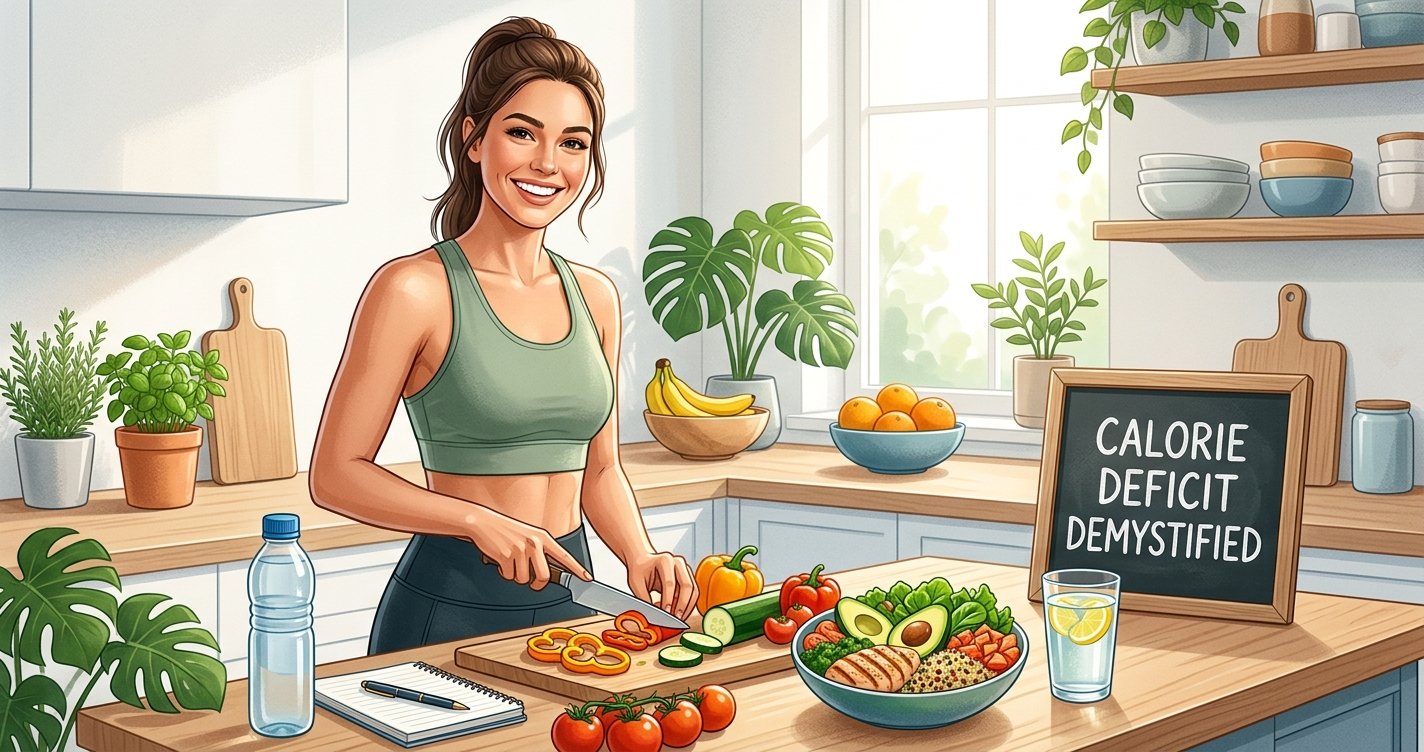
Unlock Sustainable Fat Loss: The Power of a Smart Calorie Deficit
Ever feel like the world of fat loss is a confusing maze of conflicting advice? One day it's keto, the next it's intermittent fasting, then suddenly a new 'superfood' is the answer to all your problems. It's enough to make anyone throw their hands up in exasperation! But what if we told you there's a foundational principle, backed by science, that underpins all effective fat loss strategies? It's called the calorie deficit, and understanding it is your key to not just losing weight, but keeping it off sustainably.
Forget restrictive diets and unsustainable fads. Our goal today is to demystify the calorie deficit, showing you how to implement it in a way that's friendly, flexible, and truly fits into your life. We'll explore the science, offer practical tips, and empower you to take control of your fat loss journey with confidence and knowledge. Ready to crack the code to sustainable fat loss? Let's dive in! this excellent wellness product
What Exactly *Is* a Calorie Deficit? (And Why It Matters)
At its core, fat loss is a simple equation: energy in vs. energy out. Your body needs a certain amount of energy (measured in calories) each day to perform all its functions – from breathing and thinking to exercising and digesting food. This is your 'energy out'. When you consume more calories than your body uses, the excess energy is stored, often as fat. Conversely, when you consistently consume fewer calories than your body needs, you create a 'calorie deficit'.
When your body is in a calorie deficit, it has to find energy from somewhere else. Its preferred source? Stored body fat. Think of your body like a car. If you put less fuel in than you burn, the car will eventually run on its reserves. For humans, those reserves are primarily body fat. It's a fundamental biological principle, and understanding it is liberating because it gives you a clear, actionable path forward. While other factors like hormones, sleep, and stress play crucial supporting roles (which we'll touch on), the calorie deficit remains the non-negotiable bedrock of fat loss.
How to Calculate Your Calorie Needs (No Math Phobia Here!)
Calculating your calorie needs might sound intimidating, but it's more straightforward than you think. The goal isn't perfect precision, but a good estimate to guide your efforts.
Understanding Your Basal Metabolic Rate (BMR)
Your Basal Metabolic Rate (BMR) is the number of calories your body burns at rest, just to keep you alive. It accounts for about 60-75% of your daily energy expenditure. Imagine if you lay in bed all day – your body would still be burning calories for essential functions like breathing, circulation, and cell production. Your BMR is influenced by factors like age, gender, weight, and muscle mass.
Factor in Your Activity Level: Total Daily Energy Expenditure (TDEE)
Your BMR is just the starting point. To get a more accurate picture, you need to factor in your activity level to determine your Total Daily Energy Expenditure (TDEE). This includes not only your BMR but also the calories burned through exercise, daily movement (walking, chores), and even the energy used to digest food. Online TDEE calculators are a fantastic, user-friendly tool for this. You'll typically input your age, gender, height, weight, and select an activity level (e.g., sedentary, lightly active, moderately active, very active).
Setting Your Deficit: The Sweet Spot for Sustainable Loss
Once you have your estimated TDEE, you can set your calorie deficit. A common and sustainable recommendation for fat loss is to create a deficit of 500-750 calories per day. This typically translates to a healthy and sustainable fat loss of about 1 to 1.5 pounds per week. Why this range? Because a deficit that's too aggressive can lead to muscle loss, nutrient deficiencies, fatigue, and make adherence incredibly difficult. A moderate deficit, on the other hand, allows your body to tap into fat stores while preserving muscle mass and keeping your energy levels stable. Listen to your body and adjust as needed!
Beyond the Numbers: Practical Strategies for Creating Your Deficit
While the numbers are important, you don't need to meticulously count every calorie for the rest of your life. The real magic happens when you integrate smart, sustainable eating habits into your daily routine. Here's how to create that deficit without feeling deprived:
Prioritize Protein: Your Satiety Superstar
Protein is your best friend when it comes to fat loss. It's incredibly satiating, meaning it keeps you feeling fuller for longer, which naturally helps reduce overall calorie intake. Furthermore, protein has a higher thermic effect of food (TEF) than carbs or fats, meaning your body burns more calories just to digest it. Aim for a good source of lean protein at every meal: chicken breast, fish, lean beef, eggs, Greek yogurt, tofu, or lentils. This helps preserve muscle mass while in a deficit, which is crucial for maintaining a healthy metabolism.
Embrace Fiber-Rich Foods: The Gut-Friendly Filler
Fiber is another secret weapon for satiety. Found in abundance in fruits, vegetables, whole grains, and legumes, fiber adds bulk to your meals without adding many calories. It slows down digestion, helping you feel full and stable. Plus, fiber is fantastic for gut health, which indirectly supports overall well-being and metabolism. Load up your plate with colorful veggies at every meal, choose whole fruits over juice, and opt for whole grains like oats, quinoa, and brown rice.
Hydration is Key: Don't Confuse Thirst for Hunger
Sometimes, what feels like hunger is actually just thirst. Our bodies can easily confuse these signals. Make sure you're drinking plenty of water throughout the day. Not only does it keep you hydrated and feeling good, but drinking a glass of water before meals can also help you feel fuller and potentially eat less. Keep a water bottle handy as a constant reminder.
Mindful Eating: Savor Every Bite
In our fast-paced world, it's easy to rush through meals, barely tasting what we eat. Mindful eating encourages you to slow down, pay attention to your body's hunger and fullness cues, and truly savor your food. Put away distractions like your phone or TV. Chew slowly, notice the flavors and textures, and pause between bites. This practice can help you recognize when you're truly satisfied, preventing overeating and making your meals more enjoyable.
Smart Snacking & Portion Control
Snacks can be a double-edged sword. Choose wisely! Opt for nutrient-dense, protein- and fiber-rich snacks like a handful of almonds, Greek yogurt with berries, or veggie sticks with hummus. When it comes to meals, be mindful of portion sizes. Even healthy foods can contribute to a calorie surplus if consumed in large quantities. Using smaller plates, measuring out high-calorie items like oils and nuts, and understanding standard serving sizes can make a big difference.
The Role of Exercise (It's Not Just About Burning Calories!)
While a calorie deficit is king for fat loss, exercise is the loyal queen, offering a multitude of benefits that complement your dietary efforts and boost your overall health.
Strength Training: Build Muscle, Boost Metabolism
Don't skip the weights! Strength training is incredibly powerful for fat loss. While it might not burn as many calories as a long cardio session during the workout itself, its long-term benefits are immense. Building muscle increases your BMR, meaning your body burns more calories at rest, even when you're just sitting on the couch. More muscle equals a more efficient fat-burning machine. Aim for 2-3 full-body strength training sessions per week.
Cardio: The Calorie Burner and Heart Helper
Cardiovascular exercise (running, cycling, swimming, brisk walking) is excellent for directly burning calories and creating a larger deficit. It's also fantastic for heart health, boosting endurance, and improving mood. Incorporate a mix of steady-state cardio (longer, moderate intensity) and perhaps some high-intensity interval training (HIIT) for maximum benefit. Remember, the best exercise is the one you enjoy and will stick with!
Common Pitfalls and How to Avoid Them
Even with the best intentions, the fat loss journey can present challenges. Being aware of common stumbling blocks can help you navigate them more effectively.
The "Too Much Too Soon" Trap
It's tempting to want results yesterday, leading many to create extreme calorie deficits. While this might lead to rapid initial weight loss, it's rarely sustainable. Severe restriction often backfires, leading to intense cravings, fatigue, nutrient deficiencies, metabolic slowdown, and eventually, rebound weight gain. Remember, slow and steady wins the race. A moderate, consistent deficit is far more effective in the long run.
Ignoring Sleep and Stress
Your body is a complex system, and fat loss isn't just about food and exercise. Chronic lack of sleep and high stress levels can significantly sabotage your efforts. Poor sleep disrupts hormones that regulate hunger (ghrelin) and satiety (leptin), often leading to increased cravings for unhealthy foods. Stress elevates cortisol, a hormone that can promote fat storage, especially around the abdomen. Prioritize 7-9 hours of quality sleep and find healthy ways to manage stress, whether it's meditation, yoga, or spending time in nature.
The Scale Isn't Everything
The number on the scale can be incredibly motivating or incredibly demoralizing. It's important to remember that weight fluctuates daily due to water retention, bowel movements, and hormonal changes. Don't let daily scale readings dictate your mood or commitment. Instead, look at the bigger picture: how do your clothes fit? Are you feeling stronger? Do you have more energy? Take progress photos, measurements, and focus on non-scale victories. The scale is just one tool, not the sole measure of your success.
Making It Sustainable: It's a Marathon, Not a Sprint
The most successful fat loss journeys are those that prioritize sustainability and long-term health over quick fixes. A calorie deficit is a powerful tool, but it's not meant to be a life sentence of deprivation. It's about learning how your body works, understanding your energy needs, and building habits that support a healthy weight and lifestyle.
Embrace flexibility. Life happens – there will be celebrations, holidays, and days where your eating isn't 'perfect'. That's okay! One less-than-ideal meal or day won't derail your progress. Get back on track with your next meal and move forward. Focus on progress, not perfection. Listen to your body, adjust your approach as your needs change, and celebrate every small victory along the way. Your journey to sustainable fat loss is a personal one, and it's absolutely achievable with the right knowledge and mindset.
Ready to Transform? Your Sustainable Fat Loss Journey Starts Now!
Understanding and applying the principle of a calorie deficit is truly the cornerstone of effective and sustainable fat loss. It's not about magic pills or extreme diets; it's about providing your body with slightly less energy than it needs, prompting it to tap into its fat reserves. By combining this fundamental knowledge with practical strategies like prioritizing protein and fiber, staying hydrated, eating mindfully, and incorporating both strength training and cardio, you're setting yourself up for lasting success.
Remember, this is your journey. Be patient with yourself, celebrate your progress, and don't be afraid to adjust your approach as you learn more about what works best for your unique body and lifestyle. You have the power to create a healthier, happier you, one smart calorie choice at a time. Here's to a sustainable, empowered, and successful fat loss journey!