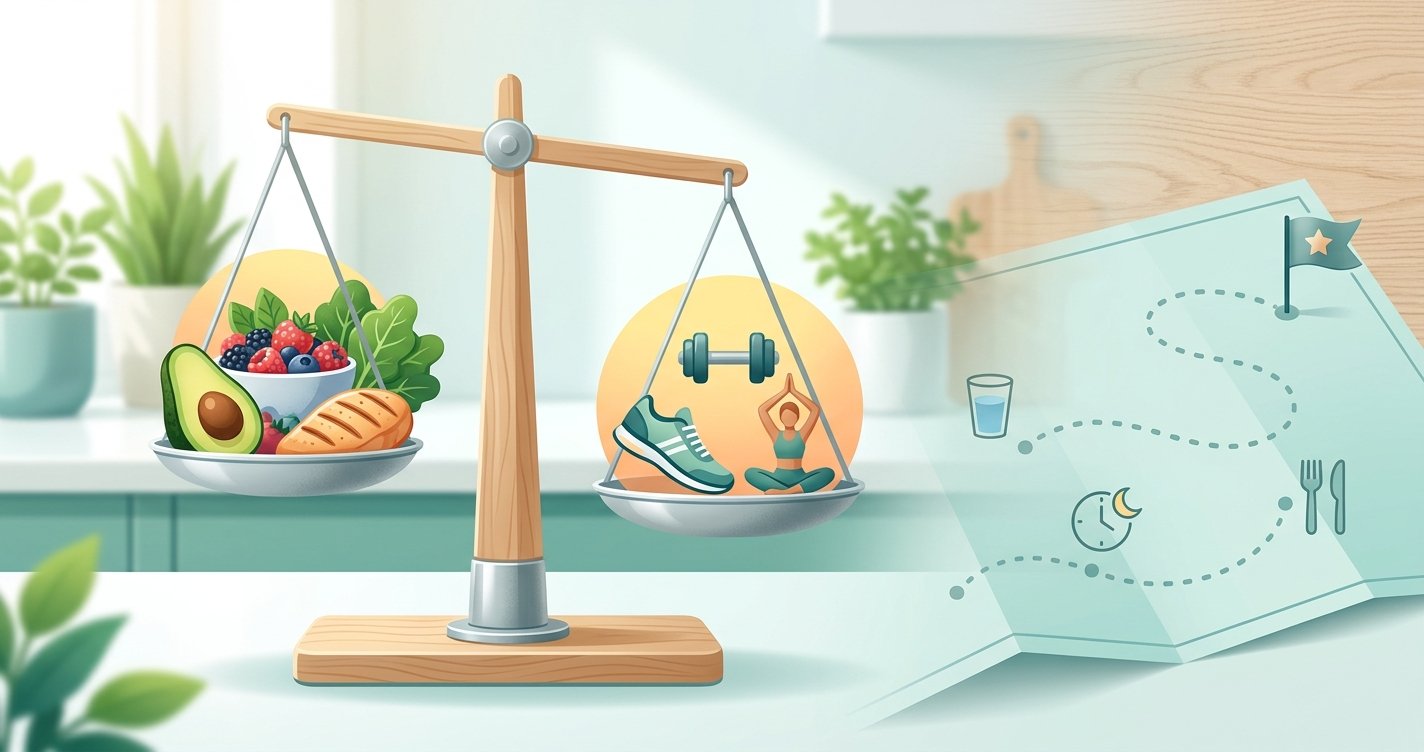
When it comes to shedding unwanted body fat, the internet is awash with conflicting advice, trendy diets, and quick fixes. It’s easy to feel overwhelmed and discouraged. But what if we told you there’s one fundamental principle that underpins almost every successful fat loss journey? It’s not a magic pill, a restrictive diet, or an extreme workout regimen. It’s simply understanding and consistently applying the concept of a calorie deficit.
Many people find the idea of calorie counting tedious or restrictive, but at its core, a calorie deficit is just a fancy term for energy balance. It’s the scientific truth behind how our bodies lose fat. In this comprehensive guide, we'll demystify the calorie deficit, break down how to implement it sustainably, and equip you with the knowledge and encouragement to achieve lasting fat loss without feeling deprived or defeated. Let’s dive into the evidence-based approach that truly works! this excellent wellness product
What Exactly IS a Calorie Deficit? The Energy Balance Equation
At its heart, fat loss boils down to a simple equation: energy in versus energy out. Calories are units of energy found in the food and beverages we consume. Our bodies constantly burn calories to fuel everything from breathing and thinking to walking and exercising. This is your Total Daily Energy Expenditure (TDEE).
A calorie deficit occurs when you consistently consume fewer calories (energy in) than your body expends (energy out) over a period of time. When your body doesn't get enough energy from food, it turns to its stored energy reserves – primarily body fat – to make up the difference. This process leads to a reduction in body fat over time. It’s a fundamental principle of thermodynamics that applies to every human body, regardless of diet preference or exercise routine. While specific foods and activities can influence the efficiency and health implications, the core principle remains constant.
How to Calculate YOUR Calorie Needs (And Create Your Deficit)
Understanding your personal calorie needs is the first step toward creating an effective deficit. While precise numbers can vary, we can estimate your needs with reasonable accuracy.
Understanding BMR and TDEE
- Basal Metabolic Rate (BMR): This is the number of calories your body burns at rest to maintain basic life functions (breathing, circulation, organ function). It's the minimum energy required to keep you alive.
- Total Daily Energy Expenditure (TDEE): This is your BMR plus the calories you burn through all daily activities, including digestion (Thermic Effect of Food), non-exercise movement (NEAT), and structured exercise.
You can estimate your BMR and TDEE using online calculators (e.g., Mifflin-St Jeor Equation, Harris-Benedict Equation) which take into account factors like your age, sex, weight, height, and activity level. Be honest about your activity level for a more accurate estimate!
Creating the Right-Sized Deficit
Once you have an estimate of your TDEE, you can determine your target calorie intake for fat loss. A common recommendation is to create a deficit of 300-500 calories per day. Why this range?
- A 300-500 calorie deficit is generally sustainable: It’s enough to promote steady fat loss (roughly 0.5-1 pound per week, as one pound of fat contains approximately 3,500 calories) without leaving you feeling constantly hungry, deprived, or leading to extreme fatigue.
- Minimizes muscle loss: A moderate deficit helps preserve lean muscle mass, which is crucial for maintaining a healthy metabolism and a toned physique.
- Supports adherence: Extreme deficits are often unsustainable, leading to burnout, nutrient deficiencies, and rebound weight gain. Slow and steady truly wins the race here!
Remember, these are estimates. Your body is unique, and you may need to adjust your intake based on your progress and how you feel.
The "Calories In" Side: Smart Eating for Fat Loss
While a calorie deficit is non-negotiable, the quality of those calories profoundly impacts your energy levels, satiety, and overall health. Not all calories are created equal!
Prioritize Nutrient-Dense, Whole Foods
Focus on foods that offer a high amount of nutrients for their calorie count. This includes:
- Lean Proteins: Chicken breast, turkey, fish, eggs, Greek yogurt, tofu, legumes. Protein is incredibly satiating and has a higher thermic effect (meaning your body burns more calories digesting it) than carbs or fats.
- Fruits and Vegetables: Packed with vitamins, minerals, fiber, and water, they add volume to your meals with minimal calories, helping you feel full and satisfied.
- Whole Grains: Oats, brown rice, quinoa, whole-wheat bread. These provide sustained energy and fiber, which aids digestion and satiety.
- Healthy Fats: Avocados, nuts, seeds, olive oil. While calorie-dense, healthy fats are essential for hormone production, nutrient absorption, and satiety. Consume them in moderation.
Minimizing highly processed foods, sugary drinks, and excessive amounts of unhealthy fats will naturally help you stay within your calorie target while providing your body with the fuel it needs.
The Power of Protein
If there's one macronutrient to highlight for fat loss, it's protein. Research consistently shows that a higher protein intake during a calorie deficit helps:
- Increase Satiety: Protein keeps you feeling fuller for longer, reducing cravings and overall calorie intake.
- Preserve Muscle Mass: When losing weight, it's crucial to lose fat, not muscle. Adequate protein intake helps signal your body to hold onto muscle, especially when combined with strength training.
- Boost Metabolism: Protein has a higher thermic effect of food (TEF) than carbohydrates or fats, meaning your body expends more energy to digest and metabolize it.
Aim for around 0.7-1 gram of protein per pound of your target body weight.
The "Calories Out" Side: Moving Your Body Smarter
While you can create a calorie deficit through diet alone, incorporating physical activity makes the process more efficient, healthier, and helps preserve muscle mass.
Embrace Strength Training
Don't skip the weights! Strength training is your secret weapon for fat loss. Building and maintaining muscle mass has several benefits:
- Boosts Metabolism: Muscle tissue is more metabolically active than fat tissue, meaning it burns more calories at rest. More muscle equals a higher BMR.
- Body Recomposition: Strength training helps you change your body shape, creating a more toned and defined physique, even if the scale doesn't move dramatically.
- Improves Insulin Sensitivity: This helps your body manage blood sugar more effectively, which is beneficial for fat loss and overall health.
Aim for 2-4 strength training sessions per week, targeting all major muscle groups.
Increase NEAT (Non-Exercise Activity Thermogenesis)
NEAT refers to all the calories you burn doing anything that isn't sleeping, eating, or structured exercise. Think walking, fidgeting, standing, taking the stairs, gardening, cleaning. These small movements add up significantly over the course of a day and week. Consciously increasing your NEAT can be a powerful, often overlooked, tool for boosting your "calories out" without feeling like you're doing an intense workout.
Prioritize Cardio (But Don't Overdo It)
Cardiovascular exercise burns calories directly and improves heart health. While it's excellent for creating a deficit, it shouldn't be your sole focus. Balance it with strength training. Aim for 150-300 minutes of moderate-intensity cardio or 75-150 minutes of vigorous-intensity cardio per week, spread out over several days.
Beyond the Numbers: The Keys to Sustainable Success
While the calorie deficit is the scientific mechanism, true success hinges on a holistic approach that fosters consistency and well-being.
Consistency is King (and Queen!)
Fat loss is a marathon, not a sprint. You won't see dramatic changes overnight, and that's perfectly normal. Small, consistent efforts day after day will yield significant results over time. Don't let a single 'off' day derail your entire week. Get back on track with your next meal or workout.
Listen to Your Body and Adjust
Your body is not a calculator. Initial calorie estimates are a starting point. Track your progress (weight, measurements, photos, how your clothes fit) and how you feel (energy levels, hunger). If you're not seeing results after a few weeks, slightly reduce your calories or increase your activity. If you're constantly ravenous or exhausted, you might be in too large a deficit. Be flexible and willing to adapt.
Prioritize Sleep and Stress Management
These often-overlooked factors play a massive role in fat loss:
- Sleep: Lack of sleep disrupts hormones that regulate hunger (ghrelin and leptin), leading to increased cravings and reduced satiety. Aim for 7-9 hours of quality sleep per night.
- Stress: Chronic stress elevates cortisol levels, which can promote fat storage, especially around the midsection, and increase cravings for comfort foods. Find healthy ways to manage stress, such as meditation, yoga, or spending time in nature.
Stay Hydrated
Drinking plenty of water is simple yet effective. It can help with satiety, boost metabolism slightly, and is essential for all bodily functions. Often, what we perceive as hunger is actually thirst.
Common Pitfalls to Avoid on Your Fat Loss Journey
Even with the right knowledge, it's easy to stumble. Be mindful of these common traps:
- Too Extreme a Deficit: While tempting for quick results, a very large deficit is unsustainable, leads to muscle loss, nutrient deficiencies, and rebound weight gain.
- Neglecting Strength Training: Focusing solely on cardio can lead to losing muscle along with fat, resulting in a 'skinny fat' physique and a slower metabolism.
- Obsessing Over the Scale: Your weight can fluctuate daily due to water retention, muscle gain, or food intake. Look at weekly averages and consider other metrics like measurements and how your clothes fit.
- Ignoring Sleep and Stress: As discussed, these can silently sabotage your best efforts.
- Expecting Linear Progress: Fat loss is rarely a straight line. Plateaus are normal. Don't get discouraged; adjust your strategy when they occur.
Your Sustainable Path to Fat Loss
Understanding the calorie deficit isn't about deprivation; it's about empowerment. It’s the foundational truth that allows you to approach fat loss with strategy, not guesswork. By consistently creating a moderate calorie deficit through smart food choices and increased activity, prioritizing protein and strength training, and nurturing your body with adequate sleep and stress management, you’re not just losing weight – you’re building a healthier, stronger, and more energetic you.
Remember, this is your journey. Be patient with yourself, celebrate small victories, and focus on sustainable habits that you can maintain for life. You have the knowledge; now go forth and build your healthier future!