Cracking the Code: Your Friendly Guide to Sustainable Calorie Deficit for Lasting Fat Loss
Hey there, future fat-loss champion! If you've ever felt overwhelmed by the sheer volume of information (and misinformation) surrounding weight loss, you're definitely not alone. From fad diets to miracle pills, the noise can be deafening. But what if I told you that the most powerful, evidence-based principle for shedding unwanted body fat is actually quite simple? It all boils down to one fundamental concept: the calorie deficit.
Forget the complicated rules and restrictive eating plans for a moment. Understanding and implementing a sustainable calorie deficit is the bedrock of virtually every successful fat loss journey. It's not about deprivation; it's about balance, awareness, and making informed choices that empower you. In this friendly, evidence-based guide, we’re going to demystify the calorie deficit, equip you with the knowledge to create one that works for you, and set you on a path to lasting fat loss, not just a quick fix. this excellent wellness product
Ready to unlock the secret? Let's dive in!
What Exactly is a Calorie Deficit? The Science Explained
At its core, a calorie deficit is simple math: you consume fewer calories than your body burns. Think of your body as a car and calories as fuel. If you put less fuel in than the car uses to drive around, it will eventually have to tap into its reserve tank. For your body, that 'reserve tank' is stored body fat.
Every day, your body expends energy (burns calories) just to keep you alive. This is your Basal Metabolic Rate (BMR) – the energy needed for basic functions like breathing, circulation, and cell repair. On top of that, you burn calories through physical activity, from walking to the gym, and even digesting food (the Thermic Effect of Food, or TEF).
When your total daily calorie intake is less than your total daily energy expenditure (TDEE), your body has no choice but to tap into its stored energy reserves – primarily body fat – to make up the difference. This is why a calorie deficit is non-negotiable for fat loss. It's a universal law of thermodynamics that applies to everyone.
Key takeaway: Calories in < Calories out = Fat Loss.
How to Calculate Your Calorie Needs (And Create a Deficit)
Now that we understand the 'why,' let's get to the 'how.' Estimating your calorie needs is the first step toward creating an effective deficit. While precise measurements require lab tests, we can use reliable formulas to get a very good estimate.
1. Estimate Your Basal Metabolic Rate (BMR)
Your BMR is the number of calories your body burns at rest. A popular and fairly accurate formula is the Mifflin-St Jeor Equation:
- For Men: (10 × weight in kg) + (6.25 × height in cm) - (5 × age in years) + 5
- For Women: (10 × weight in kg) + (6.25 × height in cm) - (5 × age in years) - 161
Example: A 30-year-old woman, 165 cm tall, weighing 70 kg:
(10 × 70) + (6.25 × 165) - (5 × 30) - 161 = 700 + 1031.25 - 150 - 161 = 1420.25 calories (BMR)
2. Determine Your Total Daily Energy Expenditure (TDEE)
Your TDEE accounts for your BMR plus the calories you burn through physical activity. Multiply your BMR by an activity factor:
- Sedentary (little to no exercise): BMR × 1.2
- Lightly active (light exercise/sports 1-3 days/week): BMR × 1.375
- Moderately active (moderate exercise/sports 3-5 days/week): BMR × 1.55
- Very active (hard exercise/sports 6-7 days/week): BMR × 1.725
- Extremely active (very hard exercise/physical job): BMR × 1.9
Example (continuing with our woman, moderately active):
1420.25 × 1.55 = 2201.38 calories (TDEE)
3. Create Your Calorie Deficit
To lose fat, you generally need a deficit of 500-750 calories per day. This typically results in a healthy and sustainable fat loss of 1-1.5 pounds (0.5-0.7 kg) per week, as one pound of fat is roughly 3,500 calories.
- For a 500-calorie deficit: TDEE - 500
- For a 750-calorie deficit: TDEE - 750
Example (our woman aiming for a 500-calorie deficit):
2201.38 - 500 = 1701.38 calories (Target Daily Intake for Fat Loss)
Online calculators can simplify this process, but understanding the underlying math empowers you!
Creating Your Deficit: The Smart & Sustainable Way
Knowing your target isn't enough; you need practical strategies to hit it without feeling deprived or constantly hungry. This is where smart nutrition and strategic exercise come into play.
Nutrition Strategies: Fueling Your Body Wisely
- Prioritize Protein: Protein is your best friend for fat loss. It's highly satiating (keeps you full), has a higher thermic effect (burns more calories during digestion), and helps preserve muscle mass in a deficit. Aim for 0.7-1 gram of protein per pound of body weight.
- Embrace Fiber-Rich Foods: Fruits, vegetables, and whole grains are packed with fiber, which adds volume to your meals, slows digestion, and promotes fullness without adding excessive calories.
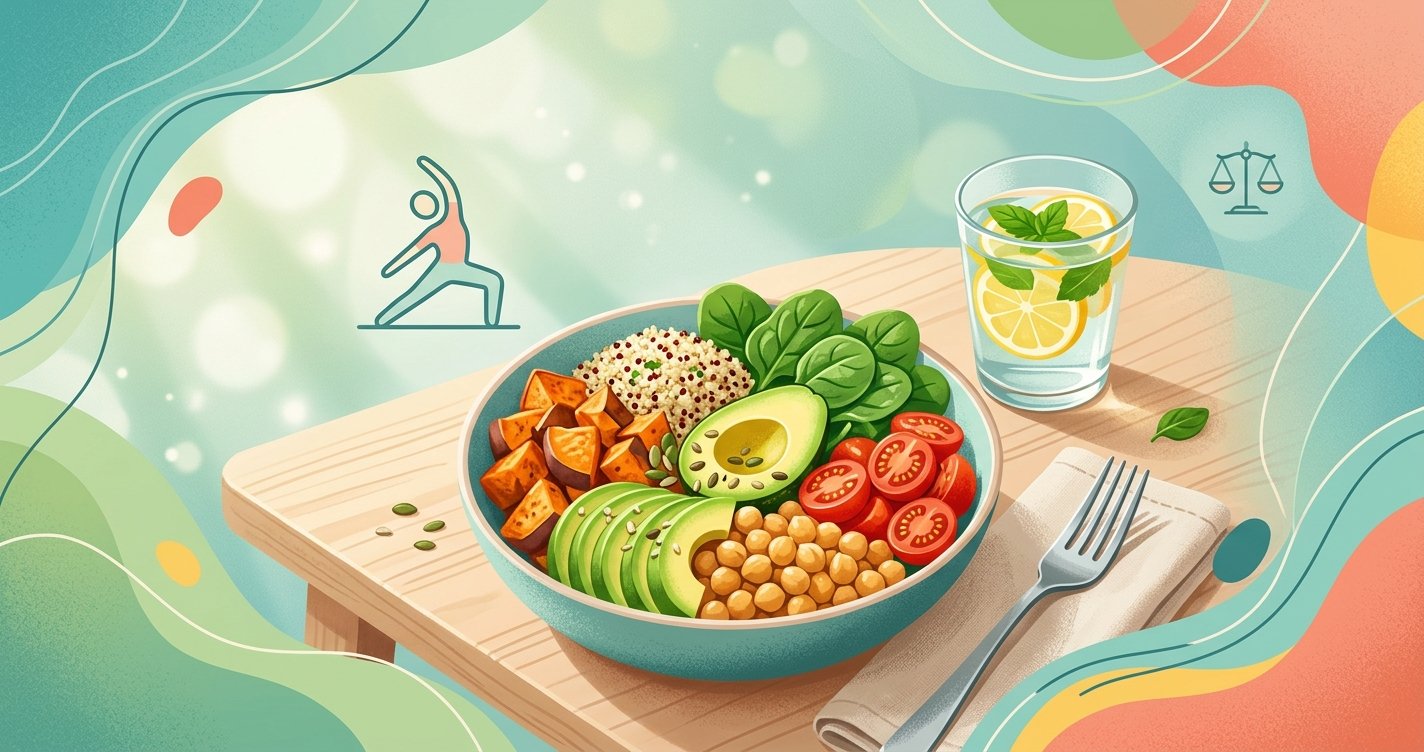
- Choose Whole, Unprocessed Foods: These are generally less calorie-dense and more nutrient-dense than their processed counterparts. Think lean meats, fish, eggs, legumes, nuts, seeds, fruits, and vegetables.
- Stay Hydrated: Sometimes, thirst is mistaken for hunger. Drinking plenty of water can help manage appetite and supports overall metabolic function.
- Mindful Eating: Pay attention to your hunger and fullness cues. Eat slowly, savor your food, and avoid distractions.
The Role of Exercise: Enhancing Your Calorie Burn
While you can't out-train a bad diet, exercise significantly helps create and maintain a deficit.
- Strength Training: Building muscle increases your BMR, meaning you burn more calories at rest. Aim for 2-4 sessions per week.
- Cardiovascular Exercise: Activities like brisk walking, jogging, cycling, or swimming directly burn calories and improve cardiovascular health. Find activities you enjoy to ensure consistency.
- NEAT (Non-Exercise Activity Thermogenesis): This includes all the calories you burn from daily activities outside of structured exercise – walking, fidgeting, taking the stairs. Increase your NEAT by taking more steps throughout the day.
Lifestyle Factors: The Unsung Heroes of Fat Loss
- Sleep: Poor sleep can disrupt hunger-regulating hormones (ghrelin and leptin), leading to increased appetite and cravings. Aim for 7-9 hours of quality sleep per night.
- Stress Management: Chronic stress elevates cortisol levels, which can promote fat storage, especially around the belly. Find healthy ways to manage stress, like meditation, yoga, or hobbies.
Common Pitfalls and How to Avoid Them
Even with the best intentions, it's easy to stumble. Here are common mistakes and how to navigate them:
- Deficit is Too Aggressive: A drastic calorie cut (e.g., more than 1000 calories below TDEE) can lead to extreme hunger, nutrient deficiencies, muscle loss, and metabolic slowdown. This is unsustainable and often leads to rebound weight gain. Stick to a moderate 500-750 calorie deficit.
- Underestimating Intake / Overestimating Output: We often eat more than we think and burn less through exercise. Accurately tracking your food (even for a few weeks) and using reliable TDEE estimates is crucial.
- Ignoring Micronutrients: Focusing only on calories can lead to neglecting vitamins and minerals. Ensure your diet is rich in whole foods to support overall health and energy levels.
- Giving Up Too Soon: Fat loss is not linear. There will be plateaus and fluctuations. Stay consistent, trust the process, and don't get discouraged by daily scale readings.
Tracking Your Progress (Beyond the Scale)
The scale is just one tool, and it doesn't tell the whole story. Body weight fluctuates daily due to water retention, food intake, and other factors. Look for other indicators of progress:
- Body Measurements: Take weekly or bi-weekly measurements of your waist, hips, arms, and thighs.
- Progress Photos: Weekly or bi-weekly photos in the same lighting and clothing can reveal subtle but significant changes.
- Clothing Fit: Do your clothes feel looser? This is a great non-scale victory!
- Energy Levels: Are you feeling more energetic throughout the day?
- Strength & Performance: Are you getting stronger in the gym? Can you walk further or faster?
These non-scale victories are incredibly motivating and often reflect true body composition changes better than the scale alone.
Making it Sustainable: Long-Term Success Tips
Sustainable fat loss isn't about rigid perfection; it's about consistency and adaptability. Here’s how to make your calorie deficit journey a lasting success:
- Find Foods You Enjoy: A diet of bland, boring food is a recipe for failure. Experiment with healthy recipes and find meals you genuinely look forward to eating.
- Allow for Flexibility: Occasional treats or higher-calorie meals won't derail your progress if 80-90% of your choices are on point. The 'all or nothing' mindset often leads to failure.
- Build Healthy Habits: Focus on habits like meal prepping, consistent exercise, and adequate sleep rather than just chasing a number on the scale.
- Seek Support: Share your goals with a trusted friend, family member, or join a supportive community. Accountability can be a powerful motivator.
- Educate Yourself: The more you understand about nutrition and your body, the more empowered you'll be to make informed decisions.
Conclusion: Your Path to Lasting Fat Loss
The calorie deficit is not a fad; it's a scientific reality and the fundamental principle behind all effective fat loss. By understanding how your body uses energy, estimating your needs, and consistently creating a moderate deficit through smart nutrition and activity, you're not just losing weight – you're building a sustainable, healthier lifestyle.
Remember, this is your journey, and it's about progress, not perfection. Be patient with yourself, celebrate every small victory, and know that with consistency and the right knowledge, you absolutely have the power to achieve your fat loss goals and maintain them for good. You've got this!