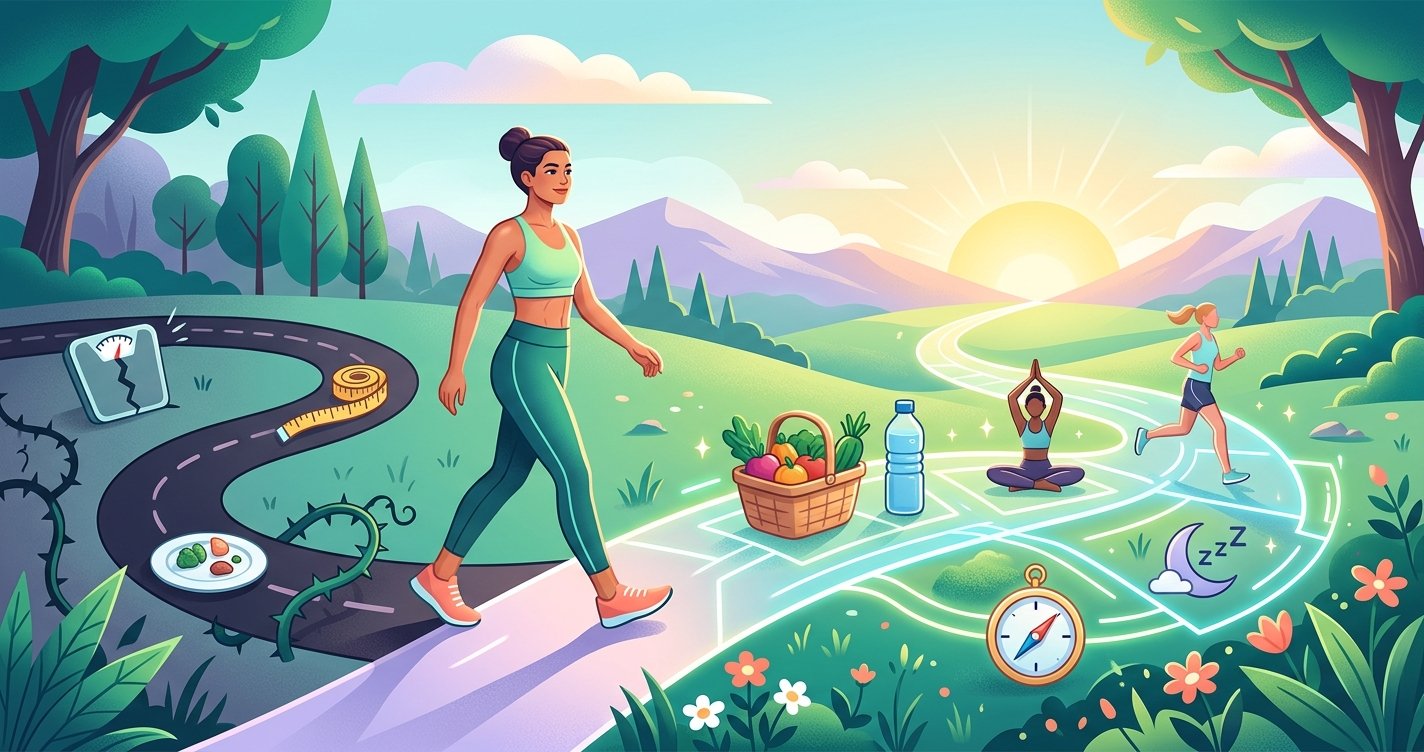
Are you tired of the endless cycle of crash diets, quick fixes, and the frustrating rebound that always seems to follow? You're not alone. In a world obsessed with instant gratification, it's easy to fall prey to promises of rapid weight loss. But here's a hard truth: these extreme approaches rarely deliver lasting results. Instead, they often leave you feeling deprived, demotivated, and further from your goals.
What if there was a better way? A path to fat loss that's not only effective but also sustainable, enjoyable, and supportive of your overall health? Good news – there is! This comprehensive guide will equip you with the evidence-based strategies to achieve sustainable fat loss, helping you build healthy habits that last a lifetime, without the need for restrictive, soul-crushing diets. Let's ditch the diet cycle for good and embark on a journey towards a healthier, happier you. this excellent wellness product
Why Crash Diets Fail: The Science Behind the Struggle
Before we dive into what works, it's crucial to understand why many popular quick-fix diets ultimately fail. It's not a lack of willpower; it's often a biological response:
- Metabolic Adaptation: When you drastically cut calories, your body perceives it as starvation. Your metabolism slows down to conserve energy, making it harder to lose weight and easier to regain it once you return to normal eating. This is often referred to as 'adaptive thermogenesis.'
- Muscle Loss: Extremely low-calorie diets, especially those lacking sufficient protein, can lead to significant muscle loss. Muscle is metabolically active tissue, meaning it burns more calories at rest than fat. Losing muscle further slows your metabolism, creating a vicious cycle.
- Nutrient Deficiencies: Restrictive diets often cut out entire food groups, leading to deficiencies in essential vitamins, minerals, and macronutrients vital for energy, mood, and overall health.
- Psychological Toll: Constant hunger, deprivation, and social isolation can lead to increased stress, anxiety, and an unhealthy relationship with food. This often results in rebound eating and weight gain once the diet ends.
Understanding these pitfalls is the first step towards choosing a more effective and sustainable path.
The Foundation: Nutrition for Sustainable Fat Loss
Sustainable fat loss isn't about deprivation; it's about smart, nourishing choices that fuel your body and keep you satisfied.
Prioritize Protein and Fiber
These two nutrients are your best friends for fat loss. Protein is crucial for preserving muscle mass during a calorie deficit, and it's highly satiating, helping you feel fuller for longer. Aim for a lean protein source at every meal (chicken, fish, eggs, tofu, lentils, Greek yogurt).
Fiber, found in fruits, vegetables, whole grains, and legumes, also promotes satiety, aids digestion, and helps regulate blood sugar levels. A high-fiber diet can significantly reduce overall calorie intake naturally.
Understanding Your Calorie Deficit
At its core, fat loss requires a consistent calorie deficit – consuming fewer calories than your body burns. However, this doesn't mean drastic cuts. A moderate deficit (300-500 calories below maintenance) is ideal for sustainable progress, preventing metabolic slowdown and preserving muscle. Tools like online calculators can help estimate your maintenance calories, but remember these are starting points; listen to your body and adjust as needed.
Embrace Whole Foods, Not Restrictions
Focus on incorporating nutrient-dense, whole foods into your diet: lean proteins, plenty of vegetables, fruits, healthy fats (avocado, nuts, seeds, olive oil), and whole grains. Instead of eliminating entire food groups, learn to balance and moderate. This approach ensures you get all the necessary nutrients and makes your eating plan enjoyable and sustainable long-term.
The Power of Mindful Eating
Slow down. Pay attention to your body's hunger and fullness cues. Eat without distractions. Mindful eating can help you recognize when you're truly hungry versus eating out of boredom or stress, leading to a more intuitive and balanced relationship with food.
Move Your Body: Exercise Strategies That Work
While nutrition is paramount, incorporating consistent physical activity accelerates fat loss, improves body composition, and boosts overall health.
Strength Training: Your Metabolism's Best Friend
Don't skip the weights! Strength training is non-negotiable for sustainable fat loss. It builds and preserves muscle mass, which as we discussed, directly impacts your resting metabolic rate. The more muscle you have, the more calories you burn, even at rest. Aim for 2-4 full-body strength training sessions per week, focusing on compound movements like squats, deadlifts, presses, and rows.
Cardio for Heart Health and Calorie Burn
Cardiovascular exercise, like brisk walking, jogging, cycling, or swimming, is excellent for burning calories, improving heart health, and boosting endurance. Integrate 150-300 minutes of moderate-intensity cardio or 75-150 minutes of vigorous-intensity cardio per week. Mix it up to keep things interesting and challenge different energy systems.
NEAT: The Unsung Hero of Daily Activity
NEAT (Non-Exercise Activity Thermogenesis) refers to the calories burned through everyday movements not related to structured exercise – walking, standing, fidgeting, taking the stairs. Increasing your NEAT can significantly contribute to your daily calorie expenditure. Small changes like parking further away, taking regular stretch breaks, or using a standing desk can make a big difference over time.
Beyond Diet and Exercise: The Hidden Pillars of Fat Loss
Sustainable fat loss isn't just about what you eat and how you move; it's deeply intertwined with your lifestyle.
The Crucial Role of Sleep
Lack of sleep can wreak havoc on your hormones, increasing cortisol (a stress hormone that promotes fat storage) and ghrelin (a hunger-stimulating hormone), while decreasing leptin (a satiety hormone). Aim for 7-9 hours of quality sleep per night to support metabolic function, recovery, and appetite regulation. Prioritize a consistent sleep schedule and create a relaxing bedtime routine.
Mastering Stress for Metabolic Health
Chronic stress elevates cortisol levels, which can lead to increased appetite, cravings for unhealthy foods, and stubborn belly fat. Find healthy ways to manage stress, whether it's meditation, yoga, spending time in nature, journaling, or engaging in hobbies you love. Protecting your mental well-being is a powerful fat loss strategy.
Hydration: Simple Yet Powerful
Drinking enough water is often overlooked but plays a vital role. Water helps with metabolism, nutrient transport, and satiety. Sometimes, thirst can be mistaken for hunger. Aim for at least 8 glasses of water daily, and more if you're exercising or in a hot climate.
Cultivating a Fat Loss Mindset: Patience and Consistency
Sustainable fat loss is a marathon, not a sprint. Your mindset is your most powerful tool.
Set Realistic Goals and Celebrate Progress
Forget drastic weekly weight loss targets. Aim for a healthy and sustainable rate of 1-2 pounds per week. Focus on non-scale victories too: improved energy, better sleep, stronger lifts, clothes fitting better, or simply feeling more confident. Celebrate these small wins to stay motivated.
Embrace the Journey, Not Just the Destination
Sustainable fat loss is about building habits that support a healthy lifestyle for the long haul. It's about learning to enjoy nutritious food, finding joy in movement, and prioritizing your well-being. Shift your focus from a temporary diet to a permanent lifestyle change.
Self-Compassion and Learning from Setbacks
There will be days when you overeat, miss a workout, or feel discouraged. This is normal! Instead of self-criticism, practice self-compassion. Understand that setbacks are part of any journey. Learn from them, adjust, and get back on track without letting one misstep derail your entire progress.
Your Sustainable Fat Loss Journey Starts Now
Ditching the diet cycle and embracing a sustainable approach to fat loss is perhaps the most empowering decision you can make for your health. It's about respecting your body, nourishing it with wholesome foods, moving it joyfully, and prioritizing your overall well-being. There's no magic pill or quick fix, but there's a proven path to lasting results.
Start small. Pick one or two strategies from this guide that resonate with you and implement them consistently. As you build momentum, gradually add more healthy habits. Remember, consistency over perfection is key. Your journey to sustainable fat loss is a journey towards a healthier, happier, and more vibrant you. You've got this!