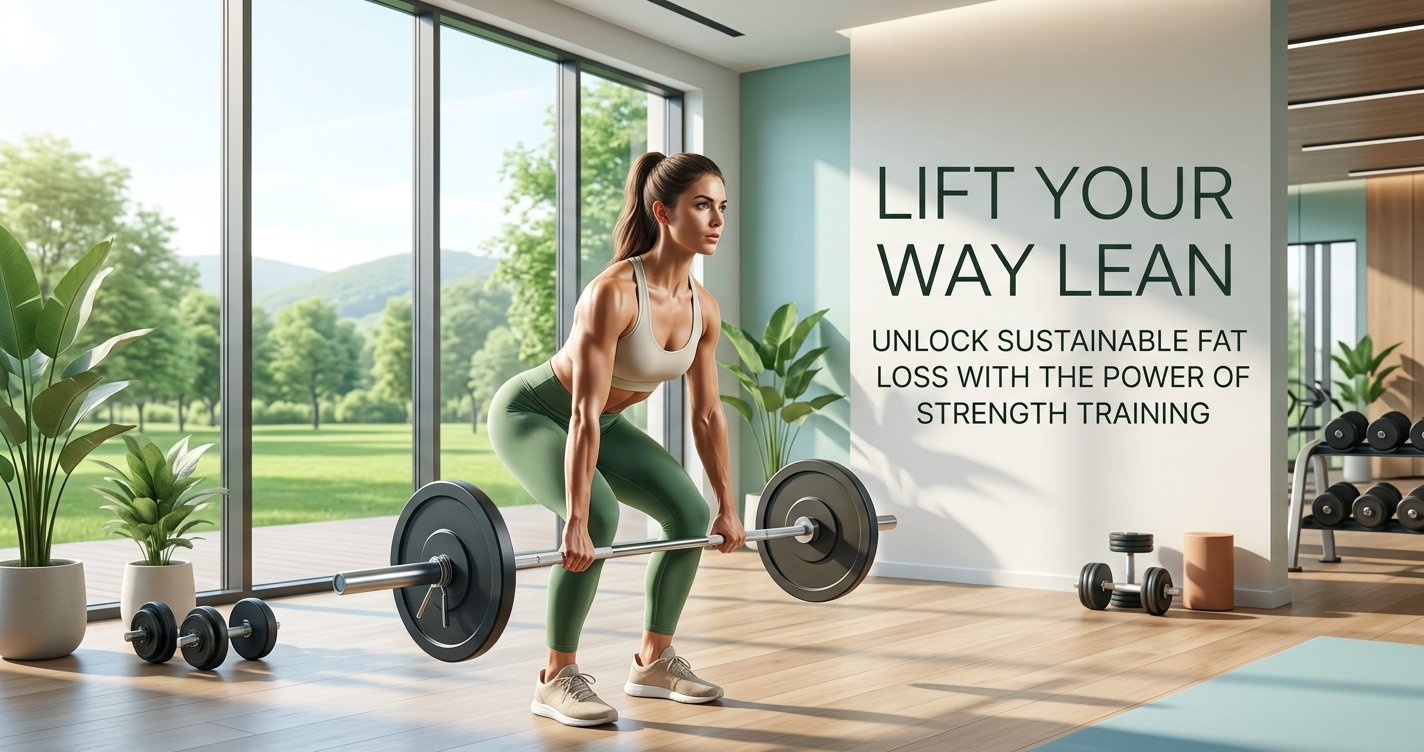
Lift Your Way Lean: Unlock Sustainable Fat Loss with the Power of Strength Training
When you picture 'fat loss,' what comes to mind? For many, it's endless hours on a treadmill, restrictive diets, or grueling cardio sessions. While cardiovascular exercise and nutrition are undeniably important, there's a powerful, often overlooked secret weapon in the fight against unwanted body fat: strength training.
That's right, lifting weights isn't just for bodybuilders or athletes. It's a game-changer for anyone looking to shed fat, sculpt their body, boost their metabolism, and feel incredibly strong and confident. If you've been hesitant to step into the weight room, or if you've been focusing solely on cardio, prepare to have your perspective shifted. We're about to dive deep into why strength training is your ultimate ally for sustainable fat loss, backed by evidence, and presented in a friendly, encouraging way. this excellent wellness product
Why Strength Training is Your Fat Loss MVP (Most Valuable Player)
Let's break down the compelling reasons why incorporating resistance training into your routine is one of the smartest moves you can make for fat loss.
Boost Your Metabolism: The Afterburn Effect & Muscle Mass
One of the most exciting benefits of strength training is its impact on your metabolism. Unlike cardio, which primarily burns calories during the activity itself, strength training provides a significant 'afterburn effect' – known as EPOC (Excess Post-exercise Oxygen Consumption). This means your body continues to burn extra calories at an elevated rate for hours, sometimes even days, after your workout as it recovers and repairs muscle tissue.
Even more powerfully, building muscle mass increases your Basal Metabolic Rate (BMR). Muscle is metabolically active tissue, meaning it burns more calories at rest than fat tissue does. The more muscle you have, the more calories you burn simply by existing. This is a crucial advantage for long-term fat loss and weight management.
Preserve Muscle, Burn Pure Fat
When you're in a calorie deficit (eating fewer calories than you burn), your body will tap into its energy stores. Without strength training, there's a risk of losing precious muscle tissue along with fat. This is detrimental because less muscle means a slower metabolism. Strength training signals to your body that you need to retain and even build muscle, ensuring that a higher percentage of the weight you lose is pure body fat.
Shape Your Body & Boost Confidence
Losing weight is one thing, but transforming your body shape is another. Strength training sculpts your physique by building lean muscle, giving you a toned, strong, and defined appearance. Imagine replacing soft areas with firm muscle – that's the power of lifting! Beyond aesthetics, the feeling of getting stronger, hitting new personal bests, and seeing your body respond to your efforts is incredibly empowering and a huge boost to self-confidence.
Bone Health & Longevity Benefits
The benefits extend beyond fat loss and aesthetics. Strength training is a fantastic way to improve bone density, reducing the risk of osteoporosis as you age. It also enhances functional strength, making everyday tasks easier, improving balance, and promoting overall longevity and quality of life. It’s an investment in your future self!
Getting Started: Your Strength Training Journey
Ready to pick up some weights? Here’s how to begin your strength training adventure safely and effectively.
The Right Routine: Full Body vs. Splits
For beginners, a full-body workout performed 2-3 times per week on non-consecutive days is often ideal. This allows you to hit all major muscle groups frequently, promoting consistent progress and recovery. As you advance, you might explore 'split' routines (e.g., upper/lower, push/pull/legs) that target specific muscle groups on different days.
Progressive Overload: The Key to Continued Progress
This is the fundamental principle of strength training. To keep getting stronger and building muscle, you need to continually challenge your muscles. This means gradually increasing the demands placed on your body over time. You can achieve progressive overload by:
- Increasing the weight lifted.
- Doing more repetitions (reps) with the same weight.
- Doing more sets.
- Decreasing rest time between sets.
- Improving exercise form.
Without progressive overload, your body has no reason to adapt and get stronger.
Essential Exercises for Beginners (Compound Movements)
Focus on compound movements – exercises that work multiple muscle groups and joints simultaneously. They are highly effective and efficient for building overall strength and muscle. Some excellent choices include:
- Squats: Works glutes, quads, hamstrings, core.
- Deadlifts (or Romanian Deadlifts): Works glutes, hamstrings, back, core.
- Push-ups (or Dumbbell Bench Press): Works chest, shoulders, triceps.
- Rows (e.g., Dumbbell Rows, Cable Rows): Works back, biceps.
- Overhead Press (Dumbbell or Barbell): Works shoulders, triceps.
- Lunges: Works glutes, quads, hamstrings.
Start with lighter weights to master your form, then gradually increase the resistance as you get stronger.
Integrating Strength Training into Your Fat Loss Plan
Strength training is powerful, but it's part of a bigger picture.
Fueling Your Workouts: Nutrition for Muscle Growth & Fat Loss
To support muscle growth and recovery while in a calorie deficit for fat loss, prioritize protein intake. Aim for roughly 0.7-1 gram of protein per pound of body weight. This helps preserve muscle and keeps you feeling full. Include plenty of fruits, vegetables, and complex carbohydrates for energy, and healthy fats for overall health. Consistency with a slight calorie deficit is key for fat loss.
Don't Forget Cardio (But Keep it Smart!)
While strength training is MVP, cardio still plays a role. It improves cardiovascular health and burns additional calories. Aim for a balance: 2-3 strength training sessions per week, complemented by 1-3 cardio sessions (walking, jogging, cycling, swimming). Consider High-Intensity Interval Training (HIIT) for efficient calorie burn and metabolic boost, or steady-state cardio for active recovery.
Rest and Recovery: The Unsung Heroes
Muscles don't grow in the gym; they grow during recovery. Ensure you're getting 7-9 hours of quality sleep per night. Incorporate rest days into your routine, allowing your body to repair and rebuild. Proper hydration is also crucial for performance and recovery.
Overcoming Common Hurdles & Staying Motivated
It's normal to have concerns or face challenges when starting something new. Let's tackle them.
"I Don't Want to Get Bulky!"
This is perhaps the biggest myth, especially among women. Building significant muscle mass takes years of incredibly intense training, specific nutrition, and often, genetic predisposition. For most people, consistent strength training will lead to a lean, toned, and athletic physique, not a "bulky" one. Embrace the strength!
Consistency Over Intensity (Especially at First)
Don't feel pressured to lift heavy from day one. Focus on mastering proper form and building a consistent routine. Show up, put in the effort, and trust the process. The intensity will naturally increase as you get stronger.
Tracking Progress Beyond the Scale
The scale only tells part of the story. As you build muscle and lose fat, your weight might not drop as quickly, or it might even stay the same, because muscle weighs more than fat by volume. Instead, track:
- Strength improvements: Can you lift more weight or do more reps?
- Body measurements: Are your waist, hips, or arms getting smaller/more toned?
- How your clothes fit: Are they looser?
- Progress photos: Visual changes can be incredibly motivating.
- Energy levels and mood: Are you feeling better overall?
Sample Strength Training Workout for Fat Loss (Beginner-Friendly)
Here’s a simple full-body routine you can try 2-3 times per week. Perform 2-3 sets of 8-12 repetitions for each exercise, resting 60-90 seconds between sets.
- Warm-up (5-10 minutes): Light cardio (jogging, cycling), dynamic stretches (arm circles, leg swings).
- Goblet Squats: Hold a dumbbell vertically against your chest.
- Dumbbell Rows: Support one hand and knee on a bench, row a dumbbell with the other arm.
- Push-ups (on knees or full): Or Dumbbell Bench Press if you have access to a bench.
- Walking Lunges: Hold light dumbbells for added challenge.
- Plank: Hold for 30-60 seconds, focusing on core engagement.
- Cool-down (5-10 minutes): Static stretches (holding stretches for 20-30 seconds).
Remember to prioritize proper form over heavy weight, especially when you're starting out. If you're unsure about form, consider consulting a certified personal trainer.
Embrace the Strength, Embrace the Change!
Strength training is more than just a tool for fat loss; it's a pathway to a stronger, healthier, and more confident you. By building muscle, you'll boost your metabolism, reshape your body, and empower yourself with newfound physical and mental resilience. It's a sustainable, evidence-based approach that delivers lasting results far beyond the number on the scale.
So, step away from the endless cardio sessions and embrace the weights. Start small, stay consistent, and celebrate every victory – whether it's lifting a heavier dumbbell, perfecting your squat form, or simply feeling stronger in your everyday life. Your fat loss journey is about to get a whole lot more powerful!