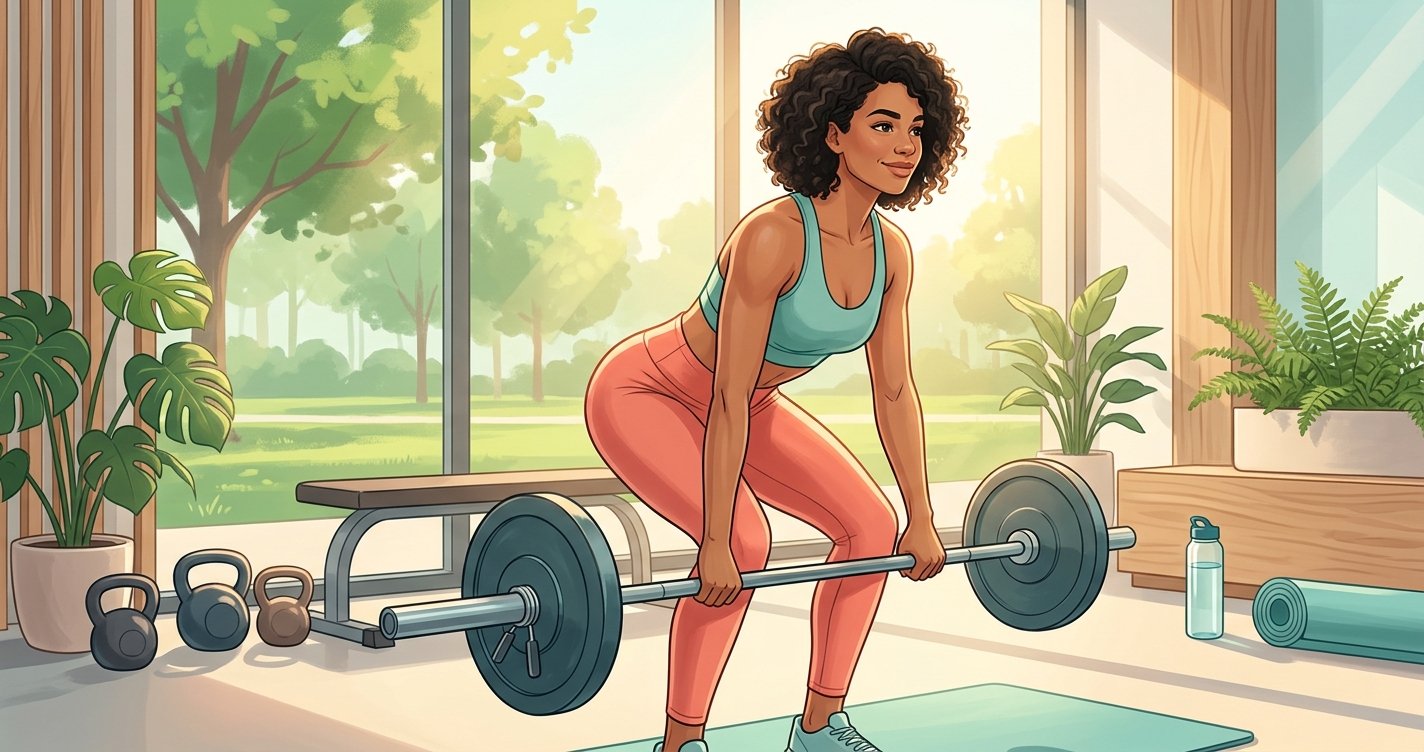
Lift Your Way Lean: Why Strength Training is Your Secret Weapon for Sustainable Fat Loss
Are you tired of the endless cycle of restrictive diets and grueling cardio sessions that promise fat loss but deliver only frustration? What if we told you there's a more empowering, effective, and sustainable path to shedding unwanted fat and sculpting a stronger, healthier you? It's time to shift your focus from the treadmill to the weight rack, because strength training isn't just for bodybuilders – it's your ultimate ally in the fight for sustainable fat loss.
For too long, strength training has been misunderstood, especially by those primarily focused on losing weight. Many believe cardio is king, or that lifting weights will make them 'bulky.' But the science tells a different, far more exciting story. In this comprehensive guide, we'll dive deep into why strength training is a non-negotiable component of any effective fat loss strategy, backed by evidence and designed to empower you to lift your way to a leaner, more confident future. this excellent wellness product
Beyond the Scale: Why Strength Training is a Fat Loss Game-Changer
When it comes to fat loss, most people fixate solely on burning calories during a workout. While that's part of the equation, strength training offers a multitude of benefits that extend far beyond the gym session itself, making it incredibly powerful for long-term fat reduction.
Boost Your Metabolism: The Afterburn Effect (EPOC)
Ever heard of the 'afterburn effect'? Scientifically known as Excess Post-exercise Oxygen Consumption (EPOC), this phenomenon means your body continues to burn calories at an elevated rate even after your workout is over. High-intensity strength training sessions create a greater metabolic disturbance than steady-state cardio, leading to a more significant and prolonged EPOC. This means you're literally burning more calories while you're resting, recovering, and going about your day!
Build Muscle, Burn More Calories at Rest
Here's the magic trick: muscle tissue is metabolically more active than fat tissue. This means that for every pound of muscle you gain, your resting metabolic rate (RMR) increases. A higher RMR means your body naturally burns more calories just to maintain its basic functions – breathing, thinking, circulating blood – even when you're doing absolutely nothing. By building muscle through strength training, you're essentially turning your body into a more efficient, fat-burning machine 24/7.
Reshape Your Body: The Aesthetic Benefits
While cardio helps you lose weight, strength training helps you lose fat and gain muscle, fundamentally changing your body composition. This leads to a more toned, sculpted physique. You might even find your clothes fitting better and your body looking leaner even if the number on the scale hasn't drastically changed. This is because muscle takes up less space than fat, making you appear more compact and athletic.
Enhance Insulin Sensitivity & Hormone Balance
Strength training can significantly improve insulin sensitivity, meaning your body becomes more efficient at using glucose for energy instead of storing it as fat. It also plays a crucial role in balancing other hormones, like cortisol (the stress hormone, which can promote fat storage) and growth hormone, both of which are vital for effective fat loss and overall well-being.
The Science-Backed Benefits: What the Research Says
Numerous studies consistently highlight the efficacy of strength training for fat loss. Research published in journals like Obesity and the American Journal of Clinical Nutrition demonstrates that resistance training, when combined with a caloric deficit, is superior to diet alone or diet plus cardio in preserving lean muscle mass while reducing body fat. This preservation of muscle is critical because it maintains a higher metabolic rate, preventing the dreaded 'metabolic slowdown' often associated with diet-only approaches.
One meta-analysis even found that resistance training was effective in reducing body fat percentage in healthy adults, irrespective of whether they were also restricting calories. The takeaway is clear: if sustainable, healthy fat loss is your goal, strength training needs to be a cornerstone of your plan.
Getting Started: Your Strength Training Blueprint for Fat Loss
Ready to embrace the weights? Here’s how you can begin your strength training journey for optimal fat loss results.
Focus on Compound Movements
Compound exercises are movements that work multiple joints and muscle groups simultaneously. Think squats, deadlifts, bench presses, overhead presses, and rows. These movements recruit more muscle fibers, burn more calories, and elicit a greater hormonal response than isolation exercises (like bicep curls or tricep extensions), making them incredibly effective for fat loss.
Progressive Overload is Key
To continue building muscle and challenging your body, you need to practice progressive overload. This means gradually increasing the demands placed on your muscles over time. This could involve:
- Lifting heavier weights
- Doing more repetitions with the same weight
- Performing more sets
- Reducing rest times between sets
- Improving your form and control
Without progressive overload, your muscles will adapt, and your progress will stall.
Rep Ranges and Sets for Fat Loss
For fat loss and muscle building (hypertrophy), a common recommendation is to perform 3-4 sets of 8-12 repetitions for most exercises, lifting a weight that challenges you by the last few reps. However, don't shy away from occasionally incorporating heavier lifts in lower rep ranges (e.g., 5-8 reps) for strength, as stronger muscles can lift more weight, leading to greater muscle growth potential over time.
Consistency Over Intensity (Initially)
As a beginner, focus on mastering proper form and being consistent with your workouts 2-3 times per week. Once your form is solid, you can gradually increase intensity. Remember, showing up and doing the work consistently is more important than having one super intense but sporadic session.
Don't Forget Recovery & Nutrition
While this article focuses on strength training, remember that adequate protein intake (around 0.7-1 gram per pound of body weight) is crucial for muscle repair and growth, and a slight calorie deficit is necessary for fat loss. Prioritize sleep and allow your muscles ample time to recover between sessions.
Integrating Strength Training into Your Fat Loss Journey
So, how often should you hit the weights?
- Beginners: Start with 2-3 full-body strength training sessions per week on non-consecutive days (e.g., Monday, Wednesday, Friday). This allows for adequate recovery.
- Intermediate/Advanced: You might progress to 3-4 sessions per week, potentially splitting your workouts into upper/lower body or push/pull/legs routines.
You can certainly incorporate cardio into your routine, but prioritize your strength training. Perform cardio after your lifting session or on separate days to ensure you have enough energy for your resistance work.
Common Myths Debunked
“Lifting makes women bulky.”
This is perhaps the biggest myth. Women typically lack the high levels of testosterone needed to build significant muscle mass without extreme dedication and specific training protocols. Strength training will lead to a toned, strong, and lean physique, not a bulky one.
“Cardio is better for fat loss.”
While cardio burns calories during the activity, strength training offers a superior metabolic boost post-workout and builds muscle, which significantly increases your resting calorie burn. For sustainable, long-term fat loss, strength training is arguably more effective.
“You need to live in the gym.”
Not at all! Effective strength training for fat loss can be achieved with just 2-4 focused sessions per week, each lasting 45-60 minutes. It's about quality, not just quantity.
Embrace the Power of the Weights!
Sustainable fat loss isn't about deprivation; it's about building a stronger, healthier, and more metabolically active body. By embracing strength training, you're not just losing fat; you're gaining confidence, strength, improved body composition, and a metabolism that works harder for you even when you're resting.
So, ditch the endless cardio and restrictive diets. Pick up those weights, challenge yourself, and watch as your body transforms in ways you never thought possible. Start your strength training journey today – your leaner, stronger self is waiting!