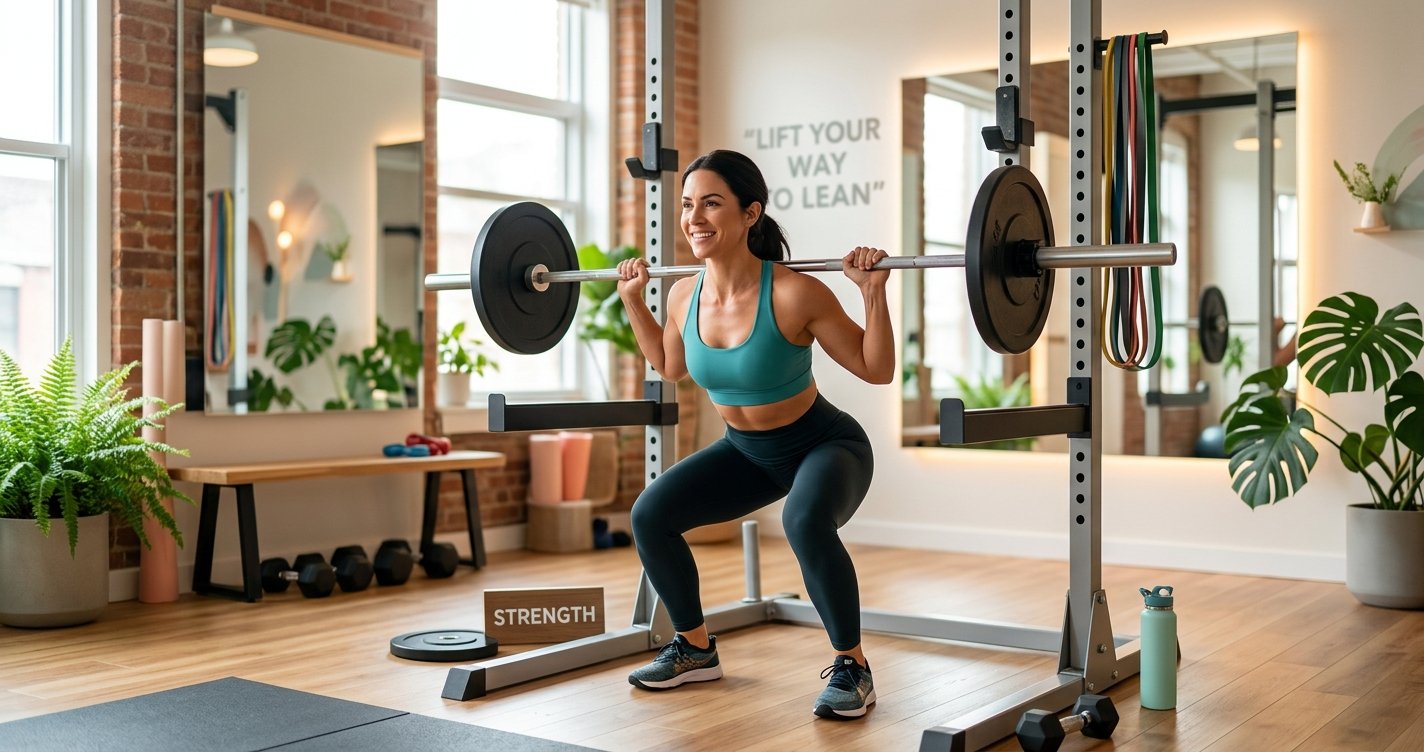
Lift Your Way to Lean: The Ultimate Guide to Strength Training for Sustainable Fat Loss
When you picture “fat loss,” what’s the first thing that comes to mind? For many, it’s endless hours on the treadmill, sweating through spin classes, or pounding the pavement. While cardio certainly has its place in a healthy lifestyle, it’s time we challenged the notion that it’s the *only* or even the *most effective* path to sustainable fat loss.
Get ready to discover your new secret weapon: strength training. Yes, lifting weights isn’t just for bodybuilders or elite athletes. It’s a powerful, transformative tool that can reshape your body, boost your metabolism, and empower you on your journey to a leaner, stronger you. Forget the fear of “getting bulky”—we’re here to debunk myths, share the science, and guide you toward a more efficient and rewarding approach to losing fat and keeping it off. Let’s dive in! this excellent wellness product
Why Strength Training is Your Fat Loss Secret Weapon
Strength training offers a cascade of benefits that directly contribute to effective and sustainable fat loss, far beyond what cardio alone can provide. It’s about working smarter, not just harder.
Boosting Your Metabolism: The Afterburn Effect & RMR
One of the most compelling reasons to pick up those weights is its impact on your metabolism. When you engage in strength training, your body experiences something called EPOC (Excess Post-exercise Oxygen Consumption), often referred to as the “afterburn effect.” This means your body continues to burn calories at an elevated rate for hours, and sometimes even days, after your workout as it recovers and repairs muscle tissue. Think of it as a bonus calorie burn that keeps working long after you’ve left the gym.
Even more significant is strength training’s ability to increase your Resting Metabolic Rate (RMR). Muscle tissue is metabolically more active than fat tissue. This means that the more muscle you have, the more calories your body burns at rest, simply to maintain its functions. By building and preserving muscle through lifting, you’re essentially turning your body into a more efficient, fat-burning machine 24/7, even when you’re just sitting on the couch or sleeping!
Preserving and Building Muscle Mass
When you lose weight through diet alone or excessive cardio without strength training, a significant portion of that weight loss often comes from muscle, not just fat. This is detrimental because losing muscle slows down your metabolism and makes it harder to maintain your weight loss in the long run. Strength training actively works to preserve your existing muscle mass and even build new muscle, ensuring that the weight you lose is primarily fat. This leads to a more toned, defined physique.
Enhancing Insulin Sensitivity and Nutrient Partitioning
Strength training also plays a crucial role in improving your body's insulin sensitivity. When your cells are more sensitive to insulin, they can more effectively take up glucose from your bloodstream and use it for energy, rather than storing it as fat. This improved nutrient partitioning means that the food you eat is more likely to be used to fuel your muscles and recovery, rather than contributing to fat storage. It’s a powerful tool for managing blood sugar and optimizing your body's ability to utilize nutrients.
Shaping Your Body and Improving Confidence
Beyond the metabolic benefits, strength training literally sculpts your body. As you reduce body fat and build muscle, you'll notice changes in your shape, tone, and overall physique. This isn't just about aesthetics; seeing your body transform and feeling stronger in everyday activities can dramatically boost your self-confidence, mental well-being, and motivation to stick with your healthy habits.
Debunking Common Myths About Lifting for Fat Loss
Let’s address some common misconceptions that might be holding you back from embracing strength training.
“I’ll Get Too Bulky!”
This is perhaps the most common myth, especially among women. Rest assured, gaining significant muscle mass (“bulking up”) is incredibly difficult and requires a very specific, intense training regimen, a high-calorie diet, and often, genetic predispositions or even pharmaceutical assistance. For most people, consistent strength training will lead to a lean, toned, and strong physique, not a bulky one. Your body will become more defined as you replace fat with dense, calorie-burning muscle.
“Cardio Burns More Calories!”
While a 30-minute cardio session might burn more calories *during* the workout itself compared to a 30-minute strength training session, this perspective overlooks the bigger picture. As we discussed, strength training offers the significant “afterburn effect” and, more importantly, increases your RMR by building muscle. This means that over a 24-hour period, a body with more muscle burns more calories overall, making strength training a more efficient long-term strategy for fat loss.
“It’s Only for Young People/Athletes!”
Absolutely not! Strength training is beneficial for people of all ages and fitness levels. In fact, it becomes even more crucial as we age to combat sarcopenia (age-related muscle loss) and maintain bone density. Modifications and proper form can make strength training accessible and safe for anyone, from beginners to seniors. It’s never too late to start building strength!
How to Get Started: Your Strength Training Blueprint
Ready to lift? Here’s how to begin your journey.
Essential Equipment (Gym vs. Home)
You don't need a fancy gym membership to start. While a gym offers a wide array of machines and free weights, you can achieve fantastic results at home with minimal equipment:
- Home: Resistance bands, dumbbells (adjustable sets are great), a kettlebell, and your own bodyweight are fantastic starting points.
- Gym: Barbell, dumbbells, kettlebells, resistance machines, cables, and benches.
The key is to choose tools that allow you to progressively challenge your muscles.
Choosing the Right Exercises: Compound vs. Isolation
Focus on compound exercises, especially as a beginner. These movements work multiple muscle groups and joints simultaneously, making them highly efficient for building strength and burning calories. Examples include:
- Lower Body: Squats (goblet, barbell, bodyweight), Deadlifts (conventional, Romanian, sumo), Lunges, Hip Thrusts.
- Upper Body Push: Push-ups, Overhead Press (dumbbell, barbell), Bench Press (dumbbell, barbell).
- Upper Body Pull: Rows (dumbbell, barbell, cable), Pull-ups (assisted if needed), Lat Pulldowns.
Isolation exercises (like bicep curls or tricep extensions) have their place for specific muscle development but should complement, not replace, compound movements for fat loss.
Progressive Overload: The Key to Progress
This is the golden rule of strength training. To continue getting stronger and building muscle, you must continually challenge your muscles. This means gradually increasing the demands placed on your body over time. Ways to achieve progressive overload include:
- Increasing the weight lifted.
- Increasing the number of repetitions.
- Increasing the number of sets.
- Decreasing rest time between sets.
- Improving exercise form.
- Increasing training frequency.
Without progressive overload, your body adapts, and your progress stalls.
Frequency and Volume Recommendations
For fat loss, aim for 3-4 strength training sessions per week. This allows for adequate muscle stimulation and recovery. For each exercise, aim for 3-4 sets of 8-12 repetitions. If you can easily complete 12 reps, it’s time to increase the weight!
Integrating Strength Training into a Holistic Fat Loss Plan
While strength training is powerful, it’s most effective when combined with other healthy habits.
Nutrition: Fueling Your Workouts and Recovery
You can’t out-train a poor diet. For fat loss, a slight caloric deficit is necessary, but it’s crucial to fuel your body with nutrient-dense foods. Prioritize:
- Protein: Essential for muscle repair and growth, and highly satiating. Aim for 0.7-1 gram per pound of body weight.
- Complex Carbohydrates: Provide energy for your workouts and aid recovery.
- Healthy Fats: Important for hormone production and overall health.
- Plenty of Fruits and Vegetables: For vitamins, minerals, and fiber.
Hydration is also key! Drink plenty of water throughout the day.
The Role of Cardio (Yes, It Still Has a Place!)
Don't ditch cardio entirely! While not the primary driver for fat loss in the same way as strength training, cardio offers immense cardiovascular health benefits, improves endurance, and can contribute to your overall calorie deficit. Integrate 2-3 sessions of moderate-intensity cardio (like brisk walking, cycling, or swimming) or short bursts of HIIT (High-Intensity Interval Training) into your week, ideally on separate days from your strength training or after your lifting session.
Prioritizing Sleep and Stress Management
Fat loss isn't just about what you do in the gym and kitchen. Adequate sleep (7-9 hours) is crucial for hormone regulation (ghrelin, leptin, cortisol), muscle recovery, and energy levels. Chronic stress can also hinder fat loss by elevating cortisol, which can promote fat storage, especially around the midsection. Incorporate stress-reducing activities like meditation, yoga, or spending time in nature.
Sample Strength Training Routine for Fat Loss (Beginner/Intermediate)
Here’s a full-body routine you can do 3 times a week, with at least one rest day in between (e.g., Monday, Wednesday, Friday).
- Warm-up (5-10 minutes): Light cardio (jogging, cycling) and dynamic stretches (arm circles, leg swings).
- Workout:
- Goblet Squats: 3 sets of 10-12 reps
- Dumbbell Rows: 3 sets of 10-12 reps per arm
- Push-ups (on knees or toes): 3 sets to failure or 8-12 reps
- Romanian Deadlifts (with dumbbells): 3 sets of 10-12 reps
- Overhead Press (with dumbbells): 3 sets of 8-10 reps
- Plank: 3 sets, hold for 30-60 seconds
- Cool-down (5-10 minutes): Static stretches, holding each for 20-30 seconds.
Remember to choose a weight that challenges you by the last few reps but allows you to maintain good form. As you get stronger, increase the weight!
Consistency is Key: Sticking With It for Long-Term Success
The most effective program is the one you can stick to. Fat loss is a journey, not a sprint. Be patient with yourself, celebrate small victories, and focus on consistency over perfection. Track your progress not just by the scale, but by how your clothes fit, your strength gains, your energy levels, and your overall well-being. These non-scale victories are incredibly motivating and reflect true, sustainable progress.
Embrace the Strength Within You
It’s time to shift your perspective on fat loss and embrace the incredible power of strength training. By lifting weights, you’re not just burning calories; you’re building a stronger metabolism, a more resilient body, and an unshakeable confidence. So, ditch the fear, pick up those weights, and start your journey to a leaner, stronger, and healthier you. Your body (and your metabolism) will thank you!