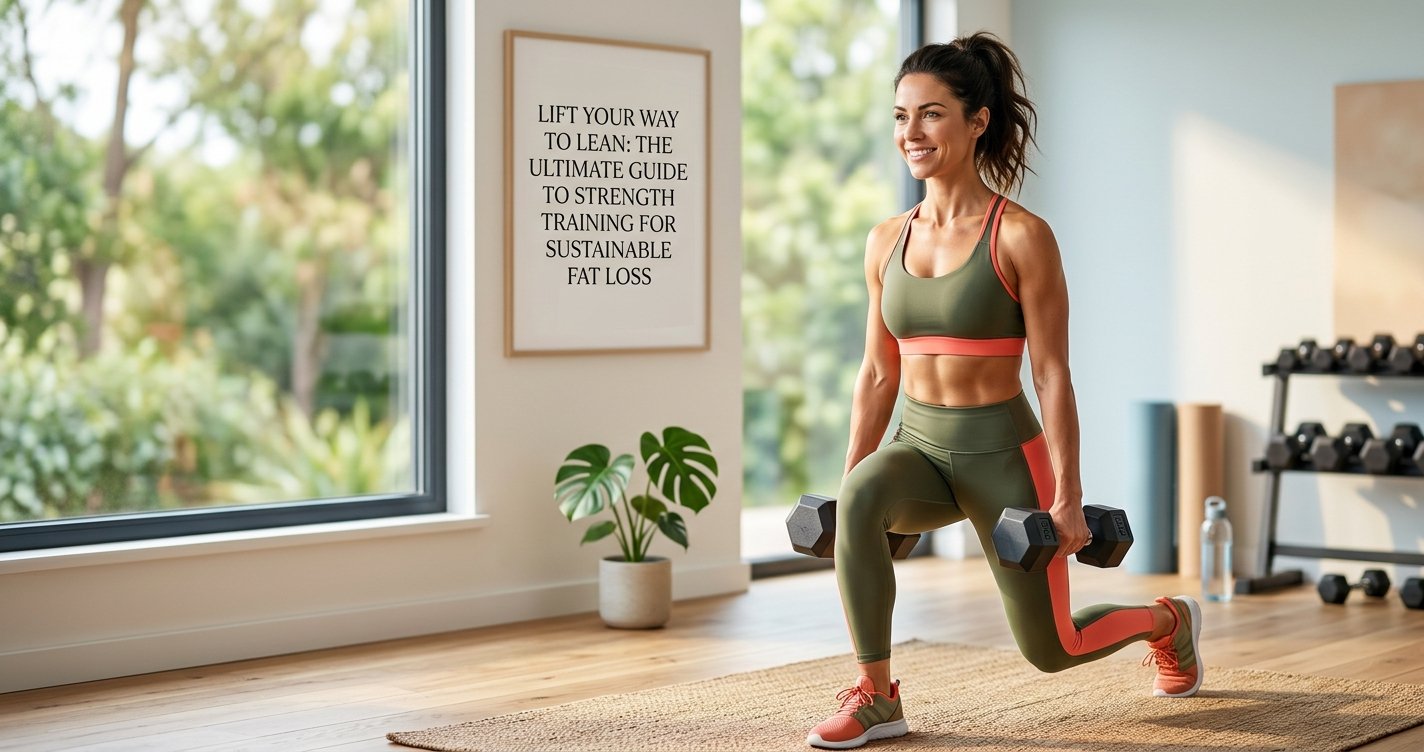
For years, the go-to advice for fat loss has been an endless stream of cardio – pounding the pavement, sweating on the elliptical, or cycling for what feels like eternity. While cardiovascular exercise certainly has its place in a healthy lifestyle, it's often overemphasized as the sole solution for shedding unwanted body fat. What if we told you there's a more efficient, empowering, and sustainable path to a leaner, stronger you? Welcome to the world of strength training for fat loss.
Forget the myth that lifting weights is just for bodybuilders or that it will make women 'bulky.' This isn't about becoming a competitive powerlifter (unless you want to!). It's about harnessing the incredible power of resistance training to transform your body composition, boost your metabolism, and build a resilient, confident self. In this comprehensive, evidence-based guide, we'll dive deep into why strength training is your secret weapon for sustainable fat loss, how to get started, and practical tips to integrate it effectively into your routine. this excellent wellness product
Why Strength Training Trumps Cardio for Fat Loss (and Overall Health)
Let's be clear: we're not saying ditch cardio entirely. A balanced fitness regimen includes both. However, when the primary goal is fat loss, strength training offers unique advantages that cardio simply can't match. It's about working smarter, not just harder.
The "Afterburn Effect" (EPOC)
Ever heard of EPOC, or Excess Post-exercise Oxygen Consumption? This is often referred to as the 'afterburn effect.' When you engage in intense strength training, your body works harder to recover, repair muscle tissue, and return to its pre-exercise state. This process requires a significant amount of energy, meaning you continue to burn calories at an elevated rate for hours, even up to 24-48 hours, after your workout is over. While cardio burns more calories during the session, strength training keeps the calorie-burning furnace stoked long after you've racked the weights.
Building Your Metabolic Engine (Muscle Mass)
This is perhaps the most significant advantage. Muscle tissue is metabolically active, meaning it burns more calories at rest than fat tissue does. The more muscle you have, the higher your Basal Metabolic Rate (BMR) – the number of calories your body burns just to perform basic functions like breathing and circulating blood. By building muscle through strength training, you're essentially turning your body into a more efficient, fat-burning machine 24/7, even when you're sleeping. This makes long-term fat loss and weight management significantly easier.
- Improved Body Composition: Strength training helps you lose fat while preserving or even building muscle, leading to a firmer, more toned physique.
- Increased Strength & Functional Fitness: Everyday tasks become easier, and you'll feel more capable and energetic.
- Bone Density & Joint Health: Lifting weights puts positive stress on your bones, helping to prevent osteoporosis and strengthen joints.
- Better Mood & Reduced Stress: Exercise, especially challenging strength training, releases endorphins, improving mood and reducing anxiety.
Getting Started: Your Strength Training Journey for Fat Loss
Ready to embrace the weights? Great! Here’s how to begin without feeling overwhelmed.
Essential Equipment (or lack thereof)
You don't need a fancy gym membership to start. Bodyweight exercises are incredibly effective and can be done anywhere. Think squats, lunges, push-ups, planks, and glute bridges. As you progress, a set of dumbbells or resistance bands can open up a world of new exercises. If you do join a gym, you'll have access to machines, free weights, and barbells, offering even more versatility.
How Often Should You Lift?
For optimal fat loss and muscle building, aim for 2-4 strength training sessions per week. Beginners might start with 2-3 full-body workouts, allowing adequate rest between sessions. As you get stronger, you can increase frequency or split your workouts (e.g., upper body/lower body splits).
Crafting Your Fat Loss Workout Plan
A well-structured plan is key to seeing results. Don't just wander aimlessly around the gym; have a purpose for each session.
Compound Movements Are Your Best Friends
Prioritize compound exercises, which work multiple muscle groups and joints simultaneously. These are highly effective for burning calories, building overall strength, and stimulating muscle growth. Examples include:
- Squats (goblet squats, back squats, front squats)
- Deadlifts (conventional, sumo, RDLs)
- Bench Press (dumbbell or barbell)
- Overhead Press (dumbbell or barbell)
- Rows (dumbbell rows, barbell rows, cable rows)
- Lunges
Include a mix of pushing movements (chest, shoulders, triceps) and pulling movements (back, biceps) to ensure balanced development.
Progressive Overload: The Secret Sauce
To continue seeing progress, you must challenge your muscles to do more over time. This principle is called progressive overload. It doesn't always mean lifting heavier weights; it can also mean:
- Increasing the number of repetitions (reps)
- Increasing the number of sets
- Decreasing rest time between sets
- Improving your form and control
- Increasing the frequency of your workouts
- Doing more challenging variations of an exercise
Without progressive overload, your body adapts, and gains plateau. Always strive to be a little bit better than your last workout.
Sample Beginner Full-Body Workout (2-3 times per week)
Perform 3 sets of 8-12 repetitions for each exercise, resting 60-90 seconds between sets.
- Goblet Squats
- Push-ups (on knees or toes)
- Dumbbell Rows
- Overhead Press (with dumbbells or resistance band)
- Lunges (alternating legs)
- Plank (hold for 30-60 seconds)
Nutrition: The Unsung Hero Alongside Your Lifts
You can't out-train a bad diet. For fat loss, nutrition plays a crucial role, working hand-in-hand with your strength training efforts.
Protein Power for Muscle Preservation
When you're in a calorie deficit (eating fewer calories than you burn, which is necessary for fat loss), your body can sometimes break down muscle for energy. Adequate protein intake is vital to prevent this. Aim for 0.7-1 gram of protein per pound of body weight. Good sources include lean meats, poultry, fish, eggs, dairy, legumes, and protein supplements.
Smart Carb and Fat Choices
Don't fear carbohydrates or healthy fats! Carbs provide energy for your workouts and aid recovery, so focus on complex carbs like whole grains, fruits, and vegetables. Healthy fats (avocado, nuts, seeds, olive oil) are essential for hormone production and overall health. Portion control is key for both.
Beyond the Gym: Recovery, Sleep, and Consistency
Your results aren't just forged in the gym; they're solidified outside of it.
Prioritize Rest
Muscles don't grow during your workout; they grow and repair during rest. Aim for 7-9 hours of quality sleep per night. Lack of sleep can impair recovery, increase stress hormones like cortisol (which promotes fat storage), and reduce your energy for subsequent workouts.
Stay Hydrated
Water is essential for every bodily function, including metabolism and muscle performance. Make sure you're drinking plenty of water throughout the day, especially around your workouts.
The Power of Patience and Consistency
Fat loss and muscle gain are not linear processes. There will be ups and downs. The most important factor is consistency. Stick with your plan, make gradual adjustments, and trust the process. Celebrate small victories and remember your 'why.'
Common Myths Debunked
- "Lifting makes women bulky": This is a persistent myth! Women typically don't have enough testosterone to build huge amounts of muscle naturally. Strength training will lead to a lean, toned, and strong physique, not a bulky one.
- "Cardio is the only way to lose fat": As we've discussed, strength training is incredibly effective, often more so for long-term body composition changes.
- "You have to train for hours every day": Quality over quantity. 3-4 structured sessions of 45-60 minutes are far more effective than long, aimless workouts.
Conclusion: Embrace the Strength Within You
Shifting your focus from endless cardio to embracing strength training can be a game-changer for your fat loss journey. It's an empowering path that not only helps you shed fat more effectively and sustainably but also builds confidence, improves your health, and makes you feel incredibly strong and capable. So, ditch the fear of the weight rack, embrace the challenge, and start lifting your way to a leaner, more vibrant you. Your body (and your metabolism) will thank you!