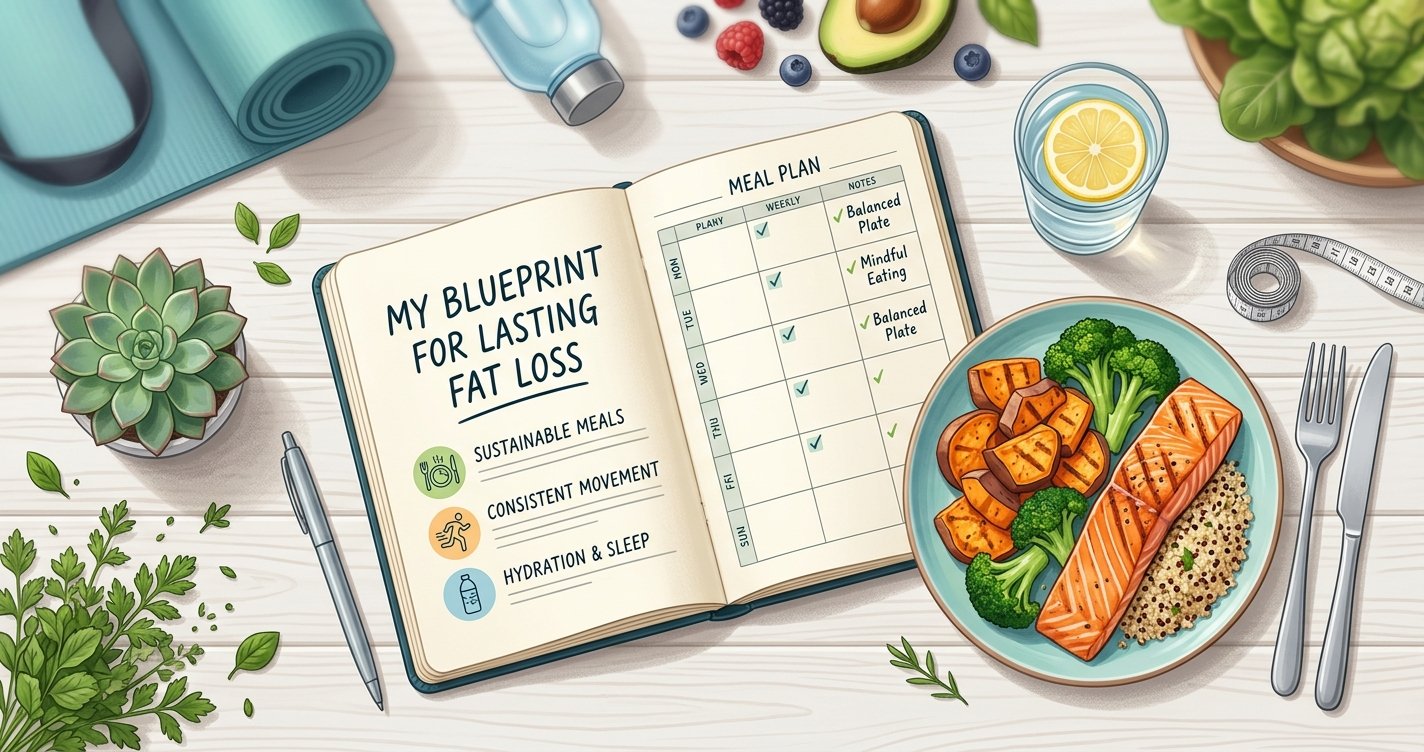
Are you tired of the endless cycle of crash diets, rapid weight loss, and then inevitably gaining it all back (and sometimes more)? You're not alone. Many people fall into the trap of extreme restrictions, hoping for a quick fix for fat loss. But the truth is, true, lasting fat loss isn't about deprivation; it's about smart, sustainable choices. And at the heart of those choices lies understanding and mastering the sustainable calorie deficit.
This isn't another fad diet. This is the fundamental, evidence-based principle that underpins all successful fat loss, presented in a way that empowers you to achieve your goals without feeling constantly hungry, deprived, or exhausted. We're going to dive deep into what a calorie deficit truly means, why 'sustainable' is your secret weapon, and how to implement it effectively for results that stick. Let's build your blueprint for a healthier, leaner you! this excellent wellness product
What Exactly is a Calorie Deficit? (The Science Bit!)
Let's strip away the myths and get to the core science. A calorie is simply a unit of energy. Your body needs energy to perform every single function, from breathing and thinking to walking and working out. This energy comes from the food and drinks you consume.
When you eat, your body uses these calories for immediate energy or stores them for later. When you consume fewer calories than your body needs to maintain its current weight, you create a calorie deficit. In this state, your body turns to its stored energy reserves – primarily fat – to make up the difference. This is the ONLY way your body can lose stored body fat.
- Calories In: The energy you consume from food and drink.
- Calories Out: The energy your body expends through basal metabolic rate (BMR), physical activity, and the thermic effect of food (TEF).
When Calories In < Calories Out, you lose fat. It's elegantly simple, but implementing it sustainably is where the magic happens.
Why "Sustainable" is Your Secret Weapon (And Why Crash Diets Fail)
You might be thinking, "Okay, so I just eat really little, right?" Wrong! This is where the crucial word "sustainable" comes in. Crash diets that advocate for extreme calorie restriction (e.g., 800-1000 calories a day) often lead to:
- Muscle Loss: Your body, desperate for energy, starts breaking down muscle tissue, which is metabolically active and important for strength and health.
- Metabolic Slowdown: Your body adapts to severe restriction by lowering its energy expenditure, making future fat loss even harder.
- Intense Hunger & Cravings: Hormones like ghrelin (the hunger hormone) skyrocket, leading to uncontrollable urges to eat.
- Nutrient Deficiencies: It's incredibly difficult to get all essential vitamins and minerals on very low-calorie diets.
- Psychological Burnout: The constant deprivation is mentally exhausting, often leading to rebound eating and weight regain.
A sustainable calorie deficit, on the other hand, allows you to lose fat steadily and healthily, preserving muscle mass, maintaining your metabolism, and keeping your hunger and energy levels in check. It's a marathon, not a sprint, and your body will thank you for it.
How to Calculate Your Starting Point: TDEE and Beyond
Before you can create a deficit, you need to know roughly how many calories your body needs to maintain its current weight. This is your Total Daily Energy Expenditure (TDEE).
Step 1: Estimate Your Basal Metabolic Rate (BMR)
Your BMR is the number of calories your body burns at rest, just to keep vital functions going. You can use online calculators that factor in your age, gender, height, and weight (e.g., Mifflin-St Jeor equation is commonly used).
Step 2: Account for Activity Level
Your BMR is then multiplied by an activity factor to estimate your TDEE:
- Sedentary: Little to no exercise (BMR x 1.2)
- Lightly Active: Light exercise 1-3 days/week (BMR x 1.375)
- Moderately Active: Moderate exercise 3-5 days/week (BMR x 1.55)
- Very Active: Hard exercise 6-7 days/week (BMR x 1.725)
- Extremely Active: Hard daily exercise or physical job (BMR x 1.9)
Example: If your BMR is 1500 calories and you're moderately active, your TDEE is approximately 1500 x 1.55 = 2325 calories.
Important Note: These are estimates! Your actual TDEE can vary due to genetics, body composition, and other factors. The best way to refine your estimate is to track your intake and weight over a few weeks. If your weight stays stable, you've found your maintenance calories.
Crafting Your Deficit: The "Sweet Spot" for Fat Loss
Now that you have an estimated TDEE, it's time to create your sustainable deficit. The general recommendation for healthy, sustainable fat loss is a deficit of 300-500 calories per day below your TDEE.
- 300-500 Calorie Deficit: This typically results in a fat loss of 0.5 to 1 pound per week. (Since 1 pound of fat is roughly 3500 calories, a 500-calorie daily deficit equals 3500 calories over a week.)
Why this range?
- It's significant enough to promote fat loss.
- It's usually small enough to be manageable without extreme hunger or energy crashes.
- It helps preserve muscle mass.
- It allows for adequate nutrient intake.
Example: If your TDEE is 2325 calories, aiming for 1825-2025 calories per day would be a great starting point for your fat loss journey.
Fueling Your Body Right: Nutrition Beyond Just Calories
While a calorie deficit is non-negotiable for fat loss, the quality of those calories makes a massive difference in how you feel and how successful you are.
Prioritize Protein:
Protein is your best friend during fat loss. It's highly satiating, meaning it keeps you feeling full for longer. It also has a higher thermic effect (your body burns more calories digesting it) and, crucially, helps preserve muscle mass in a deficit. Aim for 0.7-1 gram of protein per pound of body weight.
Embrace Fiber-Rich Foods:
Vegetables, fruits, and whole grains are packed with fiber, which aids digestion, promotes fullness, and provides essential micronutrients. Fill half your plate with non-starchy vegetables at most meals.
Don't Fear Healthy Fats:
Fats are vital for hormone production and nutrient absorption. Focus on unsaturated fats from sources like avocados, nuts, seeds, and olive oil. They also contribute to satiety.
Hydration is Key:
Often overlooked, drinking enough water can help with satiety, boost metabolism, and keep your body functioning optimally. Sometimes, what feels like hunger is actually thirst.
Limit Processed Foods & Sugary Drinks:
These tend to be calorie-dense, nutrient-poor, and highly palatable, making it easy to overeat without feeling satisfied.
Beyond the Plate: Lifestyle Factors for Success
Fat loss isn't just about what you eat; it's about how you live. These lifestyle pillars significantly impact your ability to maintain a sustainable calorie deficit and achieve your goals.
Quality Sleep:
Lack of sleep disrupts hunger hormones (ghrelin and leptin), making you hungrier and more prone to cravings. Aim for 7-9 hours of quality sleep per night.
Stress Management:
Chronic stress elevates cortisol, a hormone that can promote fat storage, especially around the belly. Find healthy ways to manage stress, like meditation, yoga, or spending time in nature.
Resistance Training:
Lifting weights is paramount for preserving and even building muscle while in a deficit. More muscle means a higher metabolism, even at rest. Aim for 2-4 sessions per week.
Increase NEAT (Non-Exercise Activity Thermogenesis):
This includes all the calories you burn from daily movements that aren't formal exercise – walking, fidgeting, taking the stairs. Small increases here can add up significantly over time.
Troubleshooting and Adjusting: When Progress Stalls
It's normal for fat loss to slow down or plateau. Don't panic! This is your body adapting. Here's what to do:
Be Patient & Consistent:
First, ensure you've been consistently hitting your deficit for at least 2-3 weeks. One bad day can offset several good ones.
Re-evaluate Your Intake:
Are you accurately tracking everything? Sneaky calories from sauces, drinks, or "just a bite" can add up. Re-weigh portions to ensure accuracy.
Increase Activity:
Can you add another workout session, increase your daily steps, or make your existing workouts more intense?
Slightly Reduce Calories (Cautiously):
If you're truly stalled, you can try reducing your intake by another 100-200 calories, but avoid going too low. Never drop below 1200 calories for women or 1500 for men without professional guidance.
Consider a Diet Break:
Sometimes, a short break (1-2 weeks) at maintenance calories can help reset hormones and reduce diet fatigue, making it easier to re-enter a deficit.
Patience and Persistence: Your Long-Term Allies
Remember, fat loss is a journey, not a destination. There will be good days and challenging days. The key to lasting success is patience and persistence. Celebrate your small wins, learn from setbacks, and always focus on building sustainable habits that you can maintain for life.
By understanding and consistently applying the principles of a sustainable calorie deficit – fueling your body with nutrient-dense foods, prioritizing sleep and stress management, and staying active – you're not just losing fat; you're building a healthier, more vibrant you. You've got this!