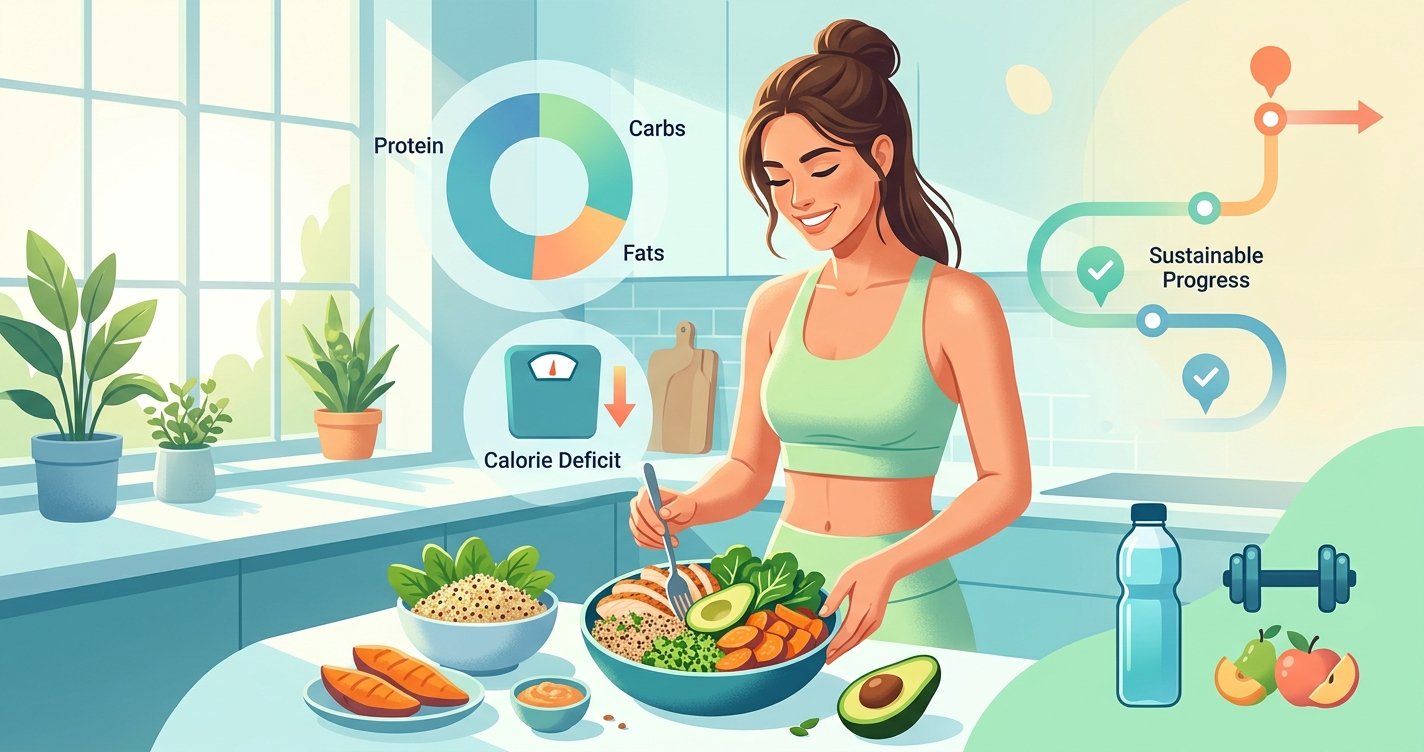
Feeling overwhelmed by the sheer volume of fat loss advice out there? From restrictive diets to extreme workout routines, it's easy to get lost in the noise and feel like sustainable progress is an impossible dream. But what if we told you that achieving and maintaining your ideal body composition doesn't have to be a battle of deprivation and frustration? The secret lies in understanding two fundamental, evidence-based principles: a smart calorie deficit and balanced macronutrient intake. Let's ditch the quick fixes and dive into a friendly, practical guide to sustainable fat loss that truly works.
The Core Principle: Understanding the Calorie Deficit
At its heart, fat loss boils down to one undeniable truth: you must consume fewer calories than your body expends. This is known as creating a calorie deficit. Think of your body as a car. If you put less fuel in than it uses, it starts drawing from its stored reserves – in this case, body fat. It sounds simple, and in theory, it is. But the 'how' and 'how much' are where people often stumble. this excellent wellness product
What is a Calorie Deficit, Really?
Your body constantly burns calories just to stay alive (Basal Metabolic Rate or BMR) and for daily activities (walking, working, exercising). This total daily energy expenditure (TDEE) is the number of calories you need to maintain your current weight. To lose fat, you need to eat below your TDEE consistently.
How to Calculate Your Starting Point
While precise measurements require lab equipment, you can get a good estimate of your TDEE using online calculators that factor in your age, gender, weight, height, and activity level. Start by finding your estimated TDEE. Then, aim to create a moderate deficit.
Why a Moderate Deficit is Key for Sustainability
This is crucial. A drastic calorie cut might lead to rapid initial weight loss, but it's often unsustainable, leads to muscle loss, nutrient deficiencies, fatigue, and can even slow your metabolism. A moderate deficit – typically 300-500 calories below your TDEE – allows for steady, sustainable fat loss (about 1-2 pounds per week) without feeling constantly starved or compromising your energy levels and muscle mass. This pace is much more realistic for long-term success and body recomposition.
Macronutrients: Your Allies in Fat Loss
Once you understand the calorie deficit, the next layer of optimization involves your macronutrients: protein, carbohydrates, and fats. These aren't just calories; they are the building blocks and fuel sources for your body, each playing a unique role in your fat loss journey.
Protein: The Satiety & Muscle Preserver
If there's one macronutrient to prioritize for fat loss, it's protein. Here's why:
- Satiety: Protein is incredibly filling, helping you feel satisfied and reduce cravings.
- Muscle Preservation: When in a calorie deficit, your body can break down muscle for energy. Adequate protein intake helps protect your hard-earned muscle, ensuring that the weight you lose is primarily fat.
- Thermic Effect of Food (TEF): Protein has a higher TEF than carbs or fats, meaning your body burns more calories digesting and processing it.
Aim for around 0.7-1 gram of protein per pound of body weight (or 1.6-2.2 grams per kilogram). Good sources include lean meats, poultry, fish, eggs, dairy, legumes, and protein supplements.
Carbohydrates: Fueling Your Body Smartly
Carbohydrates have gotten a bad rap, but they are your body's preferred energy source. The key is choosing the right kind:
- Complex Carbs: Found in whole grains, fruits, and vegetables, these are rich in fiber, providing sustained energy and promoting gut health.
- Simple Carbs: Sugary drinks, candies, and refined grains offer quick energy spikes followed by crashes, and often lack nutrients.
Carbohydrates fuel your workouts and daily activities. Don't cut them out entirely unless medically advised; instead, focus on quality and timing. After protein, carbs will typically make up the largest portion of your remaining calories.
Fats: Essential for Health and Hormones
Dietary fats are vital for hormone production, nutrient absorption, and overall health. They also contribute to satiety. However, fats are calorie-dense (9 calories per gram compared to 4 for protein and carbs), so moderation is key.
- Healthy Fats: Avocados, nuts, seeds, olive oil, and fatty fish (like salmon) are excellent sources.
- Unhealthy Fats: Trans fats (found in many processed foods) should be avoided.
Aim for 20-30% of your total daily calories from healthy fats.
Finding Your Macro Balance: A Practical Approach
Once you've set your calorie target and prioritized protein, you can allocate the remaining calories between carbs and fats based on your preferences and activity levels. Some people thrive on higher carbs, others on higher fats. There's no one-size-fits-all, but the general principle is: Protein first, then adjust carbs and fats to fit your calorie target and personal preference.
- Example Split: 30-40% Protein, 30-40% Carbs, 20-30% Fat. This is a common and effective starting point.
Beyond Numbers: Practical Strategies for Success
While calories and macros are the scientific backbone, integrating them into your daily life requires practical strategies.
Food Quality Matters: Prioritizing Whole Foods
You could technically hit your calorie and macro targets eating only highly processed foods, but that won't fuel your body effectively or provide essential micronutrients. Prioritize:
- Lean Proteins: Chicken breast, fish, tofu, lentils.
- Complex Carbs: Oats, brown rice, quinoa, sweet potatoes, whole-grain bread.
- Plenty of Fruits & Vegetables: Packed with vitamins, minerals, and fiber, they are low in calories and high in volume, helping you feel full.
- Healthy Fats: Nuts, seeds, avocado, olive oil.
This approach naturally leads to better satiety, improved health, and a more sustainable way of eating.
Meal Timing & Frequency: What the Evidence Says
Contrary to popular belief, there's no magic to eating 6 small meals a day or strictly adhering to specific eating windows (unless you enjoy intermittent fasting). The most important factor is hitting your daily calorie and macro targets. Find a meal frequency that fits your lifestyle, keeps you satisfied, and allows you to be consistent.
Hydration and Fiber: The Unsung Heroes
Don't underestimate these two! Drinking plenty of water helps with satiety, metabolism, and overall bodily functions. Fiber, found in fruits, vegetables, and whole grains, also aids satiety, digestion, and blood sugar control – all crucial for fat loss.
The Importance of Tracking (and When to Stop)
Initially, tracking your food intake (using an app like MyFitnessPal or Cronometer) is invaluable. It helps you learn about portion sizes, the caloric content of foods, and your typical macro distribution. This awareness is powerful. However, you don't need to track forever. Once you've developed a good understanding and consistent habits, you can transition to a more intuitive eating approach, checking in with tracking periodically to ensure you're still on track.
Navigating Challenges & Staying Motivated
The journey to sustainable fat loss isn't always linear. There will be plateaus, slip-ups, and moments of doubt. That's perfectly normal.
Dealing with Plateaus: When to Adjust
If your fat loss stalls for 2-3 weeks, it's time to re-evaluate. Your body adapts. You might need to slightly reduce calories further, increase your activity, or try a refeed day (a planned day at maintenance calories) to boost metabolism and mental freshness. Avoid drastic cuts; small, incremental changes are best.
The Role of Exercise
While diet is paramount for fat loss, exercise is your powerful ally. Incorporating regular strength training helps preserve and build muscle, which boosts your metabolism. Cardiovascular exercise helps burn additional calories and improves heart health. Find activities you enjoy and make them a consistent part of your routine.
Mindset & Patience: It's a Marathon, Not a Sprint
Sustainable fat loss is a journey of consistency, not perfection. There will be days you overeat or miss a workout. Forgive yourself, learn from it, and get back on track. Celebrate small victories, focus on progress over perfection, and remember that true transformation takes time. Cultivate patience, self-compassion, and a growth mindset.
Your Path to Lasting Change
Sustainable fat loss isn't about magical diets or punishing workouts. It's about understanding and consistently applying the fundamentals: a moderate calorie deficit and a smart balance of protein, carbs, and fats, all built on a foundation of whole, nutritious foods. By adopting these evidence-based principles, you're not just losing weight; you're building a healthier relationship with food, developing sustainable habits, and creating a stronger, more vibrant you. You've got this!