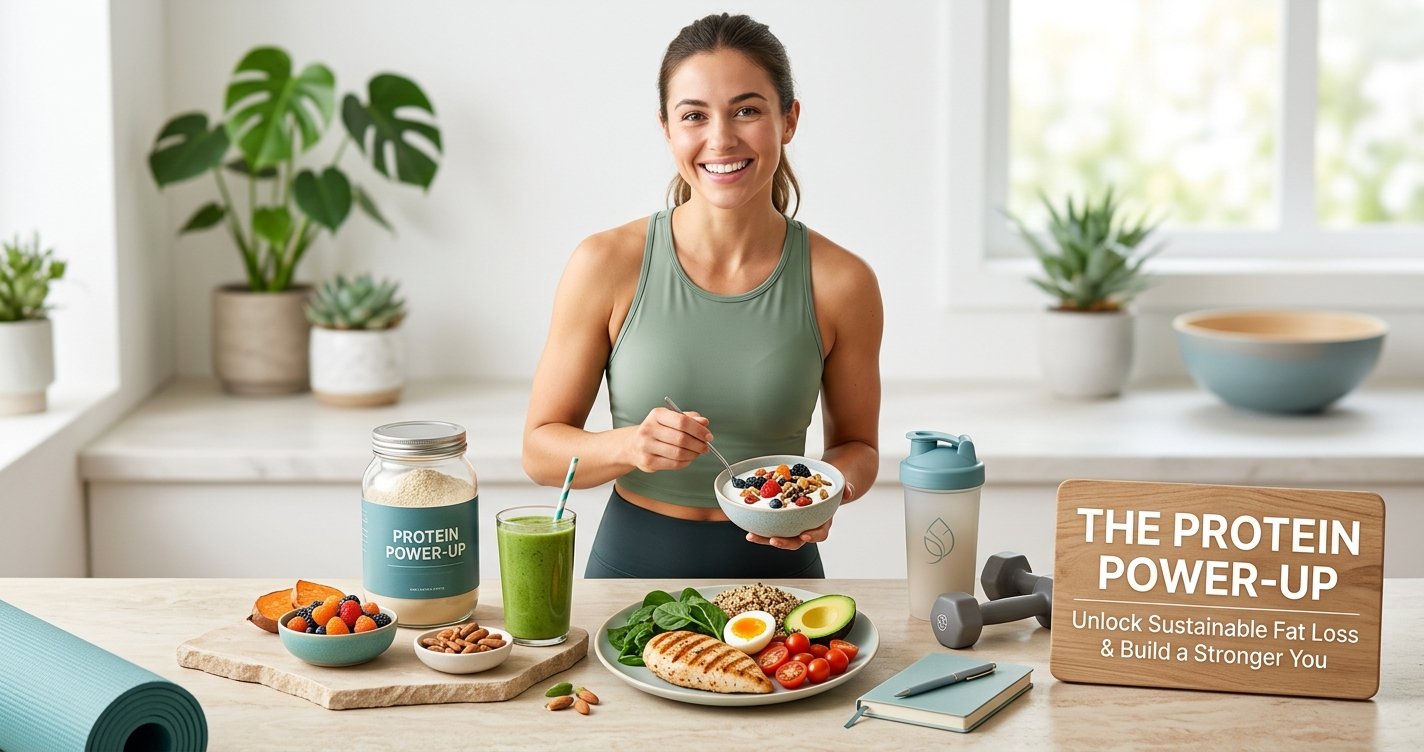
Are you on a journey to shed those extra pounds, feel more energetic, and build a healthier, stronger you? If so, you've likely heard a lot about diet and exercise. But there's one nutrient that often doesn't get the spotlight it deserves, yet plays a monumental role in effective, sustainable fat loss: protein. Far from just a muscle-builder for bodybuilders, protein is your secret weapon for feeling full, burning more calories, and preserving your precious muscle mass during weight loss.
Forget restrictive diets and endless cardio. By understanding and strategically incorporating more protein into your daily meals, you can transform your fat loss efforts from a frustrating struggle into an empowering, delicious, and highly effective journey. Let's dive into the science-backed benefits and practical strategies that make protein the MVP of your fat loss game. this excellent wellness product
The Satiety Secret: How Protein Keeps You Feeling Full and Satisfied
One of the biggest hurdles in any fat loss plan is battling hunger. Cravings and a constant feeling of emptiness can derail even the most determined individual. This is where protein truly shines. Protein is renowned for its incredible ability to promote satiety – that wonderful feeling of fullness and satisfaction after a meal.
Here's why it works: when you consume protein, it triggers the release of specific hormones in your gut, like GLP-1 and cholecystokinin (CCK), which signal to your brain that you've eaten enough. It also helps to suppress ghrelin, the 'hunger hormone.' Compared to carbohydrates and fats, protein has a significantly higher satiety index, meaning you feel fuller for longer with fewer calories. This natural appetite suppression can lead to a spontaneous reduction in overall calorie intake throughout the day, making fat loss feel less like a battle and more like a natural progression.
Fueling the Furnace: Protein's Thermic Effect on Metabolism
Imagine a nutrient that actually helps you burn more calories just by digesting it. Sounds too good to be true? Not with protein! This phenomenon is known as the Thermic Effect of Food (TEF), also sometimes called dietary-induced thermogenesis. It refers to the energy your body expends to digest, absorb, and metabolize the nutrients from your food.
Out of the three macronutrients (protein, carbohydrates, and fats), protein has by far the highest TEF. While fats have a TEF of about 0-3% and carbohydrates around 5-10%, protein boasts a TEF of 20-30%. This means that for every 100 calories of protein you consume, your body uses 20-30 of those calories just to process it! Over the course of a day, and especially over weeks and months, this 'metabolic advantage' adds up, contributing to a higher overall daily calorie expenditure and making fat loss more efficient.
Muscle Matters: Preserving Lean Mass During Fat Loss
When you're aiming for fat loss, the goal isn't just to lose weight; it's to lose fat while preserving as much lean muscle mass as possible. Why is this so crucial? Because muscle is metabolically active tissue, meaning it burns more calories at rest than fat does. If you lose muscle along with fat, your resting metabolism can slow down, making it harder to sustain weight loss and easier to regain weight in the future – a common pitfall of many conventional diets.
Adequate protein intake is absolutely essential for preserving muscle mass during a calorie deficit. When you eat less, your body might start breaking down muscle for energy. Protein provides the necessary amino acids, the building blocks of muscle, to signal to your body to repair and maintain existing muscle tissue, and even build new muscle if combined with resistance training. This ensures that the weight you're losing is predominantly fat, keeping your metabolism humming and helping you achieve a leaner, more toned physique.
Beyond the Basics: Optimal Protein Intake for Fat Loss
So, if protein is so amazing, how much should you actually be eating? The Recommended Dietary Allowance (RDA) for protein is 0.8 grams per kilogram of body weight, but this is a minimum to prevent deficiency, not necessarily optimal for fat loss or muscle preservation.
For individuals actively pursuing fat loss, especially those who are physically active, research consistently suggests a higher intake. A good general guideline is to aim for 1.6 to 2.2 grams of protein per kilogram of body weight per day. For example, if you weigh 70 kg (about 154 lbs), this would translate to roughly 112 to 154 grams of protein daily. If you're very active or have a higher body fat percentage, you might even benefit from going slightly higher, using your target body weight or lean body mass for calculation.
Spreading your protein intake throughout the day, rather than consuming it all in one meal, also seems to be beneficial for muscle protein synthesis and satiety. Aim for 20-40 grams of protein per main meal.
Smart Protein Sources: Making Delicious, Nutrient-Dense Choices
Boosting your protein intake doesn't have to be bland or boring. There's a vast array of delicious and nutritious protein sources available. Focus on whole, unprocessed foods to get the most nutritional bang for your buck.
- Lean Meats: Chicken breast, turkey, lean beef (sirloin, round), pork loin.
- Fish and Seafood: Salmon, tuna, cod, shrimp, tilapia – excellent sources of lean protein and often omega-3 fatty acids.
- Eggs: A complete protein, versatile, and affordable.
- Dairy: Greek yogurt, cottage cheese, milk, whey protein (great for smoothies).
- Legumes: Lentils, chickpeas, black beans – good plant-based protein, also rich in fiber.
- Nuts and Seeds: Almonds, peanuts, chia seeds, flax seeds (in moderation due to calorie density).
- Tofu and Tempeh: Excellent plant-based protein options.
Remember, variety is key to ensuring you get a full spectrum of essential amino acids and other vital nutrients.
Practical Tips for Boosting Your Protein Intake
Ready to put protein to work for you? Here are some actionable strategies to easily increase your daily intake:
- Start with a Protein-Packed Breakfast: Instead of sugary cereals, opt for eggs, Greek yogurt, cottage cheese, or a protein smoothie.
- Add Protein to Every Meal: Make sure each main meal includes a significant protein source. Think chicken with your salad, fish with your veggies, or lentils in your soup.
- Smart Snacking: Ditch the chips and cookies for protein-rich snacks like a handful of almonds, a hard-boiled egg, a small container of Greek yogurt, or cheese sticks.
- Utilize Protein Powder: A quick and convenient way to boost protein, especially post-workout or in smoothies.
- Plan Ahead: Meal prepping can help ensure you have protein-rich options readily available throughout the week.
- Prioritize Protein on Your Plate: When serving yourself, fill a significant portion of your plate with your chosen protein source first.
Conclusion: Your High-Protein Path to Sustainable Fat Loss
Protein isn't just a trend; it's a fundamental pillar of effective and sustainable fat loss. By harnessing its power to enhance satiety, boost your metabolism, and preserve muscle mass, you're not just losing weight – you're transforming your body composition, improving your health, and building a stronger, more resilient you.
Embrace protein as your ally. Make conscious choices to include it in every meal, experiment with different sources, and watch as your fat loss journey becomes more manageable, more satisfying, and ultimately, more successful. This isn't about deprivation; it's about intelligent nutrition that empowers you to reach your goals and maintain them for life.