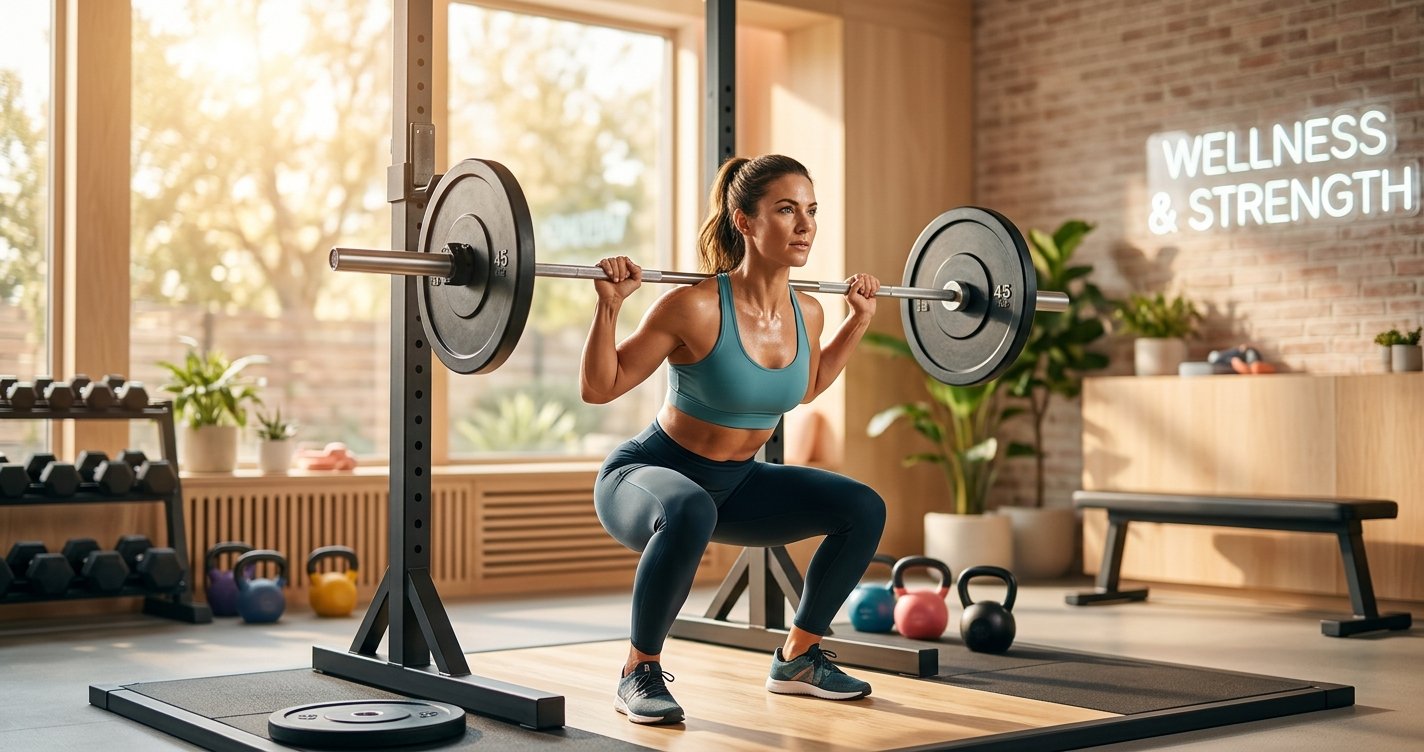
When it comes to fat loss, what's the first thing that comes to mind? For many, it's endless hours on the treadmill or elliptical, sweating through cardio sessions. While cardio certainly has its place in a healthy lifestyle, there's a powerful, often overlooked secret weapon that can revolutionize your fat loss journey and completely transform your physique: strength training. Forget the misconception that lifting weights is just for bodybuilders or will make you "bulky." The truth is, incorporating strength training into your routine is one of the most effective, evidence-based strategies for shedding unwanted fat, building a lean, strong body, and boosting your metabolism around the clock.
Ready to discover how lifting weights can be your ultimate ally in achieving sustainable fat loss and a healthier, more confident you? Let's dive in!
Why Strength Training is Your Fat Loss Secret Weapon
Strength training does so much more than just build muscle. It sets off a cascade of physiological benefits that directly contribute to efficient and lasting fat loss.
The Metabolic Powerhouse: Muscle Burns More Calories
Here's a game-changer: muscle tissue is metabolically more active than fat tissue. This means that even when you're resting, your muscles are burning more calories just to maintain themselves. The more muscle you have, the higher your Basal Metabolic Rate (BMR) becomes. A higher BMR means your body is burning more calories 24/7, even while you sleep or binge-watch your favorite show. So, by building muscle through strength training, you're essentially turning your body into a more efficient fat-burning machine.
The "Afterburn Effect" (EPOC)
Ever felt exhausted but energized after a tough workout? That's partly due to something called EPOC, or Excess Post-exercise Oxygen Consumption. Strength training, especially intense sessions, creates a significant "afterburn effect." This means your body continues to burn calories at an elevated rate for hours, sometimes even days, after you've finished your workout. Your body uses extra energy to repair muscle tissue, restore oxygen levels, and bring everything back to normal. This extended calorie burn is a huge advantage for fat loss that simple steady-state cardio often can't match.
Sculpting a Stronger You: Body Recomposition
Weight loss often focuses purely on the number on the scale. But true transformation is about body recomposition – changing your body's ratio of fat to muscle. Strength training excels at this. As you build muscle and lose fat, your body becomes leaner, firmer, and more toned. You might even find that your weight stays relatively similar while your clothes fit better, and your shape dramatically improves. This is because muscle is denser than fat. Focusing on body recomposition leads to a healthier, more aesthetic physique and often greater satisfaction than just chasing a lower number on the scale.
Busting the "Bulky" Myth: Lean & Strong, Not Big
One of the biggest fears, especially for women, is that lifting weights will lead to an undesirable "bulky" physique. Let's put that myth to rest once and for all.
Hormones & Physiology: Why It's Different for Most
Building significant muscle mass, like that of a competitive bodybuilder, requires a very specific training regimen, an extremely high calorie intake, and often, genetic predispositions or hormonal assistance that most people (especially women) simply don't have. Women, in particular, have much lower levels of testosterone, the primary hormone responsible for muscle growth. What strength training will do for you is create lean, defined muscle that gives you a strong, athletic, and incredibly confident look. You'll become toned and firm, not "bulky." Embrace the strength!
Your Blueprint for Success: Getting Started with Strength Training
Ready to pick up some weights? Here's how to start building your effective fat loss strategy.
Frequency: How Often Should You Lift?
For beginners, 2-3 full-body strength training sessions per week are an excellent starting point. This allows ample time for muscle recovery and growth. As you progress, you can increase to 3-4 sessions, potentially splitting workouts to focus on different muscle groups.
Exercise Selection: Compound Movements are King
Focus on compound exercises – movements that involve multiple joints and muscle groups working together. These are incredibly efficient for calorie burn, muscle engagement, and building functional strength. Think:
- Squats: Barbell, dumbbell, goblet, bodyweight
- Deadlifts: Conventional, sumo, Romanian
- Presses: Overhead press (shoulder), bench press (chest), push-ups
- Rows: Barbell rows, dumbbell rows, pull-ups (assisted if needed)
- Lunges: Forward, reverse, walking
Supplement these with isolation exercises as needed, but prioritize the big lifts.
Progressive Overload: The Secret to Continuous Progress
To keep getting stronger and seeing results, you need to challenge your muscles consistently. This is called progressive overload. It means gradually increasing the demands on your body over time. This could be:
- Lifting heavier weights
- Doing more repetitions with the same weight
- Performing more sets
- Decreasing rest time between sets
- Improving your form and control
Without progressive overload, your muscles won't have a reason to adapt and grow stronger, which is key for fat loss.
Form Over Everything: Lift Smart, Not Just Heavy
Proper form is paramount. Incorrect form not only reduces the effectiveness of an exercise but dramatically increases your risk of injury. Start with lighter weights to master the movement pattern. Don't hesitate to watch instructional videos, use mirrors, or even consider hiring a certified personal trainer for a few sessions to learn the ropes. Quality over quantity, always.
Beyond the Weights: Nutrition & Recovery for Optimal Fat Loss
Strength training is incredibly powerful, but it's only one piece of the fat loss puzzle. To maximize your results, you need to pay attention to what you eat and how you recover.
Protein: Your Muscle-Building & Satiety Ally
When trying to lose fat, adequate protein intake is crucial. Protein helps preserve existing muscle mass while you're in a calorie deficit, supports muscle repair and growth after training, and is highly satiating, helping you feel fuller for longer. Aim for 0.7-1 gram of protein per pound of body weight per day.
The Calorie Deficit: Non-Negotiable for Fat Loss
No matter how much you strength train, fat loss ultimately comes down to consuming fewer calories than your body burns. Strength training helps by increasing your calorie expenditure and BMR, making it easier to achieve this deficit. Focus on whole, unprocessed foods, lean proteins, healthy fats, and plenty of fruits and vegetables. Avoid crash diets; a moderate, sustainable deficit is key.
Sleep & Stress: The Unsung Heroes of Recovery
Your muscles don't grow in the gym; they grow and repair when you're resting. Aim for 7-9 hours of quality sleep per night. Chronic stress can also hinder fat loss by increasing cortisol levels, which can promote fat storage, especially around the midsection. Prioritize stress management techniques like meditation, yoga, or spending time in nature.
Sample Beginner Strength Training Routine (Full Body)
Here’s a simple full-body routine you can do 2-3 times a week, with at least one rest day between sessions. Focus on controlled movements and proper form.
- Warm-up (5-10 minutes): Light cardio (jogging, cycling) and dynamic stretches (arm circles, leg swings).
- Workout:
- Goblet Squat: 3 sets of 8-12 repetitions
- Dumbbell Bench Press (or Push-ups): 3 sets of 8-12 repetitions
- Dumbbell Row: 3 sets of 8-12 repetitions per arm
- Overhead Dumbbell Press: 3 sets of 8-12 repetitions
- Plank: 3 sets, hold for 30-60 seconds
- Cool-down (5-10 minutes): Static stretches, holding each for 20-30 seconds (e.g., hamstring stretch, triceps stretch).
As you get stronger, gradually increase the weight or reps (progressive overload!).
Staying Consistent & Celebrating Your Journey
Fat loss and body transformation are marathon, not a sprint. Consistency is far more important than intensity in the long run. There will be days you don't feel like training, but showing up, even for a shorter session, keeps the momentum going. Celebrate non-scale victories – a stronger lift, clothes fitting better, more energy, improved mood, or simply feeling more confident in your skin. These are often more motivating than the number on the scale.
Ready to Get Stronger, Leaner, and Healthier?
Embracing strength training is one of the most empowering decisions you can make for your fat loss journey and overall health. It's not just about losing weight; it's about building resilience, boosting your metabolism, sculpting a body you're proud of, and feeling incredibly strong both inside and out. Ditch the endless cardio and pick up those weights. Your body will thank you!