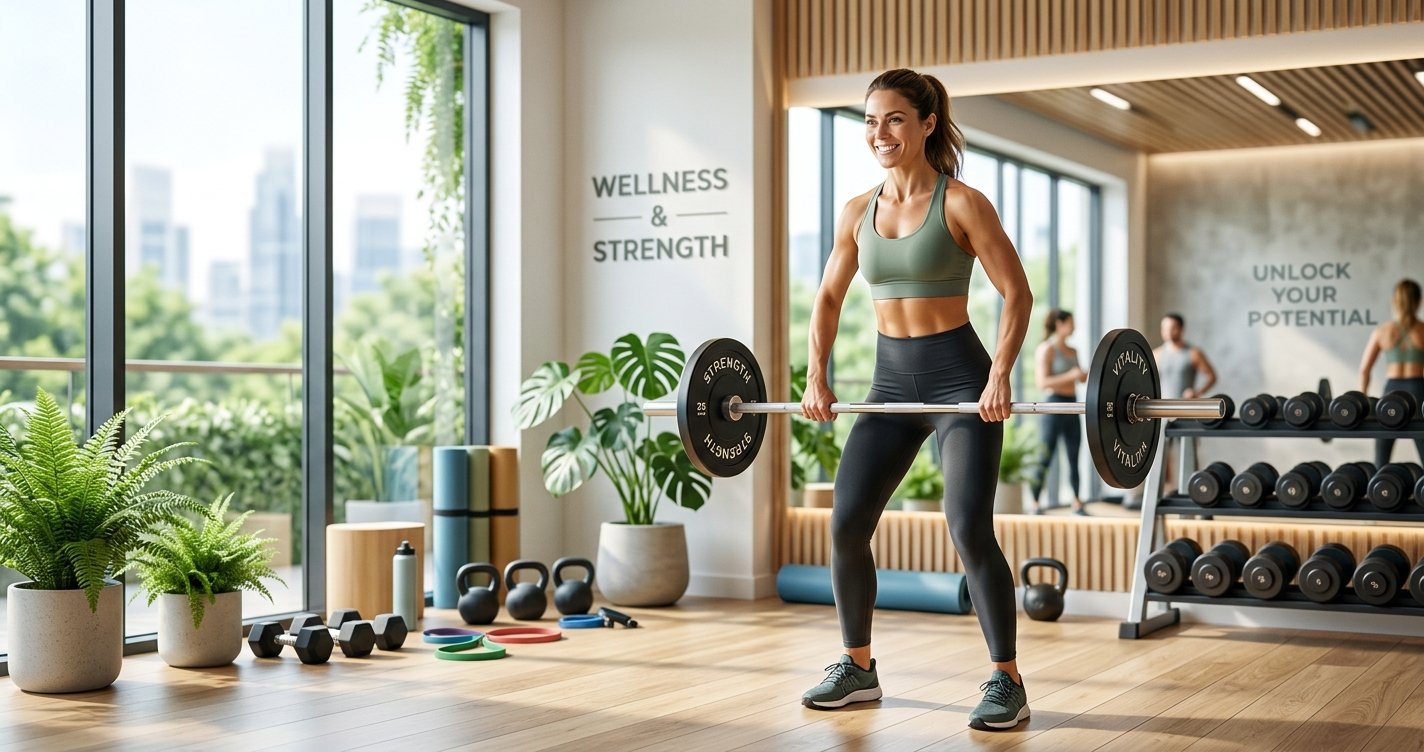
Unlock Your Fat Loss Potential: The Power of Strength Training for a Leaner You
Are you tired of endless cardio sessions and restrictive diets that leave you feeling drained, hungry, and still not seeing the fat loss results you crave? It’s a common frustration, and one that often stems from focusing on the wrong tools. What if we told you there’s a powerful, scientifically-backed method that not only helps you shed stubborn fat but also sculpts your body, boosts your metabolism, and enhances your overall health? Enter strength training.
Often misunderstood and sometimes intimidating, strength training (also known as resistance training) is your secret weapon in the fight against fat. It’s not just for bodybuilders or elite athletes; it’s for anyone looking to transform their body composition, feel stronger, and achieve sustainable fat loss. Let’s dive into why lifting weights is the game-changer you’ve been searching for. this excellent wellness product
Why Strength Training is Your Secret Weapon for Fat Loss
Forget the myth that cardio is king for fat loss. While it has its place, strength training offers unique benefits that directly target fat reduction and body recomposition.
Boost Your Metabolism, Even at Rest
One of the most significant advantages of strength training is its impact on your metabolism. Muscle tissue is metabolically active, meaning it burns more calories at rest than fat tissue does. When you build muscle through strength training, you effectively turn your body into a more efficient, fat-burning machine 24/7. This increase in your Resting Metabolic Rate (RMR) is crucial for long-term fat loss, making it easier to maintain a calorie deficit without feeling deprived.
Sculpt a Leaner Physique
Losing weight is one thing, but losing fat while maintaining or building muscle is how you achieve a truly lean and toned physique. Strength training allows for body recomposition – simultaneously losing fat and gaining muscle. This means you might not see drastic changes on the scale immediately, but your clothes will fit better, your body will look firmer, and your shape will transform in ways cardio alone simply can't achieve. You’ll develop definition and strength that makes you look and feel incredible.
Burn More Calories During and After Your Workout
While a vigorous cardio session might burn more calories *during* the activity itself, strength training has a powerful 'afterburn' effect known as Excess Post-exercise Oxygen Consumption (EPOC). After a challenging weightlifting session, your body continues to burn extra calories for hours, and sometimes even days, as it recovers and repairs muscle tissue. This sustained calorie expenditure contributes significantly to your overall fat loss efforts.
Improve Overall Health and Well-being
Beyond aesthetics, strength training offers a multitude of health benefits that support a healthier lifestyle crucial for sustained fat loss. It improves bone density, reducing the risk of osteoporosis, enhances joint stability, and can significantly improve insulin sensitivity, helping your body manage blood sugar more effectively. Furthermore, the mental boost from feeling stronger, achieving new personal bests, and seeing your body transform can be incredibly empowering, reducing stress and improving mood.
Getting Started: Your Strength Training Journey
Ready to embrace the weights? Here’s how to begin your strength training journey safely and effectively.
Foundation First: Form and Basics
Before you lift heavy, focus on mastering proper form. Incorrect form can lead to injury and reduce the effectiveness of your workout. Start with lighter weights or even just your bodyweight to learn the movement patterns. Consider consulting a certified personal trainer for a few sessions to ensure you're performing exercises correctly. Focus on foundational compound movements that work multiple muscle groups:
- Squats
- Deadlifts (or Romanian deadlifts)
- Bench Press (or Push-ups)
- Overhead Press
- Rows
Progressive Overload: The Key to Progress
To continually build muscle and get stronger, you must challenge your muscles to do more over time. This principle is called progressive overload. It means gradually increasing the demands on your body. This can be done by:
- Increasing the weight you lift
- Doing more repetitions (reps) with the same weight
- Performing more sets
- Decreasing rest time between sets
- Improving your form and control
Without progressive overload, your muscles won't have a reason to adapt and grow, and your fat loss progress may stall.
How Often and What Exercises?
For most beginners, 2-4 strength training sessions per week are ideal. A full-body workout routine performed 2-3 times a week is an excellent starting point, allowing adequate rest for muscle recovery. As you advance, you might consider a split routine (e.g., upper/lower body split). Each session should typically last 45-75 minutes, including warm-up and cool-down.
Don't Forget Recovery and Nutrition
Strength training is only one piece of the puzzle. For optimal fat loss and muscle growth, you need to prioritize:
- Protein Intake: Aim for 0.7-1 gram of protein per pound of body weight daily to support muscle repair and growth.
- Sleep: 7-9 hours of quality sleep per night is crucial for hormonal balance and muscle recovery.
- Hydration: Drink plenty of water throughout the day to support metabolic functions and performance.
Common Myths Debunked
Let's address some common misconceptions that often deter people from strength training.
"Bulking Up" vs. "Toning"
Many, especially women, fear that lifting weights will make them "bulky." This is a pervasive myth! Building significant muscle mass like a bodybuilder requires specific, intense training, a highly specialized diet, and often, hormonal advantages that most women don't possess naturally. What you're likely aiming for when you say "toned" is actually a combination of increased muscle mass and decreased body fat, which is precisely what strength training helps you achieve. You'll become lean, strong, and sculpted, not bulky.
Cardio vs. Weights: A Partnership, Not a Rivalry
It's not about choosing one over the other; it's about understanding their roles. While strength training is superior for body recomposition and RMR boost, cardio is excellent for cardiovascular health, endurance, and additional calorie expenditure. A balanced approach that incorporates both strength training and moderate cardio (e.g., 2-3 strength sessions and 1-2 cardio sessions per week) will yield the best results for overall health and fat loss.
Making It Sustainable: Tips for Long-Term Success
Fat loss is a journey, not a destination. Here’s how to make strength training a lasting part of your lifestyle.
Start Small, Stay Consistent
Don't try to do too much too soon. Begin with a manageable routine that you can stick to consistently. Two full-body workouts a week are far more effective than five intense sessions you burn out on after two weeks. Consistency is the true key to long-term success.
Find What You Enjoy
Strength training doesn't have to be limited to barbells and dumbbells. Explore different modalities like kettlebells, resistance bands, bodyweight exercises, or even certain fitness classes that incorporate resistance. Finding what you enjoy will make it easier to stay motivated and committed.
Track Your Progress
Keep a workout journal to log your exercises, sets, reps, and weights. Seeing your strength improve over time is incredibly motivating. Beyond the scale, celebrate non-scale victories like increased strength, better fitting clothes, more energy, and improved mood. These are powerful indicators that your body is transforming in positive ways.
Embrace Your Strength, Embrace Your Transformation
Strength training is more than just a workout; it’s an investment in your body, your health, and your confidence. By embracing the power of resistance, you’re not just losing fat; you’re building a stronger, leaner, and more resilient version of yourself. So, ditch the endless cardio and restrictive diets, pick up those weights, and unlock your true fat loss potential. Your journey to a stronger, leaner you starts now!