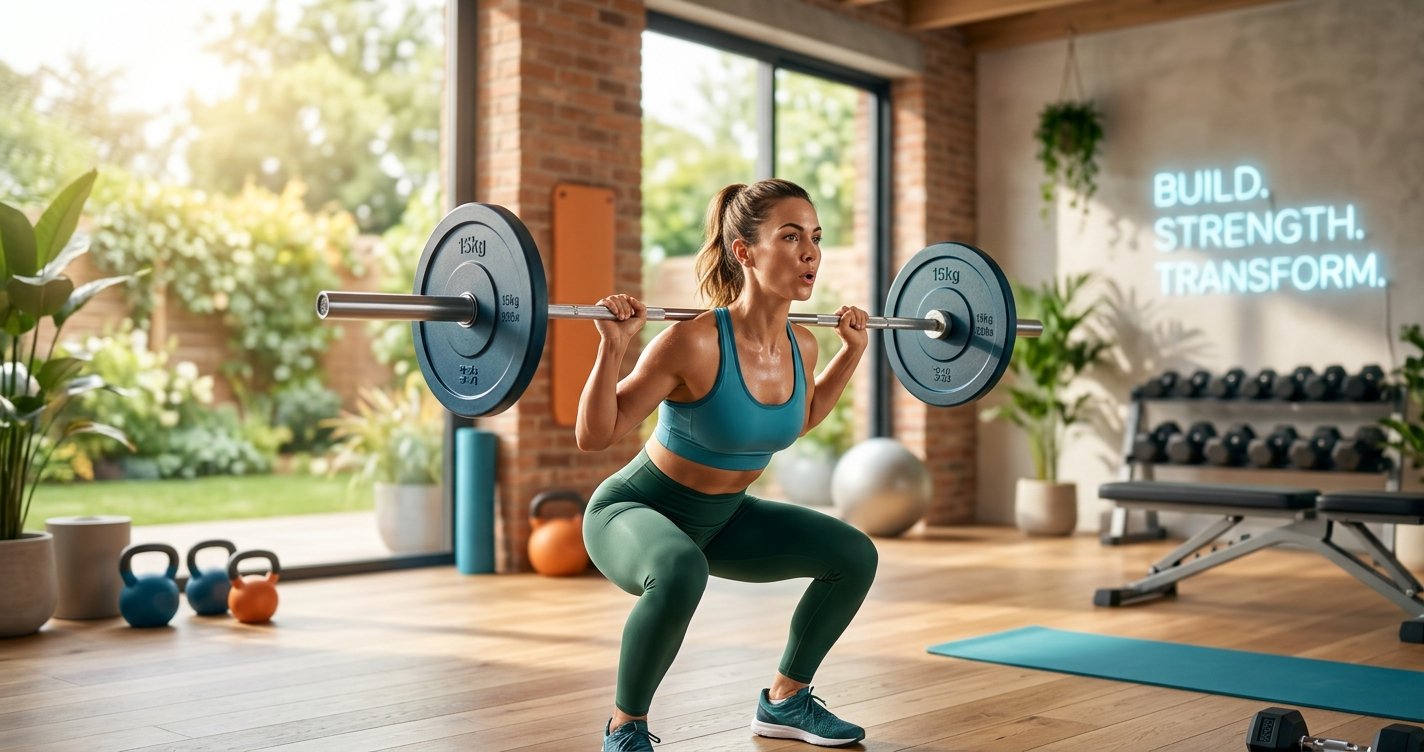
Are you tired of the endless cycle of restrictive diets and grueling cardio that promise quick fat loss but deliver fleeting results? You're not alone. Many people embark on their fat loss journey with the best intentions, only to find themselves frustrated by slow progress, muscle loss, and the inevitable rebound weight gain. What if there was a more sustainable, empowering, and effective way to not only lose fat but also build a stronger, healthier, and more confident you?
Enter strength training. Often overlooked in favor of traditional 'diet and cardio' approaches, resistance training is arguably the most potent tool in your fat loss arsenal. It's not just about building big muscles; it's about transforming your metabolism, reshaping your body composition, and creating a sustainable path to long-term health and vitality. This isn't a quick fix, but a powerful, evidence-based strategy that will change the way you look, feel, and think about your body. this excellent wellness product
Beyond the Treadmill: Why Strength Training is Your Fat Loss Secret Weapon
For decades, the conventional wisdom for fat loss has been 'eat less, move more,' often translated into severe calorie restriction and endless hours on the treadmill. While cardio certainly has its place for cardiovascular health, it’s not the most efficient or sustainable strategy for significant fat loss, especially when done in isolation. Here's why strength training stands out:
The Metabolic Advantage: Muscle vs. Fat
Think of your body as an engine. Muscle tissue is far more metabolically active than fat tissue. This means that a pound of muscle burns more calories at rest than a pound of fat. By increasing your muscle mass through strength training, you effectively turn your body into a more efficient fat-burning machine, even when you're just sitting on the couch or sleeping. This boost to your Basal Metabolic Rate (BMR) is a game-changer for sustainable fat loss, making it easier to maintain a calorie deficit without feeling constantly deprived.
More Than Just Calories: The Afterburn Effect (EPOC)
Unlike steady-state cardio, which primarily burns calories during the activity itself, strength training creates a significant 'afterburn effect,' scientifically known as Excess Post-exercise Oxygen Consumption (EPOC). After an intense strength training session, your body continues to burn extra calories for hours, and sometimes even days, as it works to repair muscle tissue, restore energy stores, and return to its pre-exercise state. This prolonged calorie expenditure adds up, contributing significantly to your overall fat loss efforts beyond just the calories burned during your workout.
Redefining Your Body: The Power of Body Composition
When you focus solely on the number on the scale, you often miss the bigger picture. Weight is just a number, but body composition – the ratio of fat to lean muscle mass in your body – is what truly defines your physique and health.
The Scale Lies: Why Your Weight Isn't the Whole Story
Imagine two people who weigh exactly the same. One might have a high percentage of body fat and low muscle mass, while the other might have a lower body fat percentage and higher muscle mass. The second person will not only look leaner and more 'toned' but will also be metabolically healthier. As you incorporate strength training, you might notice the scale moving slower, or even staying the same, even though your clothes fit better and your body is visibly changing. This is often because you're losing fat and simultaneously gaining muscle, which is denser than fat. Don't let the scale dictate your success; focus on how you feel, how your clothes fit, and your strength gains.
Sculpting Your Physique: Achieving That "Toned" Look
Many people aspire to a 'toned' physique, but what does that actually mean? It means having enough muscle definition to give your body shape and firmness, without excessive body fat obscuring it. Cardio alone won't achieve this; it might reduce overall body fat, but it won't build the underlying muscle that creates definition. Strength training, however, actively builds and shapes your muscles, creating the strong, lean, and aesthetically pleasing physique you're aiming for. It's about building curves in the right places and achieving a strong, athletic look.
Your Strength Training Blueprint: Getting Started Right
Ready to embrace the power of strength training? Here's how to get started effectively and safely:
Foundation First: Compound Movements Are Your Best Friends
Focus on compound exercises that work multiple muscle groups simultaneously. These are incredibly efficient, burn more calories, and elicit a greater hormonal response conducive to muscle building and fat loss. Examples include:
- Squats: Works glutes, quads, hamstrings, core.
- Deadlifts: Works almost every muscle in your body, especially back, glutes, hamstrings.
- Bench Press (or Push-ups): Works chest, shoulders, triceps.
- Overhead Press: Works shoulders, triceps, core.
- Rows (e.g., Bent-over Rows, Pull-ups): Works back, biceps.
- Lunges: Works glutes, quads, hamstrings, core.
Start with bodyweight variations or light weights to master your form. Proper form is paramount to prevent injury and maximize muscle activation.
Progressive Overload: The Key to Continued Progress
To keep building muscle and getting stronger, you need to continually challenge your muscles. This principle is called progressive overload. It means gradually increasing the demands on your body over time. This can be done by:
- Increasing the weight: The most common method.
- Increasing repetitions: Doing more reps with the same weight.
- Increasing sets: Doing more total sets of an exercise.
- Decreasing rest time: Between sets.
- Improving form: Performing the movement more precisely and with better control.
Without progressive overload, your muscles won't have a reason to adapt and grow.
How Often and What to Do: A Practical Schedule
For optimal fat loss and muscle gain, aim for 3-4 strength training sessions per week. This allows for adequate muscle recovery and growth. A common and effective split for beginners and intermediates is a full-body workout 3 times a week or an upper/lower split:
- Option 1 (Full Body): Train 3 non-consecutive days (e.g., Monday, Wednesday, Friday), hitting all major muscle groups each session.
- Option 2 (Upper/Lower Split): Train 4 days a week (e.g., Monday: Upper, Tuesday: Lower, Thursday: Upper, Friday: Lower).
Each session should last 45-75 minutes, including a warm-up and cool-down. Remember, quality over quantity! Focus on making each set and rep count.
Fueling Your Transformation: Nutrition for Muscle and Fat Loss
You can't out-train a bad diet. Nutrition plays a crucial role in both fat loss and muscle building. It's about fueling your body for performance and recovery, not just restriction.
Protein Power: Essential for Muscle Repair and Satiety
Protein is the cornerstone of a fat loss diet when strength training. It's vital for repairing and building muscle tissue, and it's also highly satiating, helping you feel fuller for longer. Aim for 0.7-1 gram of protein per pound of your target body weight. Excellent sources include lean meats, poultry, fish, eggs, dairy, legumes, and protein supplements.
Smart Carbs and Healthy Fats: Energy and Overall Health
Don't fear carbohydrates! They are your primary energy source for intense workouts. Focus on complex carbohydrates like whole grains, fruits, and vegetables, which provide sustained energy and essential nutrients. Healthy fats, found in avocados, nuts, seeds, and olive oil, are crucial for hormone production, nutrient absorption, and overall health. Balance is key – you need all macronutrients for optimal function.
The Calorie Sweet Spot: Deficit Without Deprivation
To lose fat, you still need to be in a calorie deficit, but it doesn't have to be extreme. A modest deficit (300-500 calories below your maintenance) combined with sufficient protein intake will allow you to lose fat while preserving or even building muscle. Avoid crash diets, as they often lead to muscle loss and metabolic slowdown, making long-term fat loss harder.
Mindset, Consistency, and Celebrating Every Win
Your fat loss journey with strength training is a marathon, not a sprint. A positive mindset and unwavering consistency are just as important as your workouts and nutrition.
Patience is Your Superpower: Long-Term Vision
Building muscle and losing fat takes time. Don't get discouraged if you don't see drastic changes overnight. Celebrate small victories: an extra rep, a heavier weight lifted, feeling stronger, more energetic, or noticing your clothes fit better. These non-scale victories are powerful indicators of progress.
Beyond the Gym: Sleep, Stress, and Hydration
Recovery is where muscle growth truly happens. Prioritize 7-9 hours of quality sleep each night. Manage stress through practices like meditation, yoga, or spending time in nature, as chronic stress can hinder fat loss. And don't forget hydration; adequate water intake is essential for metabolic processes and overall health.
Non-Scale Victories: Track Your Progress Wisely
Instead of relying solely on the scale, track your progress using multiple metrics:
- Progress Photos: Take photos every 4-6 weeks to see visual changes.
- Measurements: Track circumference of waist, hips, arms, and thighs.
- Strength Gains: Log your lifts (weight, reps, sets) to see yourself getting stronger.
- How You Feel: Notice improvements in energy, mood, sleep, and confidence.
- Clothing Fit: The ultimate indicator of body composition changes.
Embrace the Strength Within You
Strength training isn't just about changing your body; it's about empowering yourself. It teaches you discipline, resilience, and the incredible capability of your own body. By integrating resistance training into your lifestyle, you're not just pursuing fat loss; you're building a stronger metabolism, a more resilient body, and a healthier, more confident you for life.
So, ditch the endless cardio and restrictive diets. Pick up some weights, fuel your body wisely, stay consistent, and watch as your body transforms in ways you never thought possible. Your journey to sustainable fat loss and a stronger self starts now!