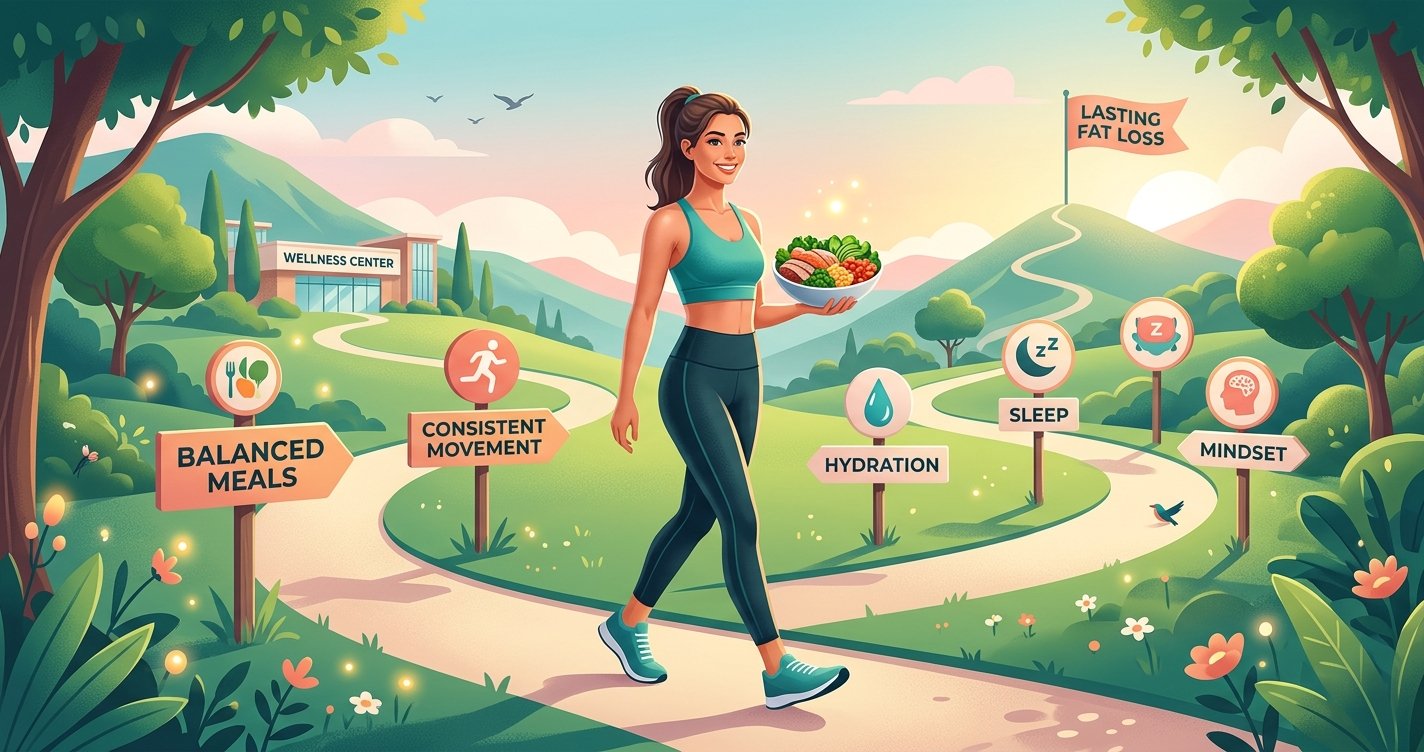
Navigating the world of fat loss can feel like a maze, full of conflicting advice and quick-fix promises. You’ve probably tried a few diets, seen initial results, only to find yourself back where you started. Sound familiar? You’re not alone. The truth is, sustainable fat loss isn't about deprivation or extreme measures; it's about understanding a fundamental principle: the calorie deficit. But not just any calorie deficit – a sustainable one.
This isn't another restrictive diet plan. Instead, think of this as your friendly, evidence-based guide to harnessing the power of a calorie deficit in a way that truly lasts. We'll demystify the science, equip you with practical steps, and help you build habits that support your body and mind, leading to fat loss that sticks around for good. Ready to ditch the yo-yo dieting cycle and embrace a smarter, kinder approach? this excellent wellness product
What Exactly is a Calorie Deficit, Anyway?
At its core, a calorie deficit is simple math. Your body needs a certain amount of energy (measured in calories) to perform all its daily functions – from breathing and thinking to exercising and digesting food. This is your 'calories out'. When you consume fewer calories ('calories in') than your body expends, you create a deficit. To make up the difference, your body turns to its stored energy reserves, primarily fat, leading to fat loss.
Think of it like a bank account. If you spend more money than you deposit, your balance goes down. In the same way, if you 'spend' more calories than you 'deposit' through food, your body's fat stores decrease. It's not magic; it's basic energy balance. The beauty of this principle is that it applies to everyone, regardless of their preferred diet style. Whether you're keto, vegan, or anything in between, a calorie deficit is the non-negotiable key to losing fat.
Why a Sustainable Calorie Deficit is Your Secret Weapon
Many people jump into extreme calorie deficits, hoping for rapid results. While this might lead to quick initial weight loss, it's often unsustainable and can backfire spectacularly. Here’s why a moderate, sustainable approach is always superior:
- Preserves Muscle Mass: When you drastically cut calories, your body might start breaking down muscle tissue for energy, not just fat. Muscle is metabolically active, meaning it burns more calories even at rest. Losing muscle slows your metabolism, making future fat loss harder. A moderate deficit helps preserve precious muscle.
- Prevents Metabolic Slowdown: Your body is incredibly adaptive. If it senses starvation, it can slow down your metabolism to conserve energy, making it harder to lose weight even on very few calories. A sustainable deficit avoids this drastic metabolic adaptation.
- Boosts Adherence: Extreme diets are miserable. They lead to intense cravings, fatigue, irritability, and social isolation. A sustainable deficit allows for flexibility, enjoyment of food, and a more positive relationship with eating, making it far easier to stick with long-term.
- Avoids Rebound Weight Gain: The dreaded 'yo-yo effect' is often a result of unsustainable dieting. Once the diet ends, people return to old habits, and the weight (and often more) comes back. A sustainable approach teaches you lasting habits.
- Better Energy & Mood: You'll have more energy for workouts, daily activities, and generally feel better, without the brain fog and constant hunger associated with overly restrictive eating.
Step-by-Step: How to Calculate Your Sustainable Calorie Deficit
Ready to put theory into practice? Here's how to calculate your personalized, sustainable calorie target.
Step 1: Estimate Your Basal Metabolic Rate (BMR) & Total Daily Energy Expenditure (TDEE)
First, we need to understand how many calories your body burns just existing, and then how many it burns with your daily activity.
- Basal Metabolic Rate (BMR): This is the number of calories your body burns at rest to maintain basic life functions (breathing, circulation, organ function). You can use online calculators (like the Mifflin-St Jeor equation) which consider your age, gender, height, and weight.
- Total Daily Energy Expenditure (TDEE): This is your BMR plus the calories you burn through physical activity (exercise, walking, fidgeting, etc.). Most online TDEE calculators will ask you to select an activity level (e.g., sedentary, lightly active, moderately active, very active). Be honest with yourself here – it's better to underestimate slightly than overestimate.
Pro Tip: Online calculators provide estimates. Your actual TDEE might vary slightly. Think of this as your starting point.
Step 2: Create a Modest Deficit
Once you have your estimated TDEE, it's time to create your deficit. For sustainable fat loss, a deficit of 300-500 calories per day is generally recommended. This typically translates to about 1-2 pounds of fat loss per week, which is a healthy, sustainable rate.
- If your TDEE is 2500 calories, aim for 2000-2200 calories per day.
- If your TDEE is 2000 calories, aim for 1500-1700 calories per day.
Why not more? A larger deficit might seem appealing for faster results, but it significantly increases the risk of muscle loss, nutrient deficiencies, excessive hunger, and metabolic slowdown, making it harder to sustain long-term.
Step 3: Track and Adjust
Your initial calculation is an educated guess. The real magic happens with tracking and adjustment:
- Track Your Intake: For at least a week or two, track everything you eat and drink using a food tracking app (like MyFitnessPal or Cronometer). This gives you an accurate picture of your actual calorie intake. You might be surprised!
- Monitor Your Progress: Weigh yourself once a week (at the same time, under the same conditions), take measurements, and observe how your clothes fit. Don't obsess over daily fluctuations; look for trends over several weeks.
- Adjust as Needed: If you're consistently losing 1-2 pounds per week, great! Stick with it. If you're not losing weight, slightly reduce your calories by another 100-200. If you're losing too fast or feeling excessively hungry/fatigued, slightly increase your calories.
Fueling Your Deficit: Smart Nutrition Strategies
Eating in a calorie deficit doesn't mean eating less food; it means eating smarter food. Prioritizing nutrient-dense options will keep you feeling full, energized, and nourished.
Prioritize Protein
Protein is your best friend during fat loss. It’s incredibly satiating, helps preserve muscle mass in a deficit, and has a higher thermic effect (meaning your body burns more calories digesting it). Aim for 0.7-1 gram of protein per pound of body weight.
- Sources: Lean meats (chicken, turkey, beef), fish, eggs, Greek yogurt, cottage cheese, legumes, tofu, protein powder.
Embrace Fiber-Rich Carbs
Don't cut carbs entirely! Complex carbohydrates, especially those rich in fiber, provide sustained energy and keep you full. Fiber also supports gut health.
- Sources: Whole grains (oats, quinoa, brown rice), fruits, vegetables (especially leafy greens, broccoli, berries).
Don't Fear Healthy Fats (But Mind Portions!)
Fats are crucial for hormone production, nutrient absorption, and satiety. However, they are calorie-dense, so portion control is key even with healthy fats.
- Sources: Avocados, nuts, seeds, olive oil, fatty fish (salmon).
Hydration is Key
Drinking enough water is often overlooked but plays a huge role. It can help with satiety, support metabolic processes, and prevent fatigue often mistaken for hunger.
The Art of Mindful Eating
Slow down, savor your food, and pay attention to your body's hunger and fullness cues. This helps prevent overeating and fosters a healthier relationship with food, making your calorie deficit feel less like a chore and more like intuitive eating.
Beyond the Plate: Lifestyle Factors Boosting Your Fat Loss
While nutrition is paramount, other lifestyle habits significantly impact your ability to lose fat sustainably.
Move Your Body (Smartly!)
- Strength Training: Lifting weights is crucial for preserving and even building muscle during a deficit. More muscle means a higher resting metabolism. Aim for 2-3 full-body sessions per week.
- Cardio: Incorporate some cardio (walking, jogging, cycling) to burn extra calories and improve cardiovascular health. It doesn't have to be intense; even daily walks add up!
- NEAT (Non-Exercise Activity Thermogenesis): These are the calories you burn doing non-exercise activities like walking to the store, taking the stairs, or fidgeting. Small increases in NEAT can make a big difference over time.
Prioritize Sleep
Lack of sleep messes with your hormones, specifically ghrelin (hunger hormone) and leptin (satiety hormone), making you hungrier and less satisfied. It also increases cortisol, a stress hormone linked to belly fat. Aim for 7-9 hours of quality sleep per night.
Manage Stress
Chronic stress, like poor sleep, elevates cortisol levels, which can hinder fat loss and encourage fat storage, especially around the midsection. Find healthy ways to manage stress, whether it's meditation, hobbies, spending time in nature, or connecting with loved ones.
Common Pitfalls to Avoid on Your Journey
- Going Too Low: As discussed, extreme deficits are counterproductive. Stick to that 300-500 calorie range.
- Ignoring Hunger Cues Completely: While some hunger is normal in a deficit, constant, debilitating hunger is a sign your deficit might be too aggressive or your food choices aren't satiating enough.
- Giving Up Too Soon: Fat loss is rarely linear. There will be plateaus, slow weeks, and frustrating moments. Consistency over perfection is key.
- Obsessive Tracking: While tracking is useful, don't let it consume you. Learn the portion sizes, understand the calorie density of foods, and eventually, you can transition to a more intuitive approach.
- Expecting Perfection: Life happens. You'll have days where you go over your calories. Don't let one 'bad' meal or day derail your entire progress. Get back on track with your next meal.
Your Sustainable Path to Lasting Fat Loss
Embracing a sustainable calorie deficit isn't about dieting; it's about making informed choices that support your body's natural fat-burning mechanisms. By understanding the basics of energy balance, making smart food choices, incorporating movement, and prioritizing rest, you're not just losing weight – you're building a healthier, happier lifestyle that lasts.
Remember, patience and consistency are your most powerful allies. This isn't a race; it's a journey towards a stronger, more vibrant you. You've got this!