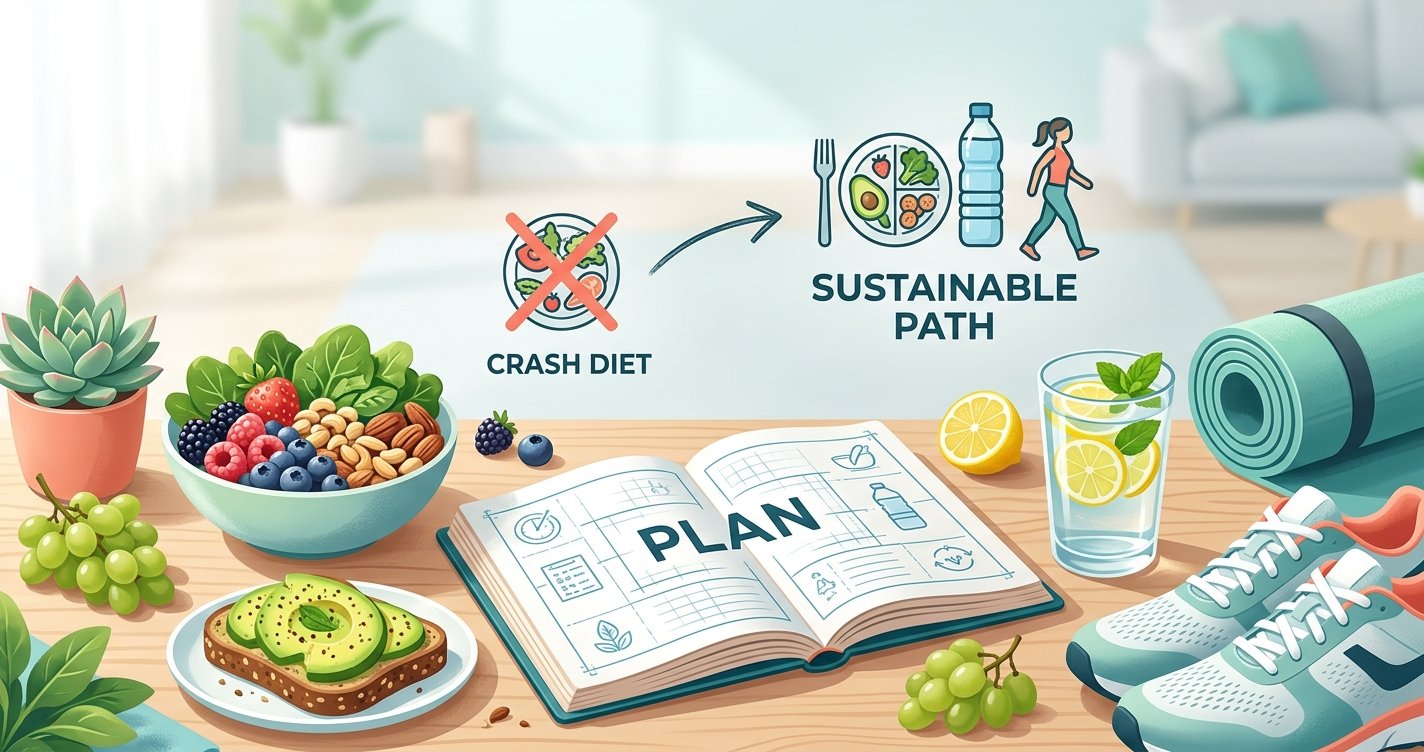
Beyond Crash Diets: Your Blueprint for Sustainable Calorie Deficit and Lasting Fat Loss
Are you tired of the diet rollercoaster? The endless cycle of strict eating, quick weight loss, only to see the numbers creep back up (and often bring friends)? You're not alone. Many people jump into extreme diets hoping for a fast fix, but true, lasting fat loss isn't about deprivation; it's about understanding your body and making smart, sustainable choices. The secret weapon? A well-managed, sustainable calorie deficit.
Forget the crash diets and the grueling workouts that leave you drained and demotivated. This guide will help you understand the foundational principle of fat loss – the calorie deficit – and, more importantly, how to create one that fits into your life without feeling like a punishment. Get ready to build habits that lead to real, lasting results, backed by science and designed for your success! this excellent wellness product
What Exactly is a Calorie Deficit (and Why It's Key for Fat Loss)?
At its core, a calorie deficit is simple: it means you're consuming fewer calories than your body burns. Think of your body as a car. If you put less fuel in than it uses, eventually, it will start drawing on its reserves. For humans, those reserves are primarily stored fat.
- Energy In vs. Energy Out: Your body constantly burns calories for basic functions (breathing, circulation), digestion, and physical activity. This is your Total Daily Energy Expenditure (TDEE). When your caloric intake (energy in) is consistently lower than your TDEE (energy out), your body turns to stored fat for the extra energy it needs.
- Weight Loss vs. Fat Loss: It's crucial to distinguish between these two. A rapid, extreme calorie deficit can lead to quick weight loss, but a significant portion of that might be water and even precious muscle mass. Our goal is fat loss, which means preserving muscle while shedding excess body fat. A sustainable deficit helps achieve this.
Understanding this fundamental principle is the first step. Now, let's talk about why 'sustainable' is the most important part of this equation.
Why "Sustainable" Matters More Than "Extreme"
The allure of rapid results often leads people down the path of extreme calorie restriction. While it might show initial numbers on the scale, it comes with a host of downsides that sabotage long-term success:
- Muscle Loss: When your body is starved of sufficient calories, it can break down muscle tissue for energy, not just fat. Less muscle means a slower metabolism, making it harder to keep the weight off in the future.
- Metabolic Adaptation: Your body is incredibly smart. If it senses prolonged starvation, it can adapt by slowing down your metabolism to conserve energy, making further fat loss even more challenging.
- Nutrient Deficiencies: Severely restricting food groups can lead to a lack of essential vitamins and minerals, impacting your energy levels, immune system, and overall health.
- Rebound Weight Gain: Extreme diets are rarely maintainable. The moment you return to your old eating habits, your body, in its 'survival' mode, is quick to store fat, often leading to regaining more weight than you lost.
- Mental Fatigue & Cravings: Constant hunger, irritability, and intense cravings are common with extreme restriction, making adherence incredibly difficult and setting you up for failure.
A sustainable calorie deficit, on the other hand, is moderate. It allows your body to tap into fat stores gradually, preserves muscle, keeps your metabolism humming, and, most importantly, is something you can stick with for the long haul without feeling deprived.
Calculating Your Personalized Calorie Deficit (The Smart Way)
While online calculators are a good starting point, remember they provide estimates. Your body is unique!
- Estimate Your Total Daily Energy Expenditure (TDEE): This is the number of calories your body burns in a day. You can use an online TDEE calculator (search "TDEE calculator"). You'll typically input your age, gender, height, weight, and activity level.
- Create Your Deficit: For sustainable fat loss, aim for a deficit of 250-500 calories per day below your TDEE. This typically results in a healthy fat loss of 0.5-1 pound per week. For example, if your TDEE is 2200 calories, aiming for 1700-1950 calories daily would be a good starting point.
- Track and Adjust: Use a food tracking app for a few weeks to get an accurate idea of your intake. Monitor your progress (weight, measurements, how your clothes fit). If you're not seeing results after 2-3 weeks, you might need to slightly reduce your intake by another 100-200 calories, or increase your activity.
Remember, consistency over perfection is key. Don't obsess over exact numbers every single day, but aim for an average deficit over the week.
Beyond the Numbers: Practical Strategies for Creating Your Deficit
Counting calories can be helpful, but it's not the only way. Focus on these practical strategies to naturally create and maintain your deficit:
- Prioritize Whole, Unprocessed Foods: Foods like lean proteins, vegetables, fruits, and whole grains are nutrient-dense and generally lower in calories than processed foods. They also keep you feeling full longer.
- Harness the Power of Protein: Protein is incredibly satiating, meaning it helps you feel full. It also has a higher thermic effect (your body burns more calories digesting it) and is crucial for preserving muscle mass during fat loss. Aim for a good source of protein at every meal (chicken, fish, eggs, tofu, lentils).
- Befriend Fiber: Fiber-rich foods (vegetables, fruits, whole grains, legumes) add bulk to your meals without adding many calories. This helps you feel satisfied and supports digestive health.
- Stay Hydrated: Sometimes, thirst is mistaken for hunger. Drinking plenty of water throughout the day can help manage appetite and keep you feeling full. Try a glass of water before each meal.
- Practice Mindful Eating: Slow down, savor your food, and pay attention to your body's hunger and fullness cues. This can help you eat less overall and enjoy your meals more.
- Smart Snacking: If you need a snack, choose wisely. Opt for protein and fiber-rich options like Greek yogurt, a handful of nuts, or apple slices with peanut butter instead of sugary, processed snacks.
- Portion Control: Even healthy foods can contribute to a calorie surplus if eaten in large quantities. Learn what a serving size looks like and consider using smaller plates.
The Unsung Heroes: Sleep, Stress, and Strength Training
Your journey to lasting fat loss isn't just about what you eat; it's also about how you live. These often-overlooked factors play a massive role:
- Sleep Smarter, Lose Fat Easier: Lack of sleep messes with your hunger hormones. Research shows that insufficient sleep increases ghrelin (the hunger hormone) and decreases leptin (the satiety hormone), making you feel hungrier and crave unhealthy foods. Aim for 7-9 hours of quality sleep per night.
- Manage Stress, Master Cravings: Chronic stress elevates cortisol levels, a hormone that can promote fat storage, especially around the belly. Stress can also trigger emotional eating. Incorporate stress-reducing activities like meditation, yoga, spending time in nature, or hobbies into your routine.
- Strength Train for a Stronger Metabolism: While cardio burns calories during the activity, strength training builds muscle. And muscle is metabolically active, meaning it burns more calories at rest than fat does. Incorporating 2-3 strength training sessions per week will help preserve your muscle mass in a deficit and boost your metabolism, making fat loss more efficient and sustainable.
Common Pitfalls to Avoid on Your Journey
Even with the best intentions, it's easy to stumble. Be mindful of these common traps:
- Underestimating Your Intake: "A little bite here, a handful there" can add up quickly. Be honest with yourself about everything you consume.
- Overestimating Your Activity: Many fitness trackers overestimate calories burned. Don't justify extra food purely based on a workout. Focus on consistent effort.
- Ignoring Non-Scale Victories: The scale doesn't tell the whole story. Pay attention to how your clothes fit, your energy levels, improved mood, and strength gains. These are signs of progress!
- The All-or-Nothing Mindset: One "bad" meal or day doesn't ruin your progress. It's a journey, not a sprint. Get back on track with your next meal and move forward.
Embrace the Sustainable Path to Lasting Fat Loss
Achieving lasting fat loss isn't about quick fixes or punishing diets; it's about making informed, sustainable choices that become a part of your lifestyle. By understanding the principles of a calorie deficit, prioritizing nutrient-dense foods, managing stress and sleep, and incorporating strength training, you're not just losing weight – you're building a healthier, stronger, and more resilient you.
Start small, be consistent, and be patient with yourself. This isn't just a diet; it's a blueprint for a healthier future. You've got this!