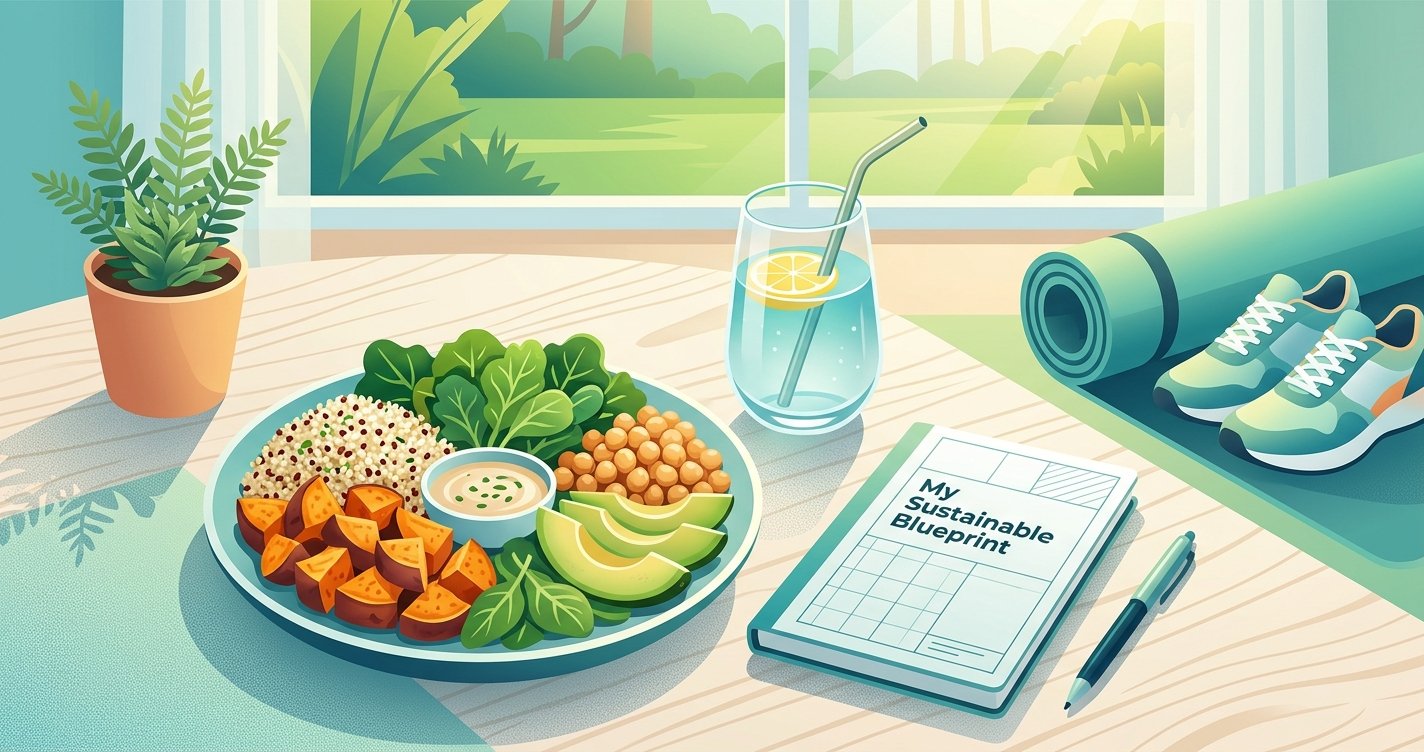
Feeling stuck in a cycle of restrictive diets, intense hunger, and disappointing weight loss plateaus? You're not alone. Many people mistakenly believe that losing fat requires extreme deprivation and a constant battle against cravings. The truth is, while a calorie deficit is the non-negotiable foundation for fat loss, how you achieve that deficit makes all the difference.
This isn't about starvation or misery. This is about understanding your body, making smart choices, and creating a sustainable approach that helps you shed fat, maintain muscle, and feel fantastic along the way. Get ready to unlock the secrets to a calorie deficit that works with you, not against you, for lasting results! this excellent wellness product
What Exactly IS a Calorie Deficit? (And Why It's Non-Negotiable for Fat Loss)
Let's cut straight to the chase: if you want to lose fat, you absolutely must be in a calorie deficit. It's a fundamental law of thermodynamics. Simply put, a calorie deficit means you're consuming fewer calories than your body expends each day. When this happens, your body turns to its stored energy reserves – primarily body fat – to make up the difference.
Think of it like this: your body needs a certain amount of fuel (calories) to perform all its daily functions, from breathing and thinking to walking and exercising. This total energy expenditure is often referred to as your Total Daily Energy Expenditure (TDEE). If you consistently provide less fuel than your TDEE, your body has no choice but to tap into its fat stores to fuel itself. There's no magic pill, no secret diet plan that bypasses this principle. It's the core mechanism of fat loss.
Debunking the 'Starvation Mode' Myth
You might have heard fears about 'starvation mode' where your metabolism grinds to a halt if you eat too little. While it's true that extreme, prolonged calorie restriction can slow your metabolism (your body adapts to conserve energy), a moderate, well-planned calorie deficit will not throw your body into a fat-hoarding frenzy. In fact, a properly executed deficit allows your body to efficiently access and burn stored fat. The key is 'moderate' and 'well-planned,' which we'll dive into next.
The Pitfalls of Extreme Deficits: Why Less Isn't Always More
If a calorie deficit is the answer, why not just eat as little as possible to lose fat faster? This is where many people make a critical mistake. While a larger deficit might lead to quicker initial weight loss, it comes with a host of undesirable consequences that undermine long-term success:
- Muscle Loss: When your body is severely deprived of calories, it starts breaking down not just fat, but also precious muscle tissue for energy. Less muscle means a slower metabolism and a 'softer' physique.
- Energy Drain & Fatigue: A drastic drop in calories will leave you feeling sluggish, irritable, and unable to perform your best in daily life or during workouts.
- Nutrient Deficiencies: It becomes incredibly difficult to get all the essential vitamins, minerals, and macronutrients your body needs when food intake is severely restricted.
- Intense Cravings & Hunger: Your body's natural survival mechanisms kick in, leading to overwhelming hunger and cravings, making adherence almost impossible.
- Metabolic Adaptation: While not 'starvation mode' in the mythical sense, your body will adapt to very low calorie intake by reducing non-exercise activity and making you feel less energetic, effectively slowing your energy expenditure.
- Rebound Weight Gain: The extreme nature of these diets makes them unsustainable. Once you 'fall off the wagon,' the intense hunger and deprivation often lead to overeating and rapid weight regain, sometimes even more than what was lost.
The goal isn't just to lose weight; it's to lose fat sustainably while preserving muscle and feeling good. This requires a smarter approach.
Finding Your Sweet Spot: How to Calculate a Sustainable Calorie Deficit
So, what's the 'sweet spot' for a sustainable calorie deficit? It typically involves reducing your calorie intake by 300-500 calories below your Total Daily Energy Expenditure (TDEE). This allows for a steady fat loss of about 0.5 to 1 pound per week, which is generally considered safe and sustainable.
Steps to Calculate Your Starting Point:
- Estimate Your Basal Metabolic Rate (BMR): This is the number of calories your body burns at rest, just to maintain basic functions. Online calculators (like the Mifflin-St Jeor equation) can give you a good estimate based on your age, sex, weight, and height.
- Calculate Your Total Daily Energy Expenditure (TDEE): Your TDEE is your BMR plus the calories you burn through physical activity (exercise, daily movement, etc.). Most online calculators will ask for your activity level (sedentary, lightly active, moderately active, very active) to help you determine this. Be honest with your activity level – most people overestimate!
- Create Your Deficit: Once you have your estimated TDEE, subtract 300-500 calories. This is your target daily calorie intake for fat loss.
Example:
- If your TDEE is 2500 calories/day.
- A moderate deficit would be 2500 - 500 = 2000 calories/day.
Important Note: These are just starting points! Your body is unique, and metabolism can vary. Monitor your progress (weight, measurements, how you feel) over 2-3 weeks. If you're not losing weight, you might need to slightly reduce calories further. If you're losing too quickly, feeling overly fatigued, or losing strength, you might need to increase them slightly. Consistency and adjustment are key!
Eating Smarter, Not Less: Nutritional Strategies for Feeling Full and Satisfied
The beauty of a sustainable calorie deficit is that you don't have to feel constantly hungry. By making smart food choices, you can maximize satiety and nutrient intake, even with fewer calories.
1. Prioritize Protein: Your Satiety Superpower
Protein is king when it comes to fat loss. It's the most satiating macronutrient, meaning it keeps you feeling fuller for longer. It also helps preserve muscle mass during a deficit, which is crucial for maintaining a healthy metabolism. Aim for 0.7-1 gram of protein per pound of body weight, spread throughout your meals.
- Sources: Lean meats (chicken, turkey, beef), fish, eggs, dairy (Greek yogurt, cottage cheese), legumes, tofu, protein powder.
2. Embrace Fiber: Volume Without the Calories
Fiber-rich foods add volume to your meals, helping you feel physically full without adding many calories. They also aid digestion and stabilize blood sugar levels, preventing energy crashes and cravings.
- Sources: Vegetables (broccoli, spinach, bell peppers), fruits (berries, apples), whole grains (oats, quinoa, brown rice), beans, lentils.
3. Don't Fear Healthy Fats (In Moderation)
While fats are calorie-dense, healthy fats are essential for hormone production, nutrient absorption, and overall health. They also contribute to satiety. Just be mindful of portion sizes.
- Sources: Avocados, nuts, seeds, olive oil, fatty fish.
4. Hydrate, Hydrate, Hydrate!
Sometimes, thirst is mistaken for hunger. Drinking plenty of water throughout the day can help manage appetite and keep you feeling refreshed. Try having a glass of water before meals.
5. Mindful Eating Practices
Slow down! Pay attention to your food, savor each bite, and listen to your body's hunger and fullness cues. Eating mindfully can prevent overeating and enhance satisfaction.
Beyond the Plate: Lifestyle Factors Supporting Your Deficit
While nutrition is paramount, your lifestyle plays a huge role in the success and sustainability of your fat loss journey.
1. Incorporate Strength Training
Strength training (lifting weights) is invaluable for fat loss. It helps you build or maintain muscle mass, which is metabolically active, meaning it burns more calories at rest than fat tissue. This supports your calorie deficit and helps you achieve a more toned physique.
2. Move More Throughout Your Day (NEAT)
Non-Exercise Activity Thermogenesis (NEAT) refers to the calories you burn through everyday movements that aren't formal exercise – walking, fidgeting, taking the stairs, cleaning. Increasing your NEAT can significantly contribute to your daily calorie expenditure without feeling like a grueling workout. Aim for more steps, stand more often, and find reasons to move.
3. Prioritize Quality Sleep
Lack of sleep can wreak havoc on your hunger hormones (ghrelin and leptin), making you feel hungrier and crave unhealthy foods. It also impairs your ability to make good decisions and can reduce your energy for workouts. Aim for 7-9 hours of quality sleep per night.
4. Manage Stress Effectively
Chronic stress elevates cortisol levels, a hormone that can promote fat storage, especially around the midsection. Find healthy ways to manage stress, whether it's meditation, yoga, spending time in nature, or hobbies you enjoy.
Troubleshooting and Sticking With It: Navigating Plateaus and Staying Motivated
Fat loss isn't a linear process. You'll have good days and challenging days, and plateaus are a normal part of the journey. Don't get discouraged!
- Patience is a Virtue: Remember that sustainable fat loss is a marathon, not a sprint. Celebrate small victories and focus on consistency over perfection.
- Track and Adjust: Regularly track your food intake (for a few days or a week) to ensure you're actually in a deficit. Monitor your weight and body measurements. If progress stalls for 2-3 weeks, consider slightly adjusting your calorie intake or increasing your activity.
- Embrace Flexibility: A sustainable approach includes occasional treats or higher-calorie meals. Don't let one 'off' meal derail your entire week. Get back on track with your next meal.
- Seek Support: Connect with like-minded individuals, consider working with a coach, or lean on friends and family for encouragement.
- Focus on Non-Scale Victories: How do your clothes fit? Are you stronger? Do you have more energy? Are your moods better? These are equally important indicators of progress.
Your Journey to Sustainable Fat Loss Starts Now!
Embracing a sustainable calorie deficit is about empowering yourself with knowledge and making conscious choices that align with your long-term health and fitness goals. It's not about punishing your body, but rather nourishing it intelligently. By prioritizing protein and fiber, staying hydrated, incorporating strength training, and managing your lifestyle, you can create a deficit that feels manageable, keeps you satisfied, and leads to lasting fat loss without the constant struggle.
Take the first step today: calculate your estimated TDEE, create a moderate deficit, and start building habits that will serve you for life. You've got this!