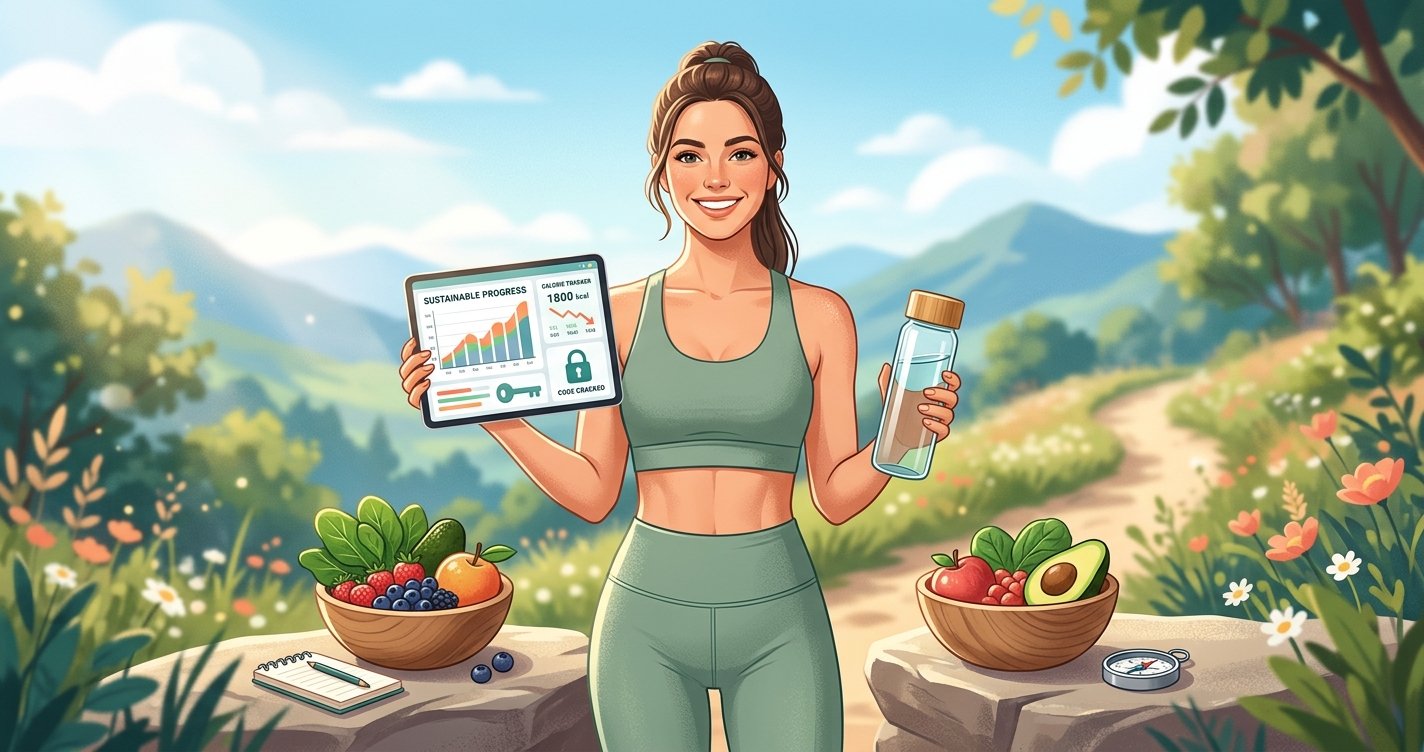
Tired of the endless cycle of fad diets, quick fixes, and frustrating yo-yo weight loss? You’re not alone! Many approaches to fat loss promise rapid results but often lead to burnout, deprivation, and ultimately, regaining the weight. But what if there was a proven, science-backed method that not only works but is also sustainable, allowing you to achieve lasting results without feeling constantly hungry or deprived?
Enter the sustainable calorie deficit. It’s not a secret, but it is the fundamental principle behind all successful fat loss. This isn't about extreme restriction; it's about understanding your body's energy needs and making smart, informed choices that you can stick with for the long haul. In this comprehensive guide, we'll demystify the calorie deficit, equip you with the tools to implement it effectively, and show you how to build a blueprint for a healthier, happier you. this excellent wellness product
Understanding the Calorie Deficit: The Golden Rule of Fat Loss
At its core, fat loss boils down to a simple concept: energy balance. Your body requires a certain amount of energy (measured in calories) to perform all its daily functions, from breathing and thinking to exercising and digesting food. When you consume more calories than your body burns, the excess energy is stored, primarily as body fat. Conversely, when you consume fewer calories than your body expends, your body is forced to tap into its stored energy reserves – your body fat – to make up the difference. This is what we call a calorie deficit.
It's the fundamental principle. No matter what diet you follow – keto, low-carb, vegan, Mediterranean – if you're losing fat, you are, by definition, in a calorie deficit. The beauty of focusing on a sustainable calorie deficit is that it empowers you to choose foods you enjoy, build healthy habits, and understand why your efforts are paying off, rather than blindly following restrictive rules.
The key word here is sustainable. An extreme deficit might lead to rapid initial weight loss, but it often comes at the cost of muscle mass, nutrient deficiencies, plummeting energy levels, and an insatiable hunger that makes long-term adherence almost impossible. A sustainable deficit aims for gradual, consistent progress that preserves your muscle, supports your energy, and fits seamlessly into your lifestyle.
How to Calculate Your Calorie Needs (and Your Deficit!)
Forget the guesswork! While precise calculations can be complex, we can get a very good estimate of your daily calorie needs to create an effective deficit. This involves two main steps: estimating your Basal Metabolic Rate (BMR) and factoring in your activity level to get your Total Daily Energy Expenditure (TDEE).
Step 1: Estimate Your Basal Metabolic Rate (BMR)
Your BMR is the number of calories your body burns at rest, simply to maintain basic life functions like breathing, circulation, and cell production. It's the minimum energy required to keep you alive. You can use online calculators that employ formulas like the Mifflin-St Jeor equation, which are generally considered quite accurate.
- Mifflin-St Jeor Equation:
- For Men: (10 × weight in kg) + (6.25 × height in cm) - (5 × age in years) + 5
- For Women: (10 × weight in kg) + (6.25 × height in cm) - (5 × age in years) - 161
Plug in your stats, and you'll have a solid baseline.
Step 2: Factor in Your Activity Level to Find Your TDEE
Your BMR only accounts for calories burned at rest. To get your TDEE, you need to multiply your BMR by an activity factor that reflects how much you move throughout the day:
- Sedentary: BMR × 1.2 (little or no exercise, desk job)
- Lightly Active: BMR × 1.375 (light exercise/sports 1-3 days/week)
- Moderately Active: BMR × 1.55 (moderate exercise/sports 3-5 days/week)
- Very Active: BMR × 1.725 (hard exercise/sports 6-7 days a week)
- Extra Active: BMR × 1.9 (very hard exercise/physical job)
Your TDEE is the estimated number of calories you burn each day. This is the magic number we'll use to create your deficit.
Step 3: Create Your Sustainable Deficit
To lose fat effectively and sustainably, aim for a deficit of 300-500 calories below your TDEE. This typically results in a fat loss of about 0.5 to 1 pound per week, which is considered a healthy and sustainable rate. For example, if your TDEE is 2500 calories, aiming for 2000-2200 calories per day would put you in a good deficit.
Why not more? A larger deficit (e.g., 750-1000 calories) might lead to faster initial loss, but it often increases hunger, fatigue, and the risk of nutrient deficiencies. It also makes it much harder to stick to long-term. Remember, consistency is king, and a moderate deficit is far easier to maintain.
The Power of Protein: Your Ally in Fat Loss
When you're in a calorie deficit, adequate protein intake becomes your secret weapon. Protein isn't just for bodybuilders; it's absolutely crucial for successful and sustainable fat loss for several key reasons:
- Satiety Superstar: Protein is the most satiating macronutrient. It keeps you feeling fuller for longer, which is invaluable when you're eating fewer calories. This helps reduce cravings and prevents overeating.
- Muscle Preservation: When you lose weight, your body can lose both fat and muscle. Eating enough protein, especially when combined with strength training, helps signal your body to preserve precious lean muscle mass. This is vital because muscle is metabolically active, meaning it burns more calories at rest than fat does.
- Thermic Effect of Food (TEF): Your body expends energy just to digest and metabolize the food you eat. This is known as the Thermic Effect of Food (TEF). Protein has the highest TEF, meaning you burn more calories digesting protein compared to carbohydrates or fats.
Aim to include a good source of lean protein at every meal. Think chicken breast, fish, lean beef, eggs, Greek yogurt, cottage cheese, tofu, lentils, and beans. A general guideline for fat loss is around 0.7-1 gram of protein per pound of your target body weight.
Smart Carbohydrates and Healthy Fats: Fueling Your Body Right
While protein takes center stage, don't demonize carbohydrates or fats. Both are essential for your health and can be part of a successful fat loss strategy when chosen wisely and consumed in appropriate portions.
Carbs: Not the Enemy!
Carbohydrates are your body's primary source of energy. The key is to choose smart, complex carbohydrates over refined ones. Complex carbs, found in whole grains, fruits, and vegetables, are rich in fiber, which contributes to satiety and digestive health. They also provide sustained energy, preventing energy crashes that can lead to unhealthy snacking.
- Choose: Whole grains (oats, brown rice, quinoa, whole-wheat bread), fruits (berries, apples, bananas), and a rainbow of vegetables (broccoli, spinach, sweet potatoes).
- Limit: Sugary drinks, white bread, pastries, and highly processed snacks, which offer little nutritional value and can lead to rapid blood sugar spikes and crashes.
Fats: Essential for Health (and Satiety!)
Healthy fats are vital for hormone production, nutrient absorption, and overall bodily functions. They also contribute to satiety, making your meals more satisfying. However, fats are calorie-dense (9 calories per gram compared to 4 for protein and carbs), so portion control is crucial.
- Choose: Monounsaturated and polyunsaturated fats found in avocados, nuts, seeds, olive oil, and fatty fish (salmon, mackerel).
- Limit: Saturated and trans fats found in processed foods, fried items, and some animal products, which can negatively impact heart health.
Beyond the Numbers: Practical Strategies for Sustainable Eating
While understanding your calorie deficit is fundamental, successful fat loss isn't just about crunching numbers. It's about building sustainable eating habits that integrate into your daily life. Here are some practical strategies:
- Meal Planning & Prep: Spend a little time each week planning your meals and snacks. Preparing some food in advance can save you time and prevent impulsive, unhealthy choices when hunger strikes.
- Portion Control: Even healthy foods can contribute to a calorie surplus if eaten in excessive amounts. Learn what a healthy portion looks like for different foods. Use smaller plates, measure out ingredients, and pay attention to serving sizes.
- Mindful Eating: Slow down and pay attention to your food. Savor each bite, notice the flavors and textures, and listen to your body's hunger and fullness cues. Eating mindfully can help prevent overeating and improve your relationship with food.
- Hydration is Key: Often, what we perceive as hunger is actually thirst. Drink plenty of water throughout the day. Water can also help you feel fuller, especially if consumed before meals.
- Load Up on Fiber-Rich Foods: Vegetables, fruits, and whole grains are packed with fiber, which adds bulk to your meals, promoting satiety without adding many calories.
- Limit Processed Foods & Sugary Drinks: These are often calorie-dense, nutrient-poor, and highly palatable, making it easy to overconsume. Cutting them back can significantly reduce your overall calorie intake.
Navigating Challenges: Plateaus, Cravings, and Social Situations
The journey to lasting fat loss isn't always a straight line. You'll encounter bumps in the road, but with the right mindset and strategies, you can navigate them successfully.
Tackling Plateaus
It's common for fat loss to slow down or stall after a period of consistent progress. This can be due to metabolic adaptation, where your body becomes more efficient at using energy as you get smaller. Don't panic! Here's what to do:
- Re-evaluate Your Calories: As you lose weight, your TDEE decreases. Recalculate your calorie needs based on your new weight and adjust your deficit accordingly.
- Increase Activity (Slightly): Adding a bit more movement, whether it's more steps or an extra workout, can help increase your calorie expenditure.
- Consider a "Diet Break": Sometimes, taking a short break (1-2 weeks) at maintenance calories can help alleviate metabolic adaptation and psychological fatigue, allowing you to re-enter your deficit with renewed vigor.
Managing Cravings
Cravings are a normal part of life, especially when you're in a deficit. The key is to differentiate between physical hunger and emotional cravings. If it's a true craving, try these strategies:
- Healthy Swaps: Find healthier alternatives for your favorite treats (e.g., Greek yogurt with berries instead of ice cream).
- Planned Indulgences: Incorporate small, planned treats into your week so you don't feel deprived. The 80/20 rule (eating healthy 80% of the time, allowing flexibility for the other 20%) can be very effective.
- Distraction: Sometimes, a craving will pass if you distract yourself for 15-20 minutes with another activity.
Social Eating
Dining out or attending social gatherings can be challenging. Plan ahead:
- Preview Menus: Look up restaurant menus online beforehand and choose healthier options.
- Portion Awareness: Ask for dressings on the side, opt for grilled instead of fried, and don't be afraid to take half your meal home.
- Balance: If you know you'll have a larger meal socially, adjust your other meals that day to create balance.
Consistency Over Perfection: The Long Game of Fat Loss
True, lasting fat loss is a marathon, not a sprint. It's about making sustainable lifestyle changes, not seeking quick fixes. You don't have to be perfect every single day. One less-than-ideal meal or even a whole day off track won't derail your progress if you consistently stick to your plan most of the time.
Focus on building habits that you can maintain for life. Celebrate your small victories, learn from your setbacks, and be patient with yourself. Your body needs time to adapt, and progress isn't always linear. Embrace the journey, trust the process, and remember that every healthy choice you make is an investment in your long-term health and well-being.
Your Blueprint for a Healthier You
Understanding and implementing a sustainable calorie deficit is the most powerful tool you have for lasting fat loss. It's not about deprivation; it's about empowerment – giving you the knowledge to make informed choices that align with your goals.
Start today by calculating your TDEE, setting a moderate deficit, prioritizing protein, and making smart choices with your carbs and fats. Incorporate practical strategies like meal planning and mindful eating. Be patient, be consistent, and most importantly, be kind to yourself. You have the blueprint; now go build the healthier, happier life you deserve!