Beyond Crash Diets: Your Blueprint for a Sustainable Calorie Deficit and Lasting Fat Loss
Are you tired of the yo-yo diet cycle? The endless promises of quick fixes that leave you feeling deprived, exhausted, and ultimately, back where you started? If so, you're not alone. Many people fall into the trap of extreme dieting in pursuit of fat loss, only to find it unsustainable and often counterproductive.
The truth is, achieving lasting fat loss isn't about starvation or grueling workouts that you can't maintain. It's about understanding a fundamental principle: the calorie deficit. But more importantly, it's about creating a calorie deficit that's sustainable, allowing you to shed fat effectively while preserving your energy, muscle, and sanity. This guide will walk you through building your own blueprint for a smart, evidence-based approach to fat loss that actually works long-term. this excellent wellness product
What Exactly is a Calorie Deficit (and Why It Matters)?
At its core, a calorie deficit is simple: you consume fewer calories than your body burns over a period of time. Think of your body as a car and calories as fuel. If you put less fuel in than the car uses, it eventually runs out. For your body, when it doesn't get enough energy from food, it starts tapping into its stored energy reserves – primarily body fat – to make up the difference. This process is the only way to lose fat.
Your body burns calories constantly, even at rest, for basic functions like breathing, circulation, and maintaining body temperature (this is your Basal Metabolic Rate or BMR). On top of that, you burn calories through digestion (Thermic Effect of Food or TEF) and all physical activity, from walking to intense exercise (Non-Exercise Activity Thermogenesis or NEAT, and Exercise Activity Thermogenesis or EAT). Summing these up gives you your Total Daily Energy Expenditure (TDEE).
When your caloric intake is consistently below your TDEE, you create the deficit necessary for fat loss. It's not magic; it's basic energy balance.
The Pitfalls of Extreme Deficits: Why Less Isn't Always More
While a calorie deficit is essential, the size of that deficit is crucial. Many jump into extreme deficits, drastically cutting calories to speed up results. While this might lead to rapid initial weight loss, it comes with significant drawbacks:
- Muscle Loss: When calories are too low, your body might start breaking down muscle tissue for energy, not just fat. Losing muscle slows your metabolism, making future fat loss harder.
- Metabolic Slowdown: Your body is smart. Faced with severe calorie restriction, it adapts by slowing down its metabolism to conserve energy, making it harder to lose fat over time.
- Nutrient Deficiencies: Very low-calorie diets often lack essential vitamins and minerals, impacting energy levels, immune function, and overall health.
- Fatigue and Irritability: Insufficient calories leave you feeling drained, moody, and unable to perform daily tasks or exercise effectively.
- Rebound Weight Gain: Extreme deprivation often leads to intense cravings and eventual binge eating, resulting in rapid weight regain, often exceeding the initial loss. This is the classic yo-yo effect.
A sustainable deficit avoids these pitfalls, focusing on steady, healthy progress.
Your Blueprint for a Sustainable Calorie Deficit
Ready to build a deficit that works for you, not against you? Here’s your step-by-step guide:
Step 1: Calculate Your Baseline (TDEE)
Your first step is to estimate how many calories your body currently burns. Online TDEE calculators are a good starting point. They'll ask for your age, sex, weight, height, and activity level. Remember, these are estimates. For more accuracy, try tracking your current food intake for a week without making changes. If your weight remains stable, that's a good approximation of your maintenance calories.
Step 2: Create a Modest Deficit (The Sweet Spot)
Once you have an estimate of your TDEE, aim for a deficit of 300-500 calories per day. This range is generally considered optimal for sustainable fat loss:
- It's large enough to promote consistent fat loss (typically 1-2 pounds per week).
- It's small enough to preserve muscle mass, maintain energy levels, and prevent extreme hunger.
For example, if your TDEE is 2500 calories, aim for 2000-2200 calories per day.
Step 3: Prioritize Protein for Satiety and Muscle Preservation
When you're in a calorie deficit, protein becomes your best friend. Here's why:
- Satiety: Protein is the most satiating macronutrient, meaning it keeps you feeling fuller for longer, reducing cravings and overeating.
- Muscle Preservation: Adequate protein intake is crucial for preserving muscle mass during weight loss. More muscle means a higher resting metabolism.
- Thermic Effect: Protein has a higher thermic effect than carbs or fats, meaning your body burns more calories digesting it.
Aim for 0.7-1 gram of protein per pound of your target body weight. Incorporate lean protein sources into every meal: chicken breast, fish, eggs, lean beef, Greek yogurt, cottage cheese, legumes, and protein powder.
Step 4: Embrace Fiber-Rich Carbs and Healthy Fats
Don't fall for the myth that you need to eliminate carbs or fats for fat loss. Quality matters!
- Carbohydrates: Focus on complex, fiber-rich carbohydrates like whole grains (oats, quinoa, brown rice), fruits, and vegetables. Fiber adds bulk to your meals, promoting fullness, and these foods provide essential vitamins and minerals.
- Healthy Fats: Include sources like avocados, nuts, seeds, and olive oil in moderation. Fats are essential for hormone production, nutrient absorption, and also contribute to satiety. Just remember they are calorie-dense, so portion control is key.
These nutrient-dense foods will provide sustained energy and micronutrients, preventing deficiencies and supporting overall health.
Step 5: Move Your Body Smartly (Not Just Harder)
While nutrition creates the deficit, exercise amplifies fat loss and improves body composition.
- Resistance Training (2-4 times/week): This is non-negotiable for preserving and building muscle. Muscle is metabolically active tissue, meaning it burns more calories even at rest. Lifting weights also helps shape your body as you lose fat.
- Cardio (2-3 times/week): Incorporate a mix of steady-state (e.g., brisk walking, cycling) and high-intensity interval training (HIIT). Cardio directly burns calories and improves cardiovascular health.
- Increase NEAT: Simple daily movements add up! Take the stairs, park further away, walk during phone calls, stand more often. These small increases in activity can significantly boost your daily calorie expenditure without feeling like a formal workout.
Step 6: Listen to Your Body and Be Patient
Fat loss is not a linear journey. There will be fluctuations, plateaus, and days when you feel less motivated. This is normal. Here's how to navigate it:
- Prioritize Sleep: Lack of sleep can disrupt hunger hormones (ghrelin and leptin) and increase cravings. Aim for 7-9 hours of quality sleep.
- Manage Stress: Chronic stress can elevate cortisol, a hormone linked to increased fat storage, especially around the midsection. Find healthy ways to manage stress.
- Track Progress Beyond the Scale: Take measurements, progress photos, and note how your clothes fit. The scale doesn't always tell the full story, especially if you're building muscle.
- Adjust When Needed: If progress stalls for 2-3 weeks, consider slightly reducing calories (another 100-200) or increasing activity. Don't drastically cut!
- Be Consistent: Small, consistent efforts over time yield far greater results than short bursts of extreme deprivation.
Beyond the Numbers: Mindset and Consistency
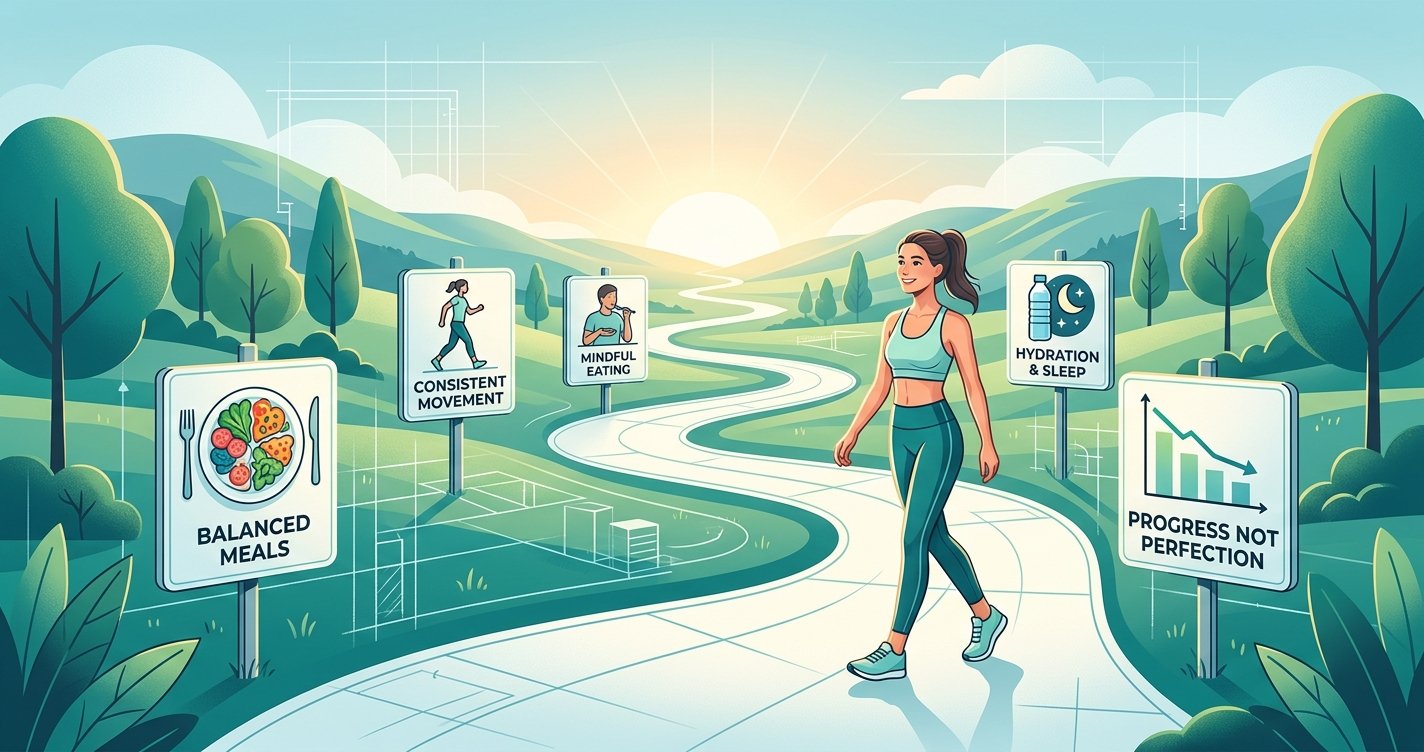
Ultimately, a sustainable calorie deficit is about building sustainable habits. It’s not a temporary diet; it’s a shift in how you approach food and movement. Develop a mindset of self-compassion and patience. Understand that setbacks are part of the process, and what truly matters is getting back on track.
Celebrate small victories, focus on how you feel, and recognize that you are investing in a healthier, stronger, and more vibrant future. This isn't about perfection; it's about progress, one smart, sustainable choice at a time.
Conclusion
Achieving lasting fat loss doesn't require drastic measures or endless suffering. By understanding and implementing a sustainable calorie deficit, you can transform your body and your relationship with food in a healthy, enjoyable way. Prioritize protein, choose nutrient-dense foods, incorporate smart exercise, and listen to your body. Embrace patience and consistency, and you'll build not just a leaner physique, but a healthier, more energetic life that you can truly sustain.
Ready to ditch the crash diets for good? Start building your sustainable blueprint today!