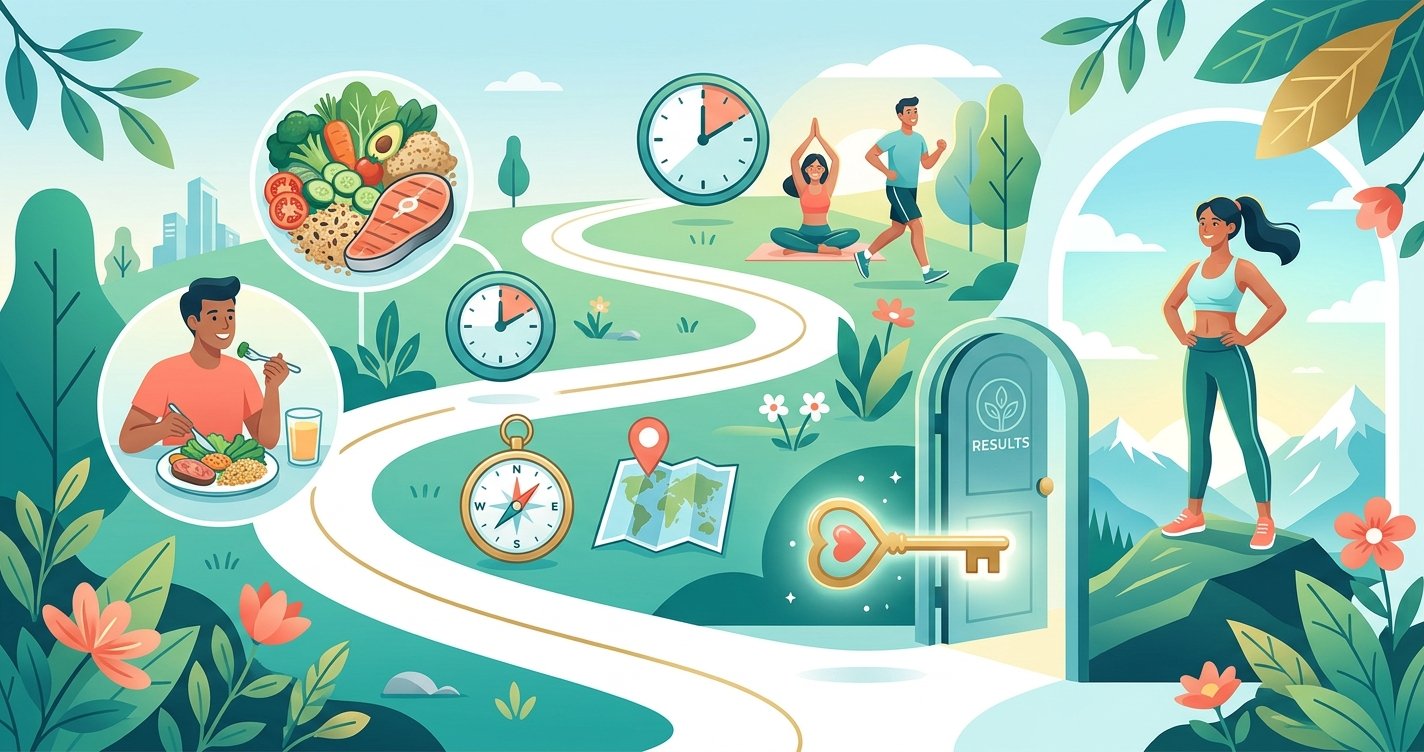
Are you tired of the endless cycle of crash diets, rapid weight loss, and inevitable rebound? You're not alone. The journey to fat loss can often feel like a frustrating rollercoaster, filled with quick fixes that promise the moon but deliver only temporary results. But what if there was a way to achieve lasting fat loss without feeling deprived, exhausted, or constantly battling your own body?
The secret lies in understanding and implementing a sustainable calorie deficit. This isn't about starvation or extreme measures; it's about creating a smart, manageable energy gap that allows your body to tap into its fat stores while preserving your energy, muscle mass, and sanity. Let's dive into how you can make this powerful strategy work for you, not just for a few weeks, but for life. this excellent wellness product
What Exactly is a Calorie Deficit? Understanding the Basics
At its core, a calorie deficit simply means consuming fewer calories than your body expends. Think of your body as a car: it needs fuel (calories) to run. If you put in less fuel than it needs to travel a certain distance, it will start using fuel it has stored (fat). This is the fundamental principle behind fat loss.
Your body is constantly burning calories for basic functions like breathing, circulating blood, and maintaining body temperature (your Basal Metabolic Rate, or BMR), plus the energy you use for daily activities, exercise, and even digesting food (your Total Daily Energy Expenditure, or TDEE). To lose fat, you need to consistently consume less than your TDEE.
However, the key word here is sustainable. An extreme deficit might lead to rapid initial weight loss, but it often comes at the cost of muscle mass, nutrient deficiencies, fatigue, irritability, and an almost inevitable rebound once you can no longer maintain such a restrictive approach. Our goal is a gentle, consistent deficit that your body can handle without going into 'starvation mode' or triggering intense cravings.
Calculating Your Sustainable Deficit: A Personalized Approach
One size does not fit all when it comes to calorie needs. Your ideal calorie deficit depends on several factors: your age, sex, weight, height, activity level, and body composition. While online calculators can give you a good starting point for your TDEE, remember they are estimates.
How to Estimate Your TDEE:
- Step 1: Calculate your BMR. This is the number of calories your body burns at rest. You can use online calculators (like the Mifflin-St Jeor equation) or even smart scales for an estimate.
- Step 2: Factor in your activity level. Multiply your BMR by an activity factor:
- Sedentary (little to no exercise): BMR x 1.2
- Lightly active (light exercise/sports 1-3 days/week): BMR x 1.375
- Moderately active (moderate exercise/sports 3-5 days/week): BMR x 1.55
- Very active (hard exercise/sports 6-7 days a week): BMR x 1.725
- Extremely active (hard daily exercise/physical job): BMR x 1.9
- Step 3: Create your deficit. For sustainable fat loss, aim for a deficit of 300-500 calories below your TDEE. This typically results in a healthy fat loss of 0.5 to 1 pound per week. For example, if your TDEE is 2500 calories, a sustainable target might be 2000-2200 calories per day.
Tracking your food intake for a few days using an app can help you understand your current habits and make adjustments. However, remember not to obsess over every single calorie; focus on consistency and overall patterns.
Beyond the Numbers: Quality Over Quantity for Satiety
While calories are important, the type of calories you consume makes a huge difference in how you feel, your energy levels, and your ability to stick to your deficit. A calorie is not just a calorie when it comes to satiety and nutrient density.
- Prioritize Protein: Protein is king for fat loss. It's highly satiating, helping you feel fuller for longer, and crucial for preserving muscle mass while in a deficit. Aim for 0.7-1 gram of protein per pound of body weight. Lean meats, poultry, fish, eggs, dairy, legumes, and tofu are excellent sources.
- Embrace Fiber-Rich Foods: Foods high in fiber (vegetables, fruits, whole grains, beans) add volume to your meals, slow digestion, and contribute to satiety without adding many calories. Load up your plate with colorful veggies!
- Don't Fear Healthy Fats: While calorie-dense, healthy fats (avocado, nuts, seeds, olive oil) are vital for hormone production, nutrient absorption, and also contribute to satiety. Just be mindful of portion sizes.
- Limit Ultra-Processed Foods: These are often high in calories, sugar, unhealthy fats, and low in nutrients and fiber, making them easy to overeat and less satisfying. Focus on whole, unprocessed foods as the foundation of your diet.
The Role of Exercise: It's Not Just for Burning Calories!
While you can lose fat through diet alone, incorporating exercise significantly enhances your results and overall health. Exercise doesn't just burn calories; it plays several critical roles in a sustainable fat loss journey:
- Preserves Muscle Mass: Strength training, in particular, signals to your body that your muscles are important, encouraging it to burn fat for energy rather than muscle, especially when in a deficit. More muscle also means a higher resting metabolism!
- Boosts Metabolism: Both strength training and high-intensity interval training (HIIT) can increase your metabolism for hours after your workout.
- Improves Mood and Reduces Stress: Exercise is a powerful stress reliever and mood booster, which can help prevent emotional eating and make sticking to your plan easier.
- Increases NEAT (Non-Exercise Activity Thermogenesis): Simply moving more throughout your day – taking the stairs, walking during calls, fidgeting – adds up and contributes to your overall calorie expenditure without feeling like a formal workout.
Aim for a balanced routine that includes both strength training (2-3 times per week) and some form of cardiovascular activity. Find activities you enjoy, whether it's lifting weights, dancing, hiking, or cycling, to ensure long-term adherence.
Mindset Matters: Patience, Consistency, and Self-Compassion
Fat loss is rarely a linear journey. There will be plateaus, days where you overeat, and moments of frustration. This is where your mindset becomes your most powerful tool.
- Embrace Patience: Sustainable fat loss takes time. Celebrate small victories and focus on consistent habits rather than instant gratification. Remember, 0.5-1 pound a week adds up significantly over months.
- Prioritize Consistency Over Perfection: One 'bad' meal or even a 'bad' day won't derail your progress. Get back on track with your next meal or workout. It's the cumulative effect of consistent good choices that matters most.
- Practice Self-Compassion: Be kind to yourself. If you slip up, learn from it and move on. Guilt and shame are counterproductive and often lead to further emotional eating.
- Focus on Non-Scale Victories: How do your clothes fit? How's your energy? Are you stronger? Is your sleep better? These are all important indicators of progress beyond the number on the scale.
Practical Tips for Sticking to Your Sustainable Deficit
Making a calorie deficit work in your daily life requires a few smart strategies:
- Meal Prepping: Dedicate some time each week to plan and prepare healthy meals and snacks. This reduces decision fatigue and the likelihood of reaching for less healthy, convenient options.
- Smart Tracking: Use a food tracking app to log your intake, but don't let it become an obsession. It's a tool for awareness and adjustment, not a rigid prison.
- Stay Hydrated: Often, thirst is mistaken for hunger. Drink plenty of water throughout the day, especially before meals.
- Prioritize Sleep: Lack of sleep can disrupt hunger-regulating hormones (ghrelin and leptin), leading to increased cravings and appetite. Aim for 7-9 hours of quality sleep per night.
- Manage Stress: Chronic stress can lead to elevated cortisol levels, which can promote fat storage, especially around the midsection. Find healthy ways to manage stress, such as meditation, yoga, or spending time in nature.
Common Pitfalls to Avoid on Your Fat Loss Journey
Even with the best intentions, it's easy to stumble. Be aware of these common traps:
- Too Drastic a Deficit: Going too low on calories is unsustainable and can harm your metabolism, energy, and mood.
- Ignoring Hunger Cues: While a calorie deficit means some hunger, extreme, persistent hunger is a sign your deficit might be too large or your food choices aren't satiating enough.
- Comparing Yourself to Others: Everyone's body and journey are unique. Focus on your progress and what works for you.
- Neglecting Micronutrients: Ensure your calorie-reduced diet is still rich in vitamins and minerals to support overall health.
Your Path to Lasting Fat Loss Starts Now
Achieving sustainable fat loss isn't about deprivation; it's about empowerment. It's about understanding your body's needs, making informed choices, and building habits that support your health and well-being for the long haul. By focusing on a moderate, consistent calorie deficit, prioritizing nutrient-dense foods, incorporating regular exercise, and cultivating a patient mindset, you can break free from the yo-yo dieting cycle.
Start small, be consistent, and trust the process. Your body is capable of amazing things when you treat it with respect and provide it with the right tools. Here's to a healthier, happier, and more sustainable you!