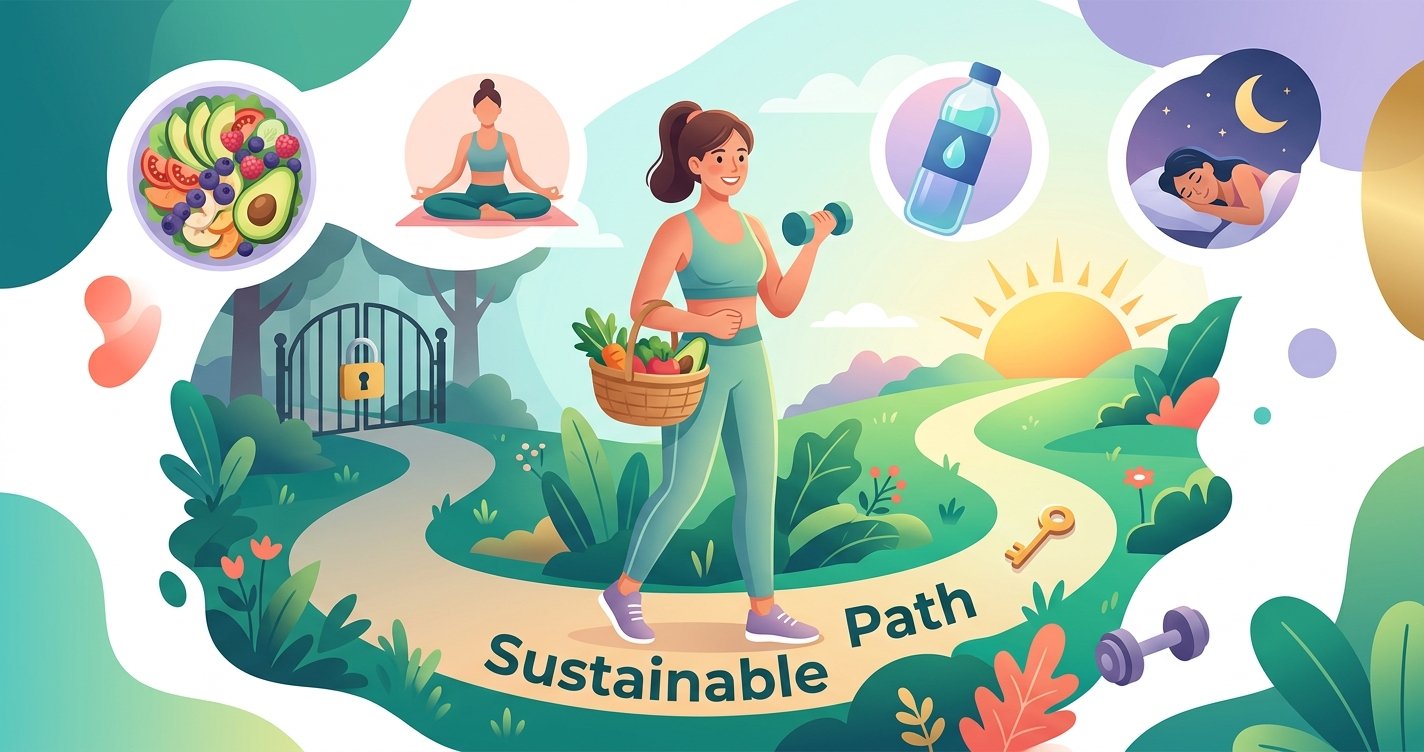
Unlock Sustainable Fat Loss: Your Friendly Guide to a Healthy Caloric Deficit
Hey there, future you! Are you tired of the endless cycle of crash diets, restrictive eating, and the frustration of seeing the scale yo-yo? You’re not alone. Many of us have been there, chasing quick fixes that promise rapid fat loss but often leave us feeling depleted, demotivated, and right back where we started. But what if there was a more sustainable, evidence-based path to achieving your fat loss goals, one that prioritizes your health and well-being?
Welcome to the world of the sustainable caloric deficit. This isn't about deprivation; it's about smart, strategic eating that allows your body to tap into its fat stores for energy, all while keeping you feeling energized and nourished. Forget the extreme measures; we're talking about a balanced approach that fits into your life, not one that takes it over. Let's dive in and discover how you can achieve lasting fat loss without sacrificing your sanity or your health! this excellent wellness product
What Exactly is a Caloric Deficit? The Science Simplified
At its core, fat loss boils down to a fundamental principle of energy balance: you need to consume fewer calories than your body expends. This difference is known as a “caloric deficit.” Think of your body as a car. If you put in less fuel than you burn, the car will eventually run out. For your body, when you create a caloric deficit, it doesn't just stop; it intelligently turns to its stored energy reserves – primarily fat – to make up the difference.
Every day, your body burns a certain number of calories just to keep you alive (this is your Basal Metabolic Rate or BMR) and to fuel all your activities, from walking to working out (this adds up to your Total Daily Energy Expenditure or TDEE). When your calorie intake consistently falls below your TDEE, your body is forced to use stored fat for energy, leading to fat loss over time. It’s simple physics, but the art lies in making it sustainable and enjoyable.
Why Sustainability is Key for Lasting Fat Loss
You’ve probably heard of or even tried diets that promise huge caloric deficits and rapid weight loss. While they might show initial results, they often come with a hefty price tag: nutrient deficiencies, muscle loss, constant hunger, irritability, and a rebound effect where the weight quickly returns, often with extra pounds. This is because extreme deficits are inherently unsustainable.
- Metabolic Adaptation: Your body is smart. When faced with severe caloric restriction, it adapts by slowing down your metabolism to conserve energy, making further fat loss harder.
- Muscle Loss: Too large a deficit, especially without adequate protein and strength training, can lead to your body breaking down muscle tissue for energy, which is counterproductive as muscle burns more calories than fat.
- Psychological Burnout: Constant hunger, cravings, and the feeling of deprivation are not only unpleasant but also lead to diet fatigue and eventual abandonment.
- Nutrient Deficiencies: Extreme calorie restriction often means missing out on vital vitamins, minerals, and macronutrients essential for overall health.
A sustainable caloric deficit, on the other hand, focuses on a moderate, manageable reduction in calories, prioritizing nutrient-dense foods, and integrating lifestyle changes that you can maintain for the long haul. This approach protects your metabolism, preserves muscle mass, and keeps you feeling good, making fat loss a gradual, healthy, and lasting journey.
How to Create a Sustainable Caloric Deficit (Without Starving Yourself)
The good news? You don't need to eat like a bird to lose fat. Here's how to create a smart, manageable deficit:
1. Calculate Your Maintenance Calories
Before you can cut calories, you need to know how many your body needs to maintain its current weight. Online TDEE calculators (search for 'TDEE calculator') can give you a good estimate based on your age, sex, weight, height, and activity level. This is your starting point.
2. Aim for a Moderate Deficit
For most people, a deficit of 250-500 calories per day is ideal for sustainable fat loss. This typically translates to losing about 0.5 to 1 pound of fat per week. It’s enough to see progress without triggering your body's survival mechanisms or leaving you feeling constantly hungry. For example, if your maintenance is 2500 calories, aiming for 2000-2250 calories per day would be a good start.
3. Prioritize Protein for Satiety and Muscle Preservation
Protein is your secret weapon for fat loss. It's highly satiating, meaning it keeps you feeling fuller for longer, reducing the urge to snack. Crucially, protein is also essential for preserving muscle mass during a caloric deficit. Aim for at least 0.7-1 gram of protein per pound of your target body weight. Think lean meats, poultry, fish, eggs, dairy, legumes, and protein supplements.
4. Embrace Fiber-Rich Foods
Fiber is another fantastic tool for satiety and digestive health. Found in fruits, vegetables, whole grains, and legumes, fiber adds bulk to your meals without adding many calories, helping you feel full and satisfied. Plus, it's packed with essential vitamins and minerals.
5. Include Healthy Fats (in Moderation)
Don't fear fats entirely! Healthy fats (from avocados, nuts, seeds, olive oil) are crucial for hormone production, nutrient absorption, and also contribute to satiety. However, they are calorie-dense, so moderation is key when you're in a deficit.
6. Practice Mindful Eating
Slow down, savor your food, and pay attention to your body's hunger and fullness cues. Eating mindfully can help you recognize when you're truly satisfied, preventing overeating and making your calorie goal easier to hit.
Beyond the Plate: Lifestyle Factors Supporting Your Deficit
Fat loss isn't just about what you eat; it's about how you live. These lifestyle factors play a huge role in supporting your caloric deficit:
1. The Role of Hydration
Drinking plenty of water is often overlooked but incredibly important. Water can help you feel full, boost metabolism slightly, and is essential for countless bodily functions. Sometimes, what feels like hunger is actually just thirst.
2. Quality Sleep Matters
Lack of sleep can wreak havoc on your fat loss efforts. Poor sleep increases levels of ghrelin (the hunger hormone) and decreases leptin (the satiety hormone), making you feel hungrier and crave unhealthy foods. Aim for 7-9 hours of quality sleep per night.
3. Stress Management
Chronic stress elevates cortisol levels, which can promote fat storage, especially around the midsection, and increase cravings. Find healthy ways to manage stress, whether it's through meditation, yoga, hobbies, or spending time in nature.
4. Incorporate Movement
While diet is paramount for creating a deficit, regular physical activity helps increase your TDEE, allowing for a slightly larger calorie intake while still losing fat. It also builds muscle (which boosts metabolism), improves mood, and enhances overall health. Focus on a mix of strength training and cardiovascular exercise.
Monitoring Progress and Making Adjustments
The journey to sustainable fat loss is not always linear. There will be fluctuations, and that's perfectly normal. Here’s how to stay on track:
- Don't Just Rely on the Scale: While the scale is a tool, it doesn't tell the whole story. Take progress photos, measure your body circumference, and pay attention to how your clothes fit. Muscle gain can mask fat loss on the scale.
- Be Patient and Consistent: Sustainable fat loss takes time. Trust the process, stay consistent with your efforts, and don't get discouraged by minor setbacks.
- When to Adjust Your Deficit: If your fat loss stalls for several weeks, or if you find yourself constantly drained and hungry, it might be time to slightly adjust your calorie intake or re-evaluate your activity levels. A small increase or decrease can make a big difference.
Common Pitfalls to Avoid
- Too Aggressive a Deficit: As discussed, this leads to metabolic slowdown, muscle loss, and burnout.
- Neglecting Micronutrients: Ensure your food choices are nutrient-dense to avoid deficiencies, even in a deficit.
- Giving Up Too Soon: Fat loss is a marathon, not a sprint. Celebrate small victories and stay committed to your long-term health.
- Comparing Yourself to Others: Everyone's body is different. Focus on your own journey and progress.
Your Path to Sustainable Fat Loss Starts Now!
Embracing a sustainable caloric deficit isn't about dieting; it's about building a healthier, more balanced lifestyle that supports your body's natural ability to lose fat. By understanding the science, prioritizing nutrient-dense foods, and integrating supportive lifestyle habits, you can achieve your fat loss goals without feeling deprived or sacrificing your well-being.
Remember, this is your journey. Be kind to yourself, celebrate every step of progress, and focus on creating habits you can maintain for life. You've got this!