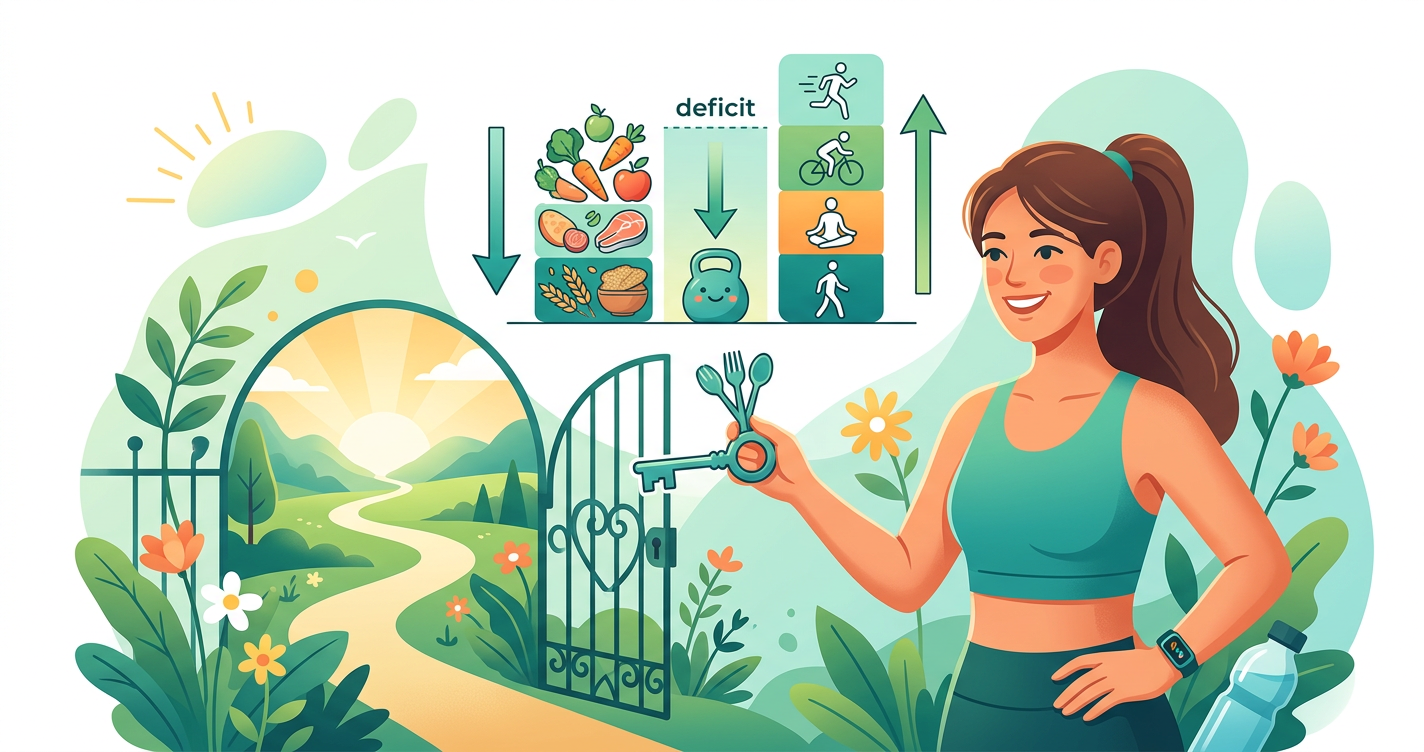
Unlock Sustainable Fat Loss: Your Friendly Guide to Mastering the Calorie Deficit
Embarking on a fat loss journey can feel like navigating a maze of conflicting advice and quick-fix promises. But what if we told you there’s one fundamental principle that underpins all successful, sustainable fat loss? It’s not a magic pill, a restrictive diet, or an extreme workout regimen. It’s the calorie deficit, and understanding it is your key to lasting results.
At its core, a calorie deficit is surprisingly simple: consuming fewer calories than your body burns. Yet, mastering this principle in a way that’s healthy, enjoyable, and sustainable is where the real magic happens. This guide will demystify the calorie deficit, offering you evidence-based insights and encouraging tips to help you achieve your fat loss goals without feeling deprived or overwhelmed. Let’s dive in! this excellent wellness product
What Exactly *Is* a Calorie Deficit? The Science Simplified
Think of your body as a car. Food is fuel, and calories are the units of energy in that fuel. Your body constantly burns calories for everything you do – from breathing and sleeping to running a marathon. This total amount of energy your body expends daily is called your Total Daily Energy Expenditure (TDEE).
Your TDEE is made up of several components:
- Basal Metabolic Rate (BMR): The calories your body burns at rest to maintain basic life functions (breathing, circulation, organ function).
- Thermic Effect of Food (TEF): The energy your body uses to digest, absorb, and metabolize the food you eat.
- Non-Exercise Activity Thermogenesis (NEAT): Calories burned from daily activities that aren't structured exercise (walking, fidgeting, standing, cleaning).
- Exercise Activity Thermogenesis (EAT): Calories burned during planned physical activity (gym workouts, sports).
When you consistently consume fewer calories than your TDEE, your body has to tap into its stored energy reserves, primarily body fat, to make up the difference. This is a calorie deficit, and it's the undisputed physiological requirement for fat loss. It’s a fundamental principle of energy balance, often summarized as “Calories In, Calories Out” (CICO).
Calculating Your Sweet Spot: Finding Your Ideal Calorie Deficit
So, how do you figure out your TDEE and create a deficit? While precise measurement requires lab equipment, you can get a very good estimate using online calculators (like those based on the Mifflin-St Jeor or Katch-McArdle formulas). These calculators take into account your age, sex, weight, height, and activity level.
Once you have an estimate of your TDEE, the next step is to create a safe and sustainable deficit. For most individuals, a deficit of 300-500 calories below your TDEE is recommended. This typically translates to a healthy fat loss rate of 1-2 pounds per week. Why not more? An overly aggressive deficit can lead to muscle loss, nutrient deficiencies, fatigue, and can be incredibly difficult to sustain, often leading to rebound weight gain.
Remember, these numbers are starting points. Your body is unique, and you'll need to listen to it and adjust as you go. Track your progress for a few weeks, and if you're not losing fat at the desired rate, you might slightly reduce your intake or increase your activity.
“Eating Less” Doesn’t Mean “Eating Badly”: Smart Nutritional Choices
Creating a calorie deficit isn’t just about eating less; it’s about eating smarter. The quality of your calories matters immensely for satiety, nutrient intake, and overall well-being. Focusing on nutrient-dense foods will help you feel full and satisfied on fewer calories.
Prioritize Protein: Your Satiety Superstar
Protein is your best friend when in a calorie deficit. It's highly satiating, meaning it keeps you feeling fuller for longer, reducing cravings. It also has a higher TEF than carbs or fats, meaning your body burns more calories digesting it. Crucially, adequate protein intake helps preserve lean muscle mass during fat loss, which is vital for maintaining a healthy metabolism.
- Sources: Lean meats, poultry, fish, eggs, dairy, legumes, tofu, tempeh.
Embrace Fiber: The Filling Powerhouse
Fiber-rich foods add bulk to your diet without adding many calories. They slow down digestion, contributing to sustained fullness and stable blood sugar levels. Plus, they support gut health!
- Sources: Fruits, vegetables, whole grains (oats, quinoa, brown rice), beans, lentils.
Don't Fear Healthy Fats (But Mind Portions!)
While fats are calorie-dense, healthy fats are essential for hormone production, nutrient absorption, and satiety. Include them in moderation to support overall health and keep you feeling satisfied.
- Sources: Avocados, nuts, seeds, olive oil, fatty fish.
And don’t forget hydration! Drinking plenty of water can help manage hunger, boost metabolism, and support overall bodily functions.
Fueling the Fire: The Role of Exercise in Your Calorie Deficit Journey
While nutrition creates the deficit, exercise can significantly enhance your fat loss efforts and improve body composition. Think of exercise as a powerful tool to widen your deficit or allow for slightly more food intake, all while building a healthier, stronger you.
Strength Training: Build and Preserve Muscle
Lifting weights is paramount for fat loss. It helps preserve muscle mass while you’re losing fat, and even build new muscle if you're new to it. More muscle means a higher BMR, as muscle tissue burns more calories at rest than fat tissue. Aim for 2-4 sessions per week.
Cardio: Boost Your Calorie Burn and Heart Health
Cardiovascular exercise directly burns calories, helping you achieve or deepen your deficit. It also significantly improves heart health, endurance, and mood. Mix in both moderate-intensity steady-state cardio (like brisk walking or jogging) and high-intensity interval training (HIIT) for varied benefits.
Don't Forget NEAT!
Simply moving more throughout your day – taking the stairs, parking further away, standing while working, walking during phone calls – can add up to a significant calorie burn over time. It’s an often-underestimated component of your TDEE!
Beyond the Numbers: The Importance of Sleep, Stress, and Patience
Fat loss isn't just about calories in and calories out; it's also deeply influenced by lifestyle factors. Neglecting these can sabotage even the most perfectly planned calorie deficit.
- Sleep: Poor sleep disrupts hunger-regulating hormones (ghrelin and leptin), making you feel hungrier and crave less healthy foods. Aim for 7-9 hours of quality sleep per night.
- Stress Management: Chronic stress elevates cortisol levels, which can promote fat storage, especially around the belly. Find healthy ways to manage stress, such as meditation, yoga, hobbies, or spending time in nature.
- Patience and Consistency: Fat loss is rarely linear. There will be plateaus, fluctuations, and weeks where the scale doesn't move. Stay consistent, trust the process, and focus on non-scale victories like increased energy, better fitting clothes, and improved strength.
Troubleshooting Your Calorie Deficit: When Progress Stalls
It's normal to hit a plateau. If the scale isn't moving after a few weeks, don't get discouraged! Here's what to consider:
- Are You Truly in a Deficit? Re-evaluate your food tracking. Are you accurately weighing and measuring? Are you accounting for sauces, drinks, and snacks? Many people underestimate their intake.
- Adjust Your Intake or Output: Your TDEE naturally decreases as you lose weight. You may need to slightly reduce your calorie intake (by another 100-200 calories) or increase your activity level.
- Consider a Diet Break: Sometimes, a brief period (1-2 weeks) at maintenance calories can help alleviate metabolic adaptation, reset hunger hormones, and provide a mental break before resuming your deficit.
- Consult a Professional: If you're consistently struggling, a registered dietitian or certified personal trainer can provide personalized guidance and help identify any underlying issues.
Your Journey to Sustainable Fat Loss Starts Here!
Mastering the calorie deficit is the most powerful tool you have for sustainable fat loss. It’s about understanding your body’s energy needs, making smart, nutrient-dense food choices, incorporating enjoyable movement, and prioritizing overall well-being. It’s not about deprivation, but about intelligent nourishment and consistent effort.
Embrace this evidence-based approach with patience, kindness, and consistency, and you’ll not only achieve your fat loss goals but also build healthier habits that last a lifetime. You’ve got this!