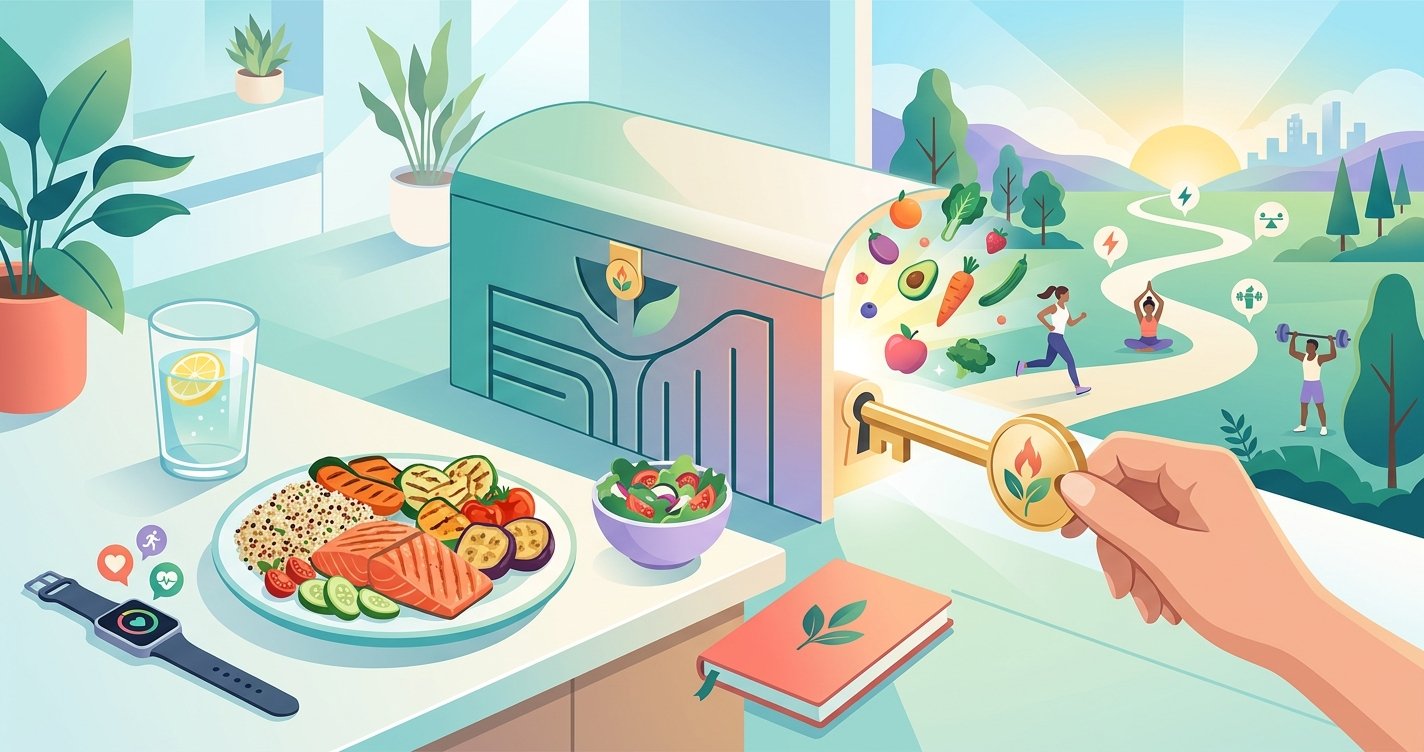
Unlock Sustainable Fat Loss: Your Ultimate Guide to a Calorie Deficit
Hey there, future you! Are you ready to finally understand the secret sauce behind lasting fat loss? Forget the fads, the extreme diets, and the confusing jargon. Today, we're diving deep into the one principle that truly matters: the calorie deficit. It's not just a buzzword; it's the scientifically proven foundation for shedding unwanted body fat in a healthy, sustainable way. And don't worry, we're going to break it down in a friendly, evidence-based, and super encouraging way!
Many people get overwhelmed by the sheer volume of information (and misinformation!) out there about weight loss. But at its core, fat loss boils down to a simple equation: energy in vs. energy out. When you consistently consume fewer calories than your body burns, your body turns to its stored fat for energy – and that, my friend, is a calorie deficit in action. Let's demystify it together and equip you with the knowledge to make informed choices for your health journey. this excellent wellness product
What Exactly *Is* a Calorie Deficit? The Core Principle Explained
Imagine your body as a car. Food is its fuel. Calories are the units of energy in that fuel. Every day, your body uses a certain amount of energy just to exist (breathing, thinking, pumping blood – this is your Basal Metabolic Rate or BMR), plus extra energy for movement, digestion, and exercise. This total daily energy expenditure is often called your TDEE.
A calorie deficit simply means that the number of calories you consume through food and drink is less than the number of calories your body burns through its TDEE. When this happens, your body, being incredibly efficient, looks for an alternative energy source. And guess what its favorite alternative is? Stored body fat! It's like spending less money than you earn – eventually, your savings (fat stores) start to dwindle.
This isn't about starvation or deprivation; it's about intelligent energy management. Creating a moderate, consistent calorie deficit is the most reliable way to signal to your body that it's time to tap into those fat reserves. It’s a fundamental biological truth that no amount of 'superfoods' or 'detox teas' can bypass.
How to Calculate Your Calorie Needs (And Your Deficit!)
Understanding your personal calorie needs is the first step. While exact numbers can be tricky, we can get a great estimate!
- Estimate Your BMR: This is the minimum number of calories your body needs to perform basic functions at rest. Online calculators (like the Mifflin-St Jeor equation) can give you a good starting point based on your age, gender, weight, and height.
- Calculate Your TDEE: Once you have your BMR, you'll multiply it by an activity factor that reflects your daily exercise level (e.g., sedentary, lightly active, moderately active, very active). Again, online calculators are your friend here.
- Create Your Deficit: For sustainable fat loss, experts generally recommend a deficit of 300-500 calories per day from your TDEE. This typically leads to a healthy weight loss of about 1-2 pounds per week, which is achievable and less likely to trigger extreme hunger or metabolic slowdown. For example, if your TDEE is 2500 calories, aiming for 2000-2200 calories per day would put you in a good deficit.
A note of caution: Don't go too low! Severe calorie restriction can lead to muscle loss, nutrient deficiencies, and can negatively impact your metabolism and overall health. Slow and steady wins the race here.
Fueling Your Body for Fat Loss: Nutrition Strategies
While a calorie deficit is key, *how* you achieve it matters immensely. Focusing on nutrient-dense foods will make the process much easier and more enjoyable.
- Prioritize Protein: Protein is your best friend for fat loss. It’s incredibly satiating, helping you feel fuller for longer, and it helps preserve muscle mass while in a deficit. Aim for 0.7-1 gram of protein per pound of body weight. Think lean meats, poultry, fish, eggs, dairy, and plant-based options like lentils and beans.
- Embrace Fiber-Rich Foods: Found in fruits, vegetables, and whole grains, fiber adds bulk to your meals, aids digestion, and also contributes to satiety. Fill at least half your plate with colorful veggies at every meal!
- Don't Fear Healthy Fats: While calorie-dense, healthy fats (like those found in avocados, nuts, seeds, and olive oil) are crucial for hormone production, nutrient absorption, and also contribute to satiety. Just be mindful of portion sizes.
- Hydrate, Hydrate, Hydrate: Drinking plenty of water can help with satiety, boost metabolism slightly, and is vital for overall health. Sometimes, what feels like hunger is actually just thirst!
- Mindful Eating: Pay attention to your hunger and fullness cues. Eat slowly, savor your food, and put away distractions. This can naturally lead to consuming fewer calories.
Moving Your Body: Exercise and a Calorie Deficit
Exercise isn't strictly necessary to create a calorie deficit, but it's a powerful tool to accelerate fat loss, improve body composition, and enhance your overall health. It works in two main ways:
- Increases Calorie Expenditure: Any movement burns calories, directly contributing to your 'calories out' side of the equation.
- Preserves and Builds Muscle: Especially important is strength training. Muscle tissue burns more calories at rest than fat tissue, so preserving (or even building) muscle while losing fat can actually boost your metabolism over time. Aim for 2-3 strength training sessions per week.
- Boosts Overall Health: Beyond calorie burning, exercise improves cardiovascular health, mood, sleep, and reduces stress – all factors that indirectly support a sustainable fat loss journey.
You don't need to become an Olympic athlete. Regular walks, dancing, cycling, swimming, or joining a fun fitness class can all make a significant difference. Find activities you enjoy and stick with them!
Beyond the Numbers: The Importance of Sustainability & Mindset
While the numbers are important, your mindset and the sustainability of your approach are paramount for long-term success.
- Patience and Consistency: Fat loss is not linear. There will be days your weight fluctuates, and plateaus are normal. Stay consistent with your deficit and trust the process. Real, lasting change takes time.
- Prioritize Sleep: Lack of sleep can disrupt hunger hormones (ghrelin and leptin), making you feel hungrier and crave unhealthy foods. Aim for 7-9 hours of quality sleep per night.
- Manage Stress: Chronic stress can lead to elevated cortisol levels, which can promote fat storage, especially around the midsection. Find healthy ways to manage stress, whether it's meditation, hobbies, or spending time in nature.
- Listen to Your Body: Your body will give you signals. Learn to distinguish true hunger from emotional hunger. Adjust your calorie intake if you feel consistently drained or overly hungry. This journey is about learning what works best for YOU.
- Focus on Non-Scale Victories: Celebrate improved energy, better sleep, clothes fitting differently, increased strength, and a more positive outlook. The scale is just one metric!
Common Pitfalls to Avoid on Your Journey
Even with the best intentions, it's easy to stumble. Here are a few common mistakes to watch out for:
- Too Extreme a Deficit: As mentioned, this can backfire, leading to muscle loss, nutrient deficiencies, and metabolic slowdown.
- Ignoring Nutrient Quality: A calorie is not just a calorie. 1500 calories of junk food will leave you feeling hungry, deprived, and lacking essential nutrients, compared to 1500 calories of whole, unprocessed foods.
- Underestimating Intake/Overestimating Output: We tend to be poor judges of how many calories we eat and how many we burn. Tracking your food intake (even for a short period) can be incredibly insightful, and don't assume your workout burned hundreds more calories than it actually did.
- Lack of Patience: Expecting instant results is a recipe for disappointment. Embrace the journey and focus on building sustainable habits.
- Giving Up After a Slip-Up: One 'bad' meal or day doesn't ruin your progress. Acknowledge it, learn from it, and get right back on track. Consistency, not perfection, is the goal.
Ready to Start Your Sustainable Fat Loss Journey?
You've got this! Understanding the calorie deficit is empowering because it puts you in control. It's not about complex diets or magic pills; it's about making informed choices about your energy balance and nourishing your body properly. Start by calculating your estimated TDEE, creating a moderate deficit, focusing on protein and fiber, and incorporating regular movement.
Remember, this is a journey towards a healthier, happier you. Be kind to yourself, stay consistent, and celebrate every small victory along the way. Your body is an incredible machine, and by giving it the right signals, you can achieve the sustainable fat loss you've been striving for. Now go forth and conquer!