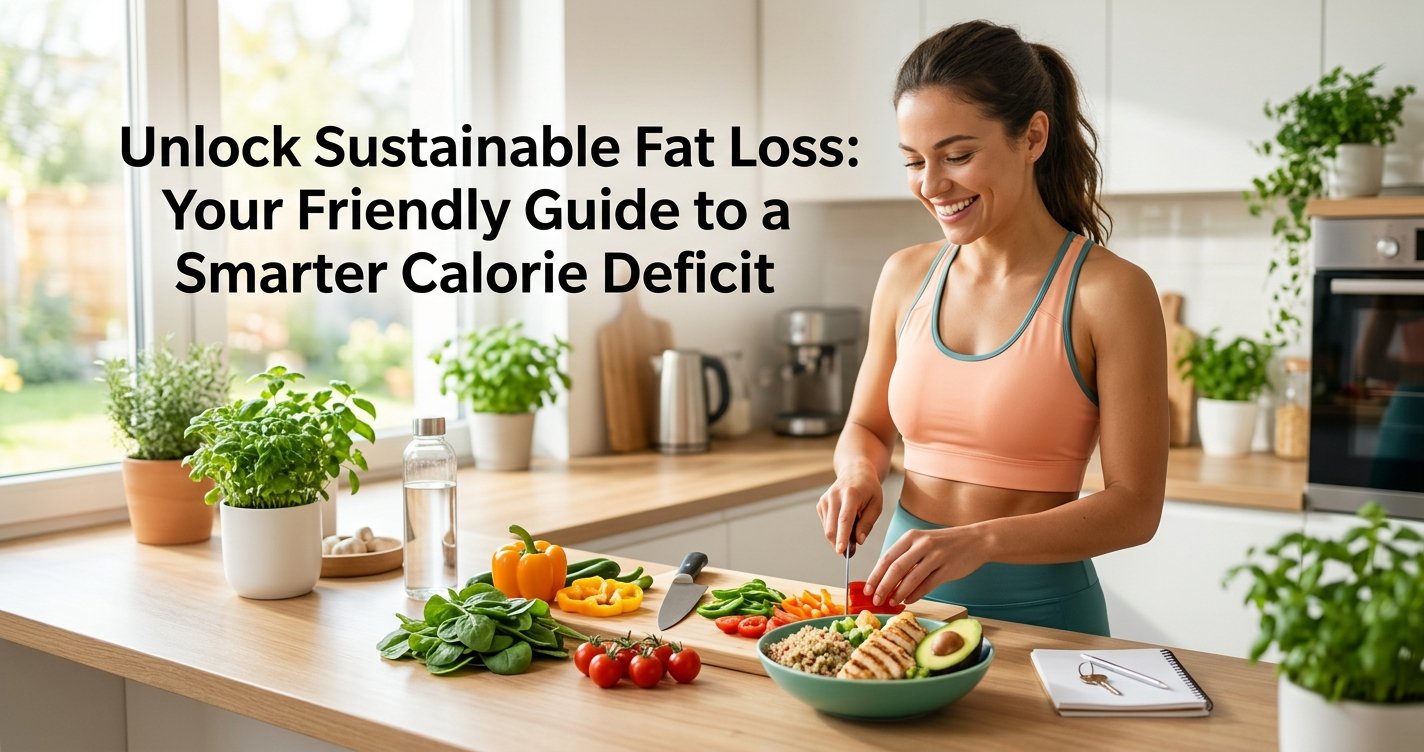
Unlock Sustainable Fat Loss: Your Friendly Guide to a Smarter Calorie Deficit
Tired of restrictive diets that promise quick fixes only to leave you feeling defeated and heavier than before? You're not alone. The world of fat loss is often filled with confusing information, extreme rules, and unrealistic expectations. But what if we told you there's a simpler, more sustainable path? A path rooted in science, self-compassion, and long-term success?
Welcome to the world of the sustainable calorie deficit. This isn't another fad diet; it's a fundamental principle of energy balance, tailored for real life. This guide will demystify the process, empower you with practical strategies, and help you achieve lasting healthy weight loss without sacrificing your sanity or your favorite foods. Let's ditch the deprivation and embrace a smarter, kinder approach to transforming your body and your health! this excellent wellness product
The Calorie Deficit Demystified: What It Really Means
At its core, fat loss boils down to a simple equation: energy in vs. energy out. A calorie deficit occurs when you consistently consume fewer calories (energy in) than your body expends (energy out) over a period of time. When this happens, your body turns to its stored energy reserves – primarily body fat – to make up the difference. This is how fat is lost.
Think of your body like a car. If you put less fuel in than you burn on a trip, your fuel tank eventually empties. For your body, the 'fuel tank' is your fat stores. It sounds straightforward, right? And it is! The challenge lies not in the concept itself, but in implementing it sustainably and healthily.
Why “Slow and Steady” Wins the Fat Loss Race
Many diets advocate for extreme calorie restriction, promising rapid results. While you might see initial drops on the scale, these methods are often unsustainable and can lead to a host of problems:
- Metabolic Slowdown: Your body adapts to severe restriction, slowing your metabolism to conserve energy, making future fat loss harder.
- Muscle Loss: Along with fat, extreme deficits can cause you to lose valuable muscle mass, which is crucial for a healthy metabolism and body composition.
- Nutrient Deficiencies: Restricting too many foods can lead to inadequate intake of essential vitamins and minerals.
- Rebound Weight Gain: The infamous 'yo-yo effect' often occurs when extreme diets are abandoned, leading to rapid regain and often more weight than before.
- Mental Fatigue & Cravings: Constant hunger and deprivation can lead to irritability, poor focus, and ultimately, uncontrollable cravings and binge eating.
A sustainable calorie deficit, on the other hand, prioritizes a modest and manageable reduction in calories, typically 300-500 calories below your maintenance level. This allows for consistent, gradual fat loss (around 1-2 pounds per week) while preserving muscle, maintaining energy levels, and fostering a healthier relationship with food.
Your Personalized Path: Calculating Your Calorie Deficit
No two bodies are exactly alike, so a one-size-fits-all approach to calories won't work. The first step to creating a sustainable deficit is understanding your body's unique energy needs.
Step 1: Estimate Your Basal Metabolic Rate (BMR)
Your BMR is the number of calories your body burns at rest to perform basic functions like breathing, circulation, and cell production. You can estimate your BMR using online calculators (e.g., Harris-Benedict or Mifflin-St Jeor equations). These take into account your age, gender, height, and weight.
Step 2: Determine Your Total Daily Energy Expenditure (TDEE)
Your TDEE is your BMR plus the calories you burn through physical activity (everything from walking to intense exercise). Online TDEE calculators will ask about your activity level (sedentary, lightly active, moderately active, very active) to give you an estimate of your daily maintenance calories.
Step 3: Create a Modest Deficit
Once you have your TDEE, subtract 300-500 calories to create your target daily intake for fat loss. For example, if your TDEE is 2500 calories, aiming for 2000-2200 calories per day would create a sustainable deficit.
Smart Strategies to Achieve Your Deficit (Without Feeling Deprived!)
Counting every calorie can feel tedious for some, but understanding where your calories come from and making smart swaps can make the process much easier. Here are some evidence-based strategies:
Prioritize Protein and Fiber: Your Satiety Superheroes
Protein and fiber are incredibly satiating, meaning they help you feel fuller for longer. This is crucial for managing hunger in a calorie deficit. Incorporate lean proteins (chicken, fish, tofu, beans, lentils) and high-fiber foods (vegetables, fruits, whole grains) into every meal.
Embrace Whole, Unprocessed Foods
Whole foods (vegetables, fruits, lean meats, whole grains, nuts, seeds) are generally lower in calories and higher in nutrients compared to their processed counterparts. They provide essential vitamins and minerals, support gut health, and keep you feeling satisfied.
Hydration is Key: Don't Forget Your Water!
Often, thirst can be mistaken for hunger. Drinking plenty of water throughout the day can help manage appetite, support metabolic functions, and keep you feeling energized. Aim for 8-10 glasses daily, and try drinking a glass before meals.
Mindful Eating: Savoring Every Bite
Slow down, pay attention to your body's hunger and fullness cues, and truly taste your food. Mindful eating can help you recognize when you've had enough, prevent overeating, and enhance your enjoyment of meals.
Move Your Body: Beyond Just “Exercise”
While structured exercise is beneficial, increasing your overall daily movement (Non-Exercise Activity Thermogenesis or NEAT) can significantly contribute to your calorie expenditure. Take the stairs, walk more, stand up frequently – every little bit adds up and supports your fat loss journey.
Navigating the Journey: Overcoming Common Fat Loss Challenges
The path to sustainable fat loss isn't always linear. You'll encounter hurdles, but knowing how to navigate them can keep you on track.
Plateaus: A Normal Part of the Process
Your body is incredibly adaptable. As you lose weight, your TDEE naturally decreases. If your progress stalls, it might be time to slightly adjust your calorie intake or increase your activity. Don't get discouraged; plateaus are normal!
Social Situations and Eating Out
Don't let social events derail your progress. Plan ahead: look at menus online, choose leaner options, ask for sauces on the side, and practice portion control. Remember, one meal won't undo all your hard work, but consistent indulgence will.
Emotional Eating: Finding Healthier Coping Mechanisms
Food is often used to cope with stress, boredom, or sadness. Identify your triggers for emotional eating and develop alternative coping strategies like going for a walk, calling a friend, practicing mindfulness, or pursuing a hobby.
Beyond the Plate: The Holistic Pillars of Sustainable Fat Loss
While a calorie deficit is fundamental, true sustainable fat loss encompasses much more than just food and exercise. It's a holistic approach to your well-being.
Quality Sleep: Your Unsung Fat Loss Hero
Lack of sleep can wreak havoc on your hormones, increasing ghrelin (hunger hormone) and decreasing leptin (satiety hormone). Aim for 7-9 hours of quality sleep per night to support your body's natural metabolism and hunger regulation.
Stress Management: Taming the Cortisol Beast
Chronic stress elevates cortisol levels, which can promote fat storage, especially around the midsection. Incorporate stress-reducing activities into your daily routine, such as meditation, yoga, deep breathing exercises, or spending time in nature.
Consistency and Patience: The Real Secret Sauce
Sustainable fat loss is a marathon, not a sprint. There will be good days and challenging days. The key is consistency over time, not perfection. Be patient with yourself, celebrate small victories, and remember that every healthy choice moves you closer to your goals.
Your Sustainable Fat Loss Journey Starts Now!
You have the knowledge and the tools to embark on a sustainable fat loss journey that prioritizes your health, happiness, and long-term success. Forget the quick fixes and embrace the power of a smart, consistent calorie deficit combined with nourishing foods, mindful movement, and self-care.
Start small, make gradual changes, and be kind to yourself along the way. Your body is capable of amazing things, and with this friendly, evidence-based approach, you're well on your way to achieving your healthy weight loss goals and building habits that last a lifetime. You've got this!