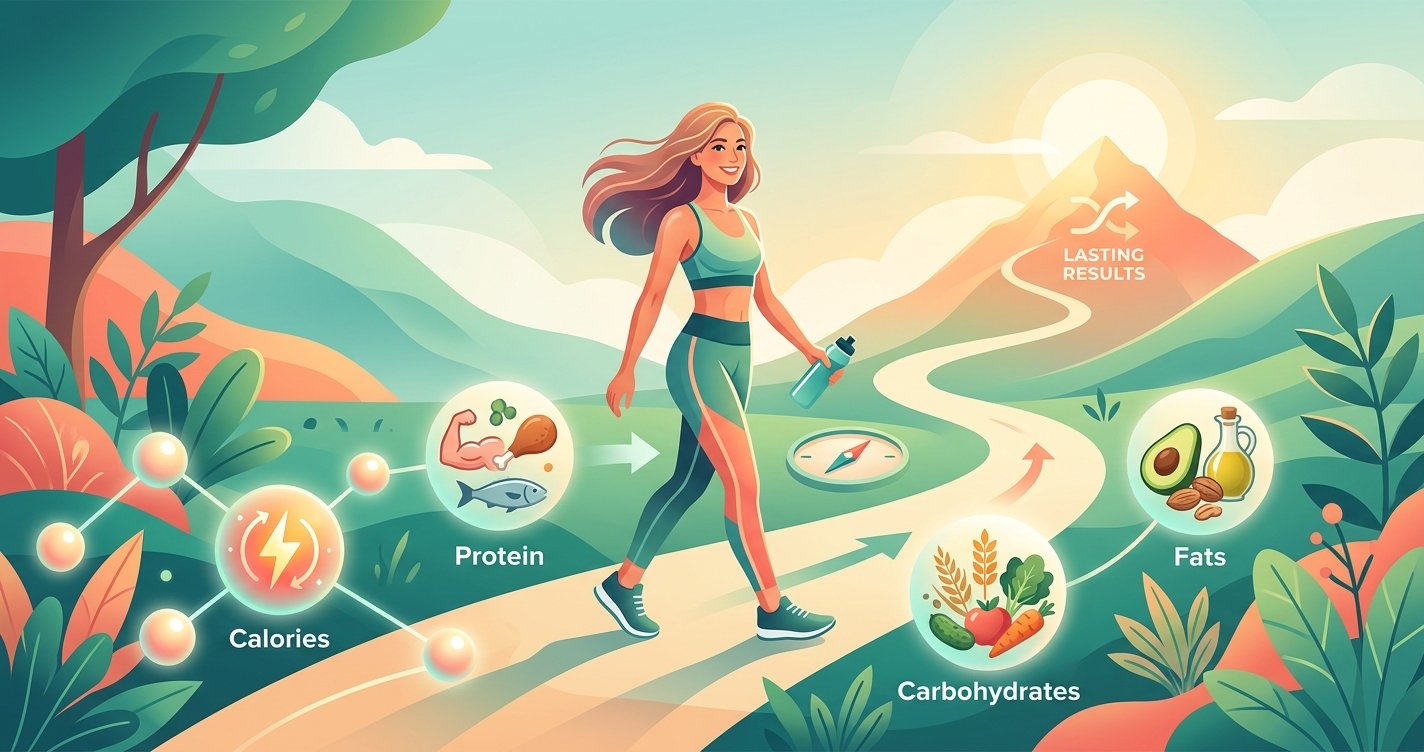
Hey there, future you! Have you ever felt caught in the endless cycle of diet fads, quick fixes, and the frustration of losing weight only to gain it back? You're not alone. Many of us have been there, chasing the promise of rapid results without truly understanding the 'how' and 'why' behind sustainable fat loss. But what if I told you that achieving your fat loss goals doesn't have to be complicated, restrictive, or a constant battle against your own body?
It's true! The secret to lasting fat loss isn't a magical pill or an extreme diet; it's a deep yet simple understanding of two fundamental pillars: calorie deficit and macronutrients. When you grasp these concepts, you unlock the power to transform your body in a healthy, sustainable way, without sacrificing your sanity or your favorite foods. Ready to ditch the diet dogma and embrace an evidence-based approach that actually works? Let's dive in! this excellent wellness product
Understanding the Core: The Calorie Deficit Explained
Imagine your body as a car. To move, it needs fuel (calories). If you put in more fuel than the car needs to travel, the excess gets stored. In our bodies, that excess fuel is stored as fat. Conversely, if you consistently provide slightly less fuel than your body needs to maintain its current state, it has no choice but to tap into those stored fat reserves for energy. This, my friend, is the essence of a calorie deficit.
Simply put, for fat loss to occur, you must consistently consume fewer calories than your body burns. It's the most fundamental principle in nutrition science, backed by countless studies. No matter what diet trend is popular, whether it's low-carb, low-fat, or intermittent fasting, if it leads to fat loss, it's because it's creating a calorie deficit. Understanding this takes the mystery out of fat loss and puts you firmly in control.
Calculating Your Calorie Needs: A Starting Point
So, how do you figure out how many calories your body burns? While precise measurements require lab tests, we can use estimates to get a very good starting point. Your Total Daily Energy Expenditure (TDEE) is the total number of calories your body burns in a day, including your Basal Metabolic Rate (BMR – calories burned at rest), calories burned through digestion, and calories burned through physical activity.
There are many reputable online TDEE calculators (e.g., from websites like Precision Nutrition or TDEEcalculator.net) that can give you an estimate based on your age, sex, weight, height, and activity level. Once you have your estimated TDEE, creating a deficit is straightforward. A good starting point for sustainable fat loss is to aim for a deficit of 250-500 calories per day. This typically results in a healthy fat loss of 0.5 to 1 pound per week, which is sustainable and minimizes muscle loss. Remember, this is a starting point; you'll adjust based on your progress.
Macronutrients: Your Building Blocks for Fat Loss
While a calorie deficit is king for fat loss, what you eat within that deficit profoundly impacts your health, hunger levels, energy, and body composition. This is where macronutrients come in – protein, carbohydrates, and fats. Each plays a unique and vital role, and balancing them correctly can make your fat loss journey significantly easier and more effective.
Protein: Your Satiety & Muscle Guardian
- Why it's crucial: Protein is the most satiating macronutrient, meaning it keeps you feeling fuller for longer, which is a huge advantage when in a calorie deficit. It also has a higher thermic effect of food (TEF) – your body burns more calories digesting protein compared to carbs or fats. Most importantly, adequate protein intake is essential for preserving lean muscle mass while losing fat. Muscle is metabolically active, so keeping it helps maintain a higher metabolism.
- Sources: Lean meats, poultry, fish, eggs, dairy (Greek yogurt, cottage cheese), legumes, tofu, protein powder.
- Recommendation: Aim for 1.6 to 2.2 grams of protein per kilogram of body weight per day (or about 0.7 to 1 gram per pound of body weight). Distribute your protein intake evenly throughout your meals.
Carbohydrates: Fuel for Your Body and Mind
- Why they matter: Carbs are your body's preferred source of energy. They fuel your workouts, brain function, and daily activities. Cutting them out entirely can lead to lethargy, poor mood, and cravings. Opting for complex carbohydrates, rich in fiber, can also aid satiety and promote healthy digestion.
- Sources: Whole grains (oats, brown rice, quinoa, whole-wheat bread), fruits, vegetables, legumes, potatoes, sweet potatoes.
- Recommendation: Focus on whole, unprocessed sources. The exact amount will vary based on your activity level and personal preference, but generally, 30-40% of your daily calories from carbs is a good range for fat loss, prioritizing complex carbs.
Fats: Essential for Health, Mindful for Calories
- Why they're essential: Dietary fats are vital for hormone production, nutrient absorption (especially fat-soluble vitamins A, D, E, K), brain health, and overall cellular function. They also contribute to satiety and make food taste great!
- Sources: Avocados, nuts, seeds, olive oil, fatty fish (salmon, mackerel), egg yolks.
- Recommendation: While essential, fats are the most calorie-dense macronutrient (9 calories per gram vs. 4 for protein/carbs), so moderation is key in a deficit. Aim for 20-30% of your daily calories from healthy fats.
Putting It All Together: Practical Tips for Tracking
Now that you understand the 'what,' let's talk about the 'how.' Tracking your calories and macronutrients might sound daunting, but it becomes second nature with practice. Here's how to make it manageable:
- Use a Food Scale: The most accurate way to track is to weigh your food, especially in the beginning. Eyeballing portions is notoriously inaccurate.
- Download a Tracking App: Apps like MyFitnessPal, Cronometer, or Lose It! have vast food databases and make logging meals incredibly easy.
- Be Consistent, Not Perfect: Don't aim for 100% accuracy every single day. Aim for consistency. If you're within 10-15% of your targets, you're doing great.
- Meal Prep: Preparing your meals in advance can significantly reduce the temptation to grab convenient, untracked, and often calorie-dense options.
- Read Labels: Become a pro at understanding nutrition labels. Pay attention to serving sizes!
- Adjust as Needed: If you're not seeing progress after 2-3 weeks, slightly adjust your calories down (e.g., by another 100-200 calories) or increase your activity. If you're feeling too deprived, slightly increase your calories. Listen to your body!
Beyond the Numbers: The Pillars of Sustainable Success
While calories and macros are the bedrock, sustainable fat loss is about more than just numbers. These often-overlooked lifestyle factors play a huge role in your success:
- Sleep: Aim for 7-9 hours of quality sleep. Poor sleep disrupts hormones that regulate hunger (ghrelin) and satiety (leptin), making cravings stronger and willpower weaker.
- Stress Management: Chronic stress elevates cortisol levels, which can promote fat storage, especially around the midsection. Find healthy ways to manage stress: meditation, hobbies, spending time in nature.
- Hydration: Drink plenty of water throughout the day. Sometimes, what feels like hunger is actually thirst. Water also aids metabolism and can make you feel fuller.
- Movement (Beyond Structured Exercise): Increase your Non-Exercise Activity Thermogenesis (NEAT) – things like walking more, taking the stairs, fidgeting. These small movements add up and contribute significantly to your daily calorie burn.
- Patience & Consistency: Fat loss is a marathon, not a sprint. There will be good days and bad days. The key is to stay consistent over time and not get discouraged by minor fluctuations.
Common Fat Loss Myths & How to Avoid Them
The world of fat loss is rife with misinformation. Let's bust a few common myths that can derail your progress:
- Myth: Carbs make you fat. Truth: Excess calories make you fat. Carbs are an essential energy source. The type and quantity matter, but they are not inherently 'bad.'
- Myth: You need to cut out all sugar/dairy/gluten. Truth: Unless you have an allergy or intolerance, eliminating entire food groups isn't necessary for fat loss and can make your diet overly restrictive and hard to maintain. Focus on overall calorie balance and nutrient density.
- Myth: Spot reduction works. Truth: You cannot choose where your body loses fat from. Fat loss occurs systemically throughout your body. Targeted exercises build muscle in an area, but won't 'melt' fat off it.
- Myth: Extreme calorie deficits are faster and better. Truth: While rapid initial weight loss might occur, extreme deficits often lead to muscle loss, metabolic adaptation (your body burning fewer calories), intense hunger, nutrient deficiencies, and are unsustainable, often resulting in rebound weight gain.
Your Journey to Lasting Fat Loss Starts Now
You now have the fundamental knowledge to approach fat loss in an intelligent, sustainable, and empowering way. By understanding the critical role of a calorie deficit and mastering your macronutrients, you're equipped with the tools to take control of your body composition, not just for a few weeks, but for life.
Remember, this isn't about perfection; it's about consistency, learning, and making gradual, informed choices that align with your health goals. Be patient with yourself, celebrate your small victories, and focus on building habits that serve your long-term well-being. You've got this! Start today, and build the healthy, strong, and vibrant you that you deserve.