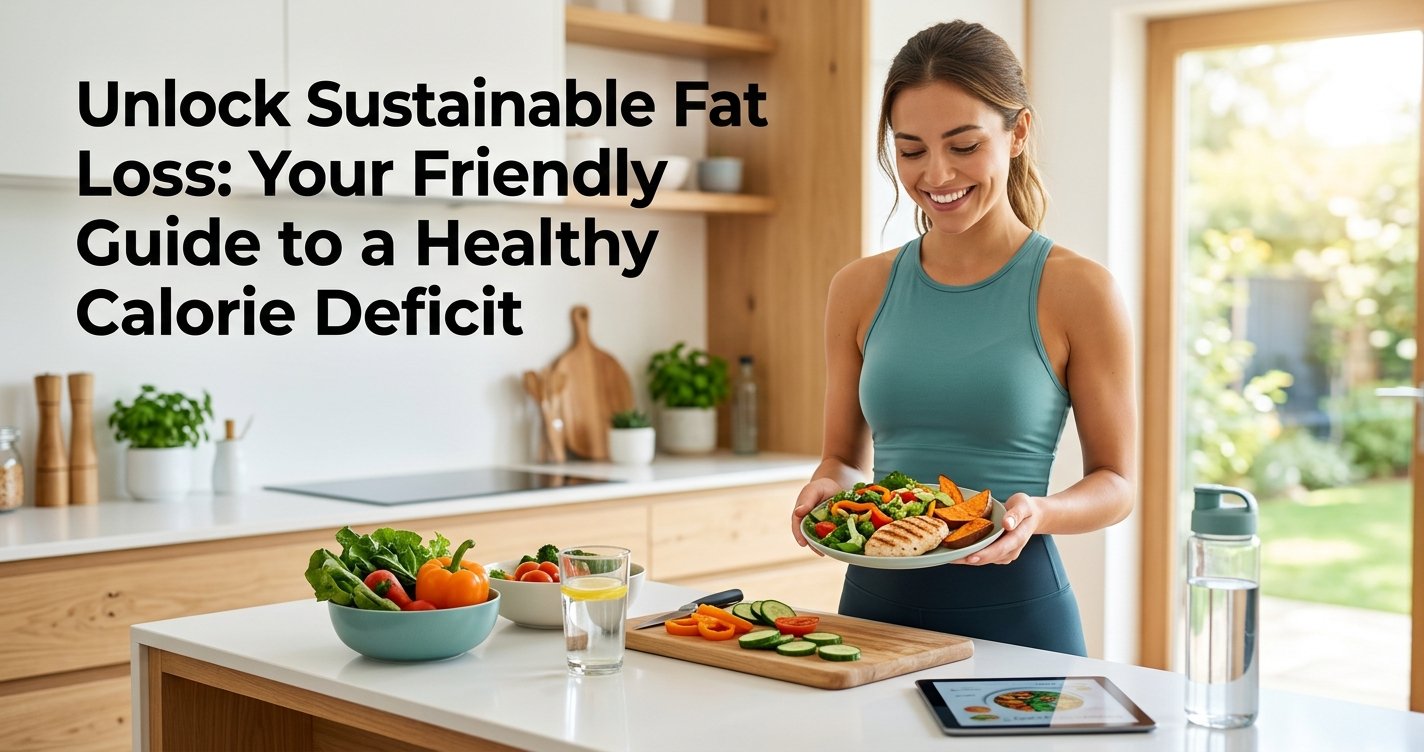
Unlock Sustainable Fat Loss: Your Friendly Guide to a Healthy Calorie Deficit
Are you tired of the endless cycle of crash diets, quick fixes, and the frustration of rebound weight gain? You’re not alone. Many people embark on their fat loss journey with high hopes, only to be met with unsustainable methods that leave them feeling deprived, exhausted, and ultimately, defeated. But what if there was a way to achieve lasting fat loss without resorting to extreme measures? What if the secret lay in a concept that’s simple, scientific, and surprisingly flexible?
Welcome to the world of the sustainable calorie deficit. This isn't just another diet trend; it's the fundamental principle behind all successful fat loss, reimagined for long-term health and happiness. In this friendly, evidence-based guide, we're going to demystify the calorie deficit, show you how to create one that works for you, and equip you with the knowledge to make sustainable fat loss a reality. Let's ditch the deprivation and embrace a smarter, healthier path to your goals! this excellent wellness product
What Exactly *Is* a Calorie Deficit? The Core Principle of Fat Loss
At its heart, a calorie deficit is simple math: it means you're consuming fewer calories than your body burns in a day. Think of your body as a car. If you put in less fuel than it needs to drive, it has to find energy elsewhere. For your body, that 'elsewhere' is your stored body fat.
Your body is constantly burning calories just to exist – to breathe, pump blood, digest food, and keep you warm. This is your Basal Metabolic Rate (BMR). Add to that the calories you burn through daily activities, exercise, and even digesting food, and you get your Total Daily Energy Expenditure (TDEE). When your calorie intake falls below your TDEE, your body taps into its fat reserves for energy, leading to fat loss. It’s the undisputed, non-negotiable scientific truth behind shedding those extra pounds. No magic pills, no secret foods – just energy balance.
Why "Sustainable" is the Magic Word for Lasting Results
Anyone can create a calorie deficit, but creating a sustainable one is where the real magic happens. This distinction is crucial for long-term success and avoiding the dreaded yo-yo effect.
The Pitfalls of Extreme Restriction
- Metabolic Slowdown: While your body is smart, it also adapts. A drastic calorie cut can signal starvation, causing your metabolism to slow down to conserve energy. This makes future fat loss even harder.
- Muscle Loss: When calories are too low, your body might start breaking down muscle tissue for energy, not just fat. Muscle is metabolically active, meaning it burns more calories at rest, so losing it is counterproductive for fat loss.
- Nutrient Deficiencies: Extreme diets often lack essential vitamins and minerals, impacting your overall health, energy levels, and even immune function.
- Rebound Weight Gain: The human body can only withstand extreme deprivation for so long. Eventually, hunger hormones surge, cravings intensify, and you're likely to overeat, leading to quick weight regain, often with extra fat.
- Psychological Toll: Constant hunger, irritability, poor sleep, and an obsession with food can make life miserable, impacting your mental well-being and social life.
The Benefits of a Moderate Approach
A sustainable calorie deficit, typically a moderate one, allows you to:
- Preserve Muscle Mass: By providing enough nutrients and pairing it with resistance training, you can primarily lose fat while maintaining or even building muscle.
- Maintain Metabolic Rate: A gradual deficit prevents your metabolism from going into full 'starvation mode,' keeping your body burning calories efficiently.
- Better Adherence: When you're not constantly battling intense hunger or cravings, you're far more likely to stick to your plan long-term.
- Improved Energy & Mood: Eating enough nutritious food means sustained energy levels and a better mood, making the process enjoyable rather than a chore.
- Develop Healthy Habits: It's about learning to eat well for life, not just for a few weeks. This fosters a healthier relationship with food.
How to Create Your Sustainable Calorie Deficit (Without Starving!)
Ready to put theory into practice? Here’s a step-by-step guide to building your personalized, sustainable calorie deficit.
Step 1: Estimate Your Maintenance Calories (TDEE)
First, you need to know how many calories your body burns on an average day. This is your TDEE. You can find many reliable online calculators (search for 'TDEE calculator') that take into account your age, gender, height, weight, and activity level. Remember, these are estimates, but they provide an excellent starting point.
For example, a moderately active 35-year-old woman weighing 150 lbs might have a TDEE of around 2000 calories. This means if she consistently eats 2000 calories, her weight should remain stable.
Step 2: Choose Your Deficit Wisely
For sustainable fat loss, aim for a deficit of 300-500 calories below your TDEE. This typically translates to a healthy fat loss of 0.5 to 1 pound per week. While it might seem slow, this pace is ideal for:
- Minimizing muscle loss.
- Avoiding drastic metabolic slowdown.
- Keeping hunger manageable.
- Ensuring you can still get adequate nutrients.
So, if your TDEE is 2000 calories, aiming for 1500-1700 calories daily would be a fantastic, sustainable target.
Step 3: Prioritize Nutrient-Dense Foods
A calorie isn't just a calorie when it comes to satiety and nutrition. Focus on foods that offer a high amount of nutrients for fewer calories:
- Protein: Lean meats, poultry, fish, eggs, dairy, legumes, tofu. Protein is incredibly satiating, helps preserve muscle, and has a higher thermic effect (meaning your body burns more calories digesting it).
- Fiber: Vegetables, fruits, whole grains, beans, lentils. Fiber adds bulk to your meals, making you feel fuller for longer, and aids digestion.
- Healthy Fats: Avocados, nuts, seeds, olive oil. While calorie-dense, healthy fats are crucial for hormone production, nutrient absorption, and satiety. Consume them in moderation.
Filling your plate with these foods means you can eat satisfying portions without busting your calorie budget. It's about eating smarter, not necessarily less food volume!
Step 4: Don't Forget Hydration
Water is often overlooked but plays a vital role in fat loss. Staying well-hydrated can:
- Help you feel fuller, potentially reducing overall calorie intake.
- Support metabolic processes.
- Prevent you from mistaking thirst for hunger.
Aim for at least 8 glasses (around 2 liters) of water daily, more if you're active.
Step 5: Incorporate Movement (Beyond Just Burning Calories)
While a calorie deficit is king for fat loss, exercise is the queen for body composition and overall health. It helps in several ways:
- Strength Training: Lifting weights or doing bodyweight exercises helps build and preserve muscle mass. This is crucial because muscle burns more calories at rest than fat, boosting your metabolism.
- Cardio: Activities like walking, jogging, cycling, or swimming burn extra calories, contributing to your deficit, and improve cardiovascular health.
- NEAT (Non-Exercise Activity Thermogenesis): Simply moving more throughout the day – taking the stairs, parking further away, standing more – adds up and contributes to your TDEE.
Remember, you can't out-train a bad diet, but combining smart eating with consistent movement is the ultimate recipe for sustainable fat loss.
Common Pitfalls and How to Avoid Them
Even with the best intentions, the journey can have its bumps. Here’s how to navigate common challenges:
- Over-restricting and Burnout: If your deficit is too large, you'll inevitably feel deprived. Listen to your body. If you're constantly exhausted and starving, slightly increase your calories. A slower, steady pace is always better than a quick sprint followed by a crash.
- Underestimating Portion Sizes/Hidden Calories: Even healthy foods have calories. Cooking oils, sauces, dressings, and 'healthy' snacks can add up quickly. Consider using a food scale for a week or two to get a more accurate understanding of your intake.
- Ignoring Sleep: Poor sleep disrupts hormones that regulate hunger (ghrelin) and satiety (leptin), making you hungrier and more prone to cravings. Aim for 7-9 hours of quality sleep each night.
- Stress Management: Chronic stress can lead to increased cortisol levels, which can promote fat storage, especially around the belly. Find healthy ways to manage stress, such as meditation, yoga, or spending time in nature.
- Not Tracking Progress (Beyond Just the Scale): The scale doesn't tell the whole story. Muscle gain, water fluctuations, and hormonal changes can mask fat loss. Take progress photos, measure inches, and notice how your clothes fit. Celebrate non-scale victories!
The Long Game: Patience and Consistency Are Your Best Allies
Sustainable fat loss isn't a race; it's a marathon. There will be days when you feel incredibly motivated, and days when you want to give up. The key is to be patient with yourself and remain consistent, even when perfection isn't possible.
Focus on building habits that you can maintain for life. Don't beat yourself up over an occasional treat or a missed workout. Simply acknowledge it, learn from it, and get back on track with your next meal or next opportunity to move. Each small, consistent step forward contributes to your ultimate success.
Your Journey to Lasting Fat Loss Starts Now!
You now have the knowledge and tools to approach fat loss in a way that is effective, healthy, and most importantly, sustainable. Understanding and implementing a moderate calorie deficit, prioritizing nutrient-dense foods, staying hydrated, and incorporating regular movement are the cornerstones of your success.
Remember, this isn't about deprivation; it's about empowerment. It's about making conscious choices that nourish your body, fuel your energy, and lead you toward a healthier, happier you. Start small, be consistent, and trust the process. Your body will thank you for it, and you’ll finally achieve the lasting fat loss you’ve been searching for. You've got this!