Tired of the Yo-Yo Diet Cycle? Discover Protein’s Secret to Sustainable Fat Loss
We’ve all been there. You jump on a trendy diet, restrict yourself mercilessly, maybe even see some quick results. But then, the hunger kicks in, the cravings become unbearable, and before you know it, you’re back where you started, often with a few extra pounds. It’s a frustrating cycle, and frankly, it’s exhausting. What if there was a simpler, more sustainable way to approach fat loss – one that actually helps you feel full, preserve muscle, and boost your metabolism?
Good news: there is! And its secret weapon is something you probably already eat every day: protein. Often overlooked or misunderstood, protein isn’t just for bodybuilders. It’s your ultimate ally in the quest for lasting fat loss, offering powerful benefits that go far beyond mere calorie counting. In this comprehensive guide, we’re going to dive deep into the science-backed reasons why protein is your fat loss MVP (Most Valuable Player) and how you can harness its power to finally achieve the sustainable results you’ve been dreaming of. Get ready to ditch the deprivation and embrace a smarter, more satisfying path to a healthier you! this excellent wellness product
Why Protein is Your Fat Loss MVP (Most Valuable Player)
When it comes to shedding unwanted fat, protein truly stands out from the other macronutrients (carbohydrates and fats). It plays several critical roles that collectively make it a powerhouse for body composition and weight management. Think of protein as performing three essential jobs simultaneously, each contributing significantly to your fat loss journey:
- The Satiety Secret: Keeping you feeling full and satisfied, naturally reducing your overall calorie intake.
- The Calorie Torch: Boosting your metabolism by requiring more energy to digest.
- The Muscle Protector: Helping you preserve precious muscle mass, which is vital for a healthy metabolism, especially during a calorie deficit.
Let’s break down each of these incredible benefits.
The Satiety Secret: Feeling Full, Not Deprived
One of the biggest challenges in any fat loss journey is battling hunger. Constant cravings and a rumbling stomach can quickly derail even the best intentions. This is where protein shines brightest. Protein has a remarkable ability to make you feel fuller for longer compared to carbohydrates or fats, and there’s solid science behind it.
When you consume protein, it triggers the release of specific hormones in your gut, like GLP-1 and PYY, which signal to your brain that you’re satisfied. Simultaneously, it helps suppress ghrelin, often called the “hunger hormone.” The result? You feel less hungry, experience fewer cravings, and are naturally less likely to overeat. Imagine eating a meal and feeling genuinely content, not just temporarily stuffed. This powerful satiety effect means you can create a calorie deficit more easily and sustainably, without feeling like you’re constantly fighting an uphill battle against your appetite. It’s about intelligent eating, not just less eating.
Torch More Calories: The Thermic Effect of Food (TEF)
Did you know that simply eating food burns calories? This phenomenon is called the Thermic Effect of Food (TEF), or diet-induced thermogenesis. It’s the energy your body expends to digest, absorb, and metabolize the nutrients from your meals. And here’s the exciting part: protein has a significantly higher TEF than carbohydrates or fats.
While fats have a TEF of around 0-3% and carbohydrates around 5-10%, protein’s TEF can range from 20-30%. This means that for every 100 calories of protein you consume, your body uses 20-30 of those calories just to process it! In practical terms, incorporating more protein into your diet means you’re essentially getting a “bonus” calorie burn throughout the day, simply by eating. Over time, these extra calories torched can add up, contributing to your overall calorie deficit and accelerating your fat loss progress. It’s like having a tiny, internal metabolic furnace working for you.
Protecting Your Precious Muscle: Why It Matters for Metabolism
When you’re in a calorie deficit – eating fewer calories than your body burns – your body will naturally start to break down tissue for energy. The goal, of course, is to lose fat, not muscle. Unfortunately, without adequate protein intake, a significant portion of the weight you lose could be precious muscle mass. Why is this a problem?
Muscle is metabolically active tissue, meaning it burns more calories at rest than fat does. If you lose muscle during your fat loss journey, your resting metabolic rate (RMR) – the number of calories your body burns just to maintain basic functions – will decrease. This makes it harder to lose fat in the long run and significantly increases the risk of regaining weight once you stop dieting. High protein intake helps signal to your body to preserve muscle mass, even when calories are restricted. It provides the necessary building blocks (amino acids) to repair and maintain muscle tissue, ensuring that the weight you lose is predominantly fat, not muscle. This preservation of lean mass is absolutely crucial for maintaining a healthy, efficient metabolism and achieving sustainable fat loss results.
How Much Protein Do You Really Need?
Now that you understand why protein is so powerful, the next logical question is: how much should you be eating? The Recommended Dietary Allowance (RDA) for protein is 0.8 grams per kilogram of body weight per day (0.36 grams per pound). However, this is merely the minimum to prevent deficiency, not necessarily the optimal amount for fat loss or muscle preservation.
For active individuals and those specifically aiming for fat loss, research suggests a higher intake is much more beneficial. A good target range to aim for is typically 1.6 to 2.2 grams of protein per kilogram of body weight per day (or approximately 0.7 to 1.0 grams per pound of body weight). For example, a person weighing 70 kg (about 154 lbs) would aim for roughly 112-154 grams of protein daily. Spreading this intake evenly across your meals and snacks throughout the day can further enhance satiety and muscle protein synthesis.
Don’t worry about going “too high” with protein. For healthy individuals, consistently high protein intake (up to 3.4 g/kg/day) has been shown to be safe and effective for body composition, helping to reduce fat mass and preserve lean mass.
Protein Power-Ups: Easy Ways to Boost Your Intake
Hitting your protein targets might seem daunting at first, but with a few simple adjustments, it’s entirely achievable. Here are some practical tips and delicious food ideas to help you power up your protein intake:
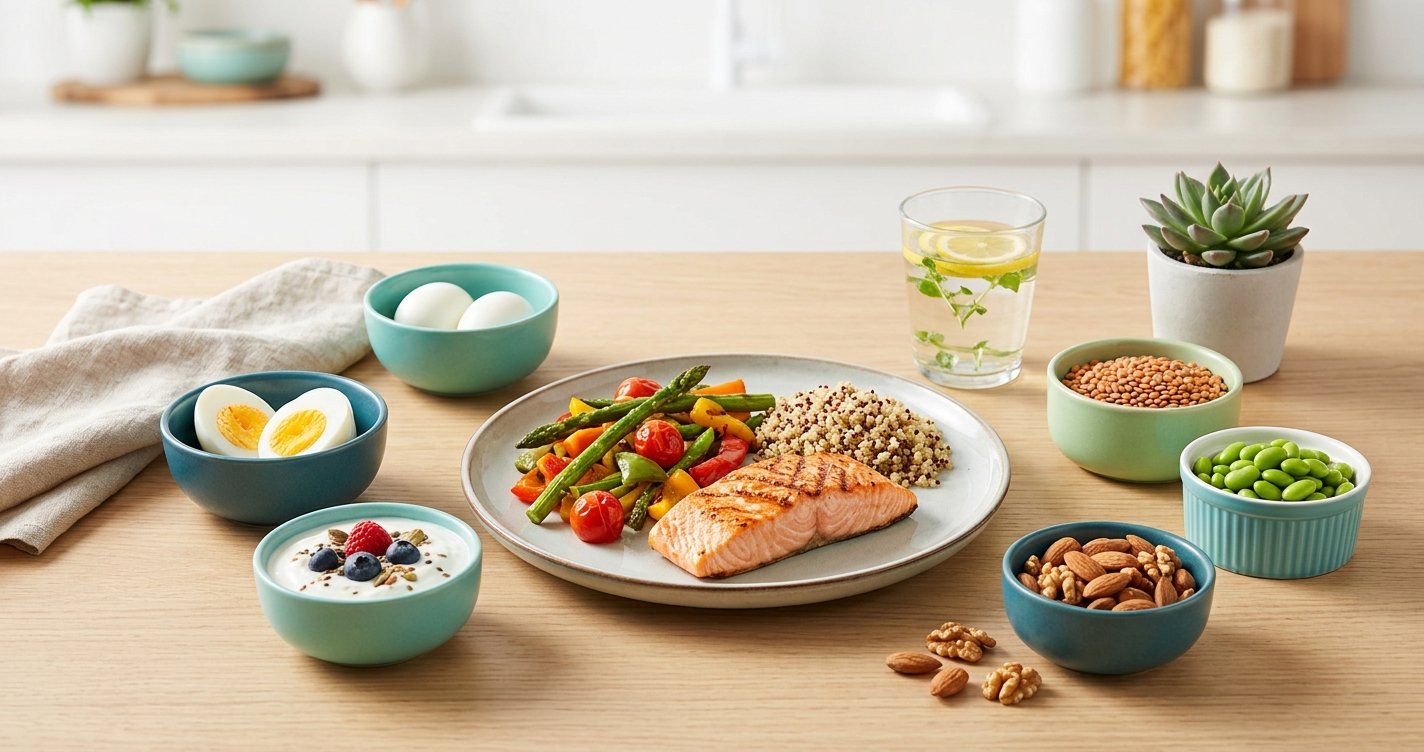
- Start Strong with Breakfast: Ditch the sugary cereals. Opt for Greek yogurt (high in protein!), eggs (scrambled, boiled, or an omelet), cottage cheese, or a protein smoothie made with protein powder, fruit, and spinach.
- Make Lunch & Dinner Protein-Centric: Build your main meals around a lean protein source. Think chicken breast, turkey, lean beef, fish (salmon, cod, tuna), tofu, tempeh, or lentils. Aim for a palm-sized portion or more.
- Smart Snacking: Instead of chips or cookies, reach for protein-rich snacks. Hard-boiled eggs, a handful of almonds, a small tub of cottage cheese, a protein bar, or jerky can keep you feeling full between meals.
- Add Protein to Everything: Sprinkle seeds (chia, hemp) into oatmeal, add beans to salads, include cheese in your wraps, or mix protein powder into baked goods.
- Don’t Forget Plant-Based Power: If you’re vegetarian or vegan, focus on legumes (beans, lentils, chickpeas), tofu, tempeh, edamame, quinoa, and plant-based protein powders. Combine different plant sources to ensure a complete amino acid profile.
Remember, consistency is key. Small, regular additions of protein throughout your day will make a big difference in the long run.
Putting It All Together: Your Protein-Powered Fat Loss Plan
Integrating more protein into your diet is a fundamental step towards sustainable fat loss, but it’s most effective when combined with other healthy habits. Think of protein as the cornerstone, supported by other essential pillars:
- Prioritize Whole Foods: Focus on nutrient-dense, unprocessed foods alongside your protein. Lean meats, fish, eggs, fruits, vegetables, whole grains, and healthy fats.
- Stay Hydrated: Drink plenty of water throughout the day. Sometimes thirst can be mistaken for hunger.
- Move Your Body: Incorporate regular physical activity. Resistance training (lifting weights) is particularly beneficial for preserving muscle mass while losing fat, and cardio helps burn additional calories.
- Get Enough Sleep: Quality sleep is crucial for hormone regulation, including those that control hunger and satiety. Poor sleep can sabotage your best efforts.
- Manage Stress: Chronic stress can lead to increased cortisol levels, which can hinder fat loss and encourage fat storage, especially around the midsection.
- Be Patient and Consistent: Sustainable fat loss is a marathon, not a sprint. Focus on making small, consistent changes that you can stick with long-term. Progress isn’t always linear, but consistency always pays off.
By focusing on these pillars, with protein as your central strategy, you’re not just dieting; you’re building a healthier, more sustainable lifestyle that supports lasting fat loss and overall well-being.
Embrace Protein, Embrace Sustainable Success!
You no longer have to fall victim to the endless cycle of crash diets and disappointment. The power of protein offers a friendly, evidence-based, and highly effective path to achieving your fat loss goals sustainably. By understanding how protein boosts satiety, torches calories, and protects your vital muscle mass, you’re equipped with the knowledge to make smarter, more empowering food choices.
It’s not about deprivation; it’s about strategic nourishment. Start today by making protein a priority in every meal and snack. Experiment with new recipes, find your favorite high-protein foods, and enjoy the feeling of being satisfied and energized. Your journey to a healthier, happier you is within reach, fueled by the incredible power of protein!