Are you tired of the endless cycle of restrictive diets, quick fixes, and the frustration of seeing lost weight creep back on? If you're nodding your head, you're not alone. Many people embark on a fat loss journey with the best intentions, only to find themselves disillusioned by unsustainable methods. But what if there was a path to lasting fat loss that wasn't about deprivation, but about understanding, balance, and empowerment?
Welcome to the world of sustainable fat loss, where the fundamental principles of a calorie deficit and intelligent macronutrient distribution become your most powerful allies. This isn't about magic pills or extreme measures; it's about equipping you with the knowledge to transform your body and your relationship with food for good. Let's unlock the secrets to a leaner, healthier you, built on a foundation of evidence-based strategies and a friendly, encouraging approach. this excellent wellness product
The Core Principle: Understanding the Calorie Deficit
At the heart of every successful fat loss journey lies one undeniable truth: you must consume fewer calories than your body expends. This is known as creating a calorie deficit. It's not a fad; it's a physiological law that governs weight change.
What is a Calorie Deficit (and why it matters)?
Think of your body as a car and calories as fuel. If you put more fuel in than the car uses, the excess is stored. For your body, that storage primarily happens as body fat. Conversely, if you consistently provide less fuel than your body needs to function (including daily activities, exercise, and basic metabolic processes), your body will tap into its stored energy reserves – primarily body fat – to make up the difference.
This simple energy balance equation is non-negotiable for fat loss. Without a calorie deficit, no amount of 'clean eating,' 'superfoods,' or intense workouts will lead to significant fat reduction. It's the foundational piece of the puzzle.
How to Calculate Your Calorie Needs & Deficit Safely
So, how do you figure out your personal calorie sweet spot? It starts with estimating your Total Daily Energy Expenditure (TDEE), which is the total number of calories your body burns in a day. TDEE is influenced by several factors:
- Basal Metabolic Rate (BMR): Calories burned at rest for basic bodily functions.
- Activity Level: Calories burned through exercise and daily movement.
- Thermic Effect of Food (TEF): Calories burned digesting food.
While precise calculation requires lab testing, you can get a very good estimate using online TDEE calculators (e.g., Harris-Benedict, Mifflin-St Jeor equations). Simply input your age, gender, height, weight, and activity level. Once you have your estimated TDEE, you can aim for a moderate calorie deficit. For sustainable fat loss, a deficit of 250-500 calories per day is generally recommended. This typically leads to a healthy and manageable fat loss rate of 0.5 to 1 pound per week.
Important Note: Drastically cutting calories below your BMR can be counterproductive, leading to nutrient deficiencies, muscle loss, and a sluggish metabolism. Always prioritize a safe, moderate deficit.
Beyond Calories: The Power of Macronutrients for Fat Loss
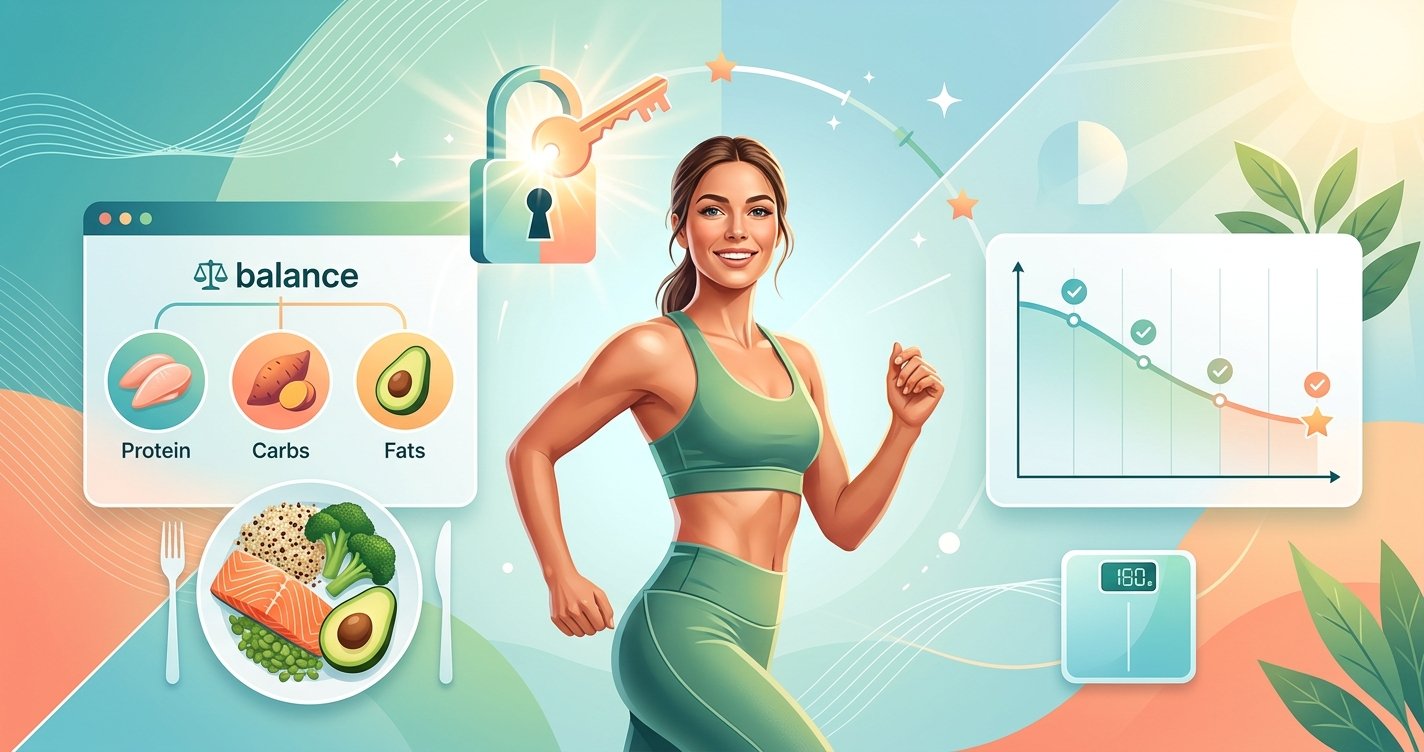
While a calorie deficit dictates whether you lose weight, the composition of those calories – your macronutrients (protein, carbohydrates, and fats) – dictates what kind of weight you lose (fat vs. muscle) and how you feel along the way.
Protein: Your Fat Loss MVP
If there's one macronutrient to prioritize for fat loss, it's protein. Here's why:
- Satiety: Protein is incredibly filling, helping you feel fuller for longer and reducing cravings.
- Muscle Preservation: When in a calorie deficit, your body can break down muscle for energy. Adequate protein intake helps preserve precious muscle mass, which is crucial for maintaining a healthy metabolism.
- Thermic Effect of Food (TEF): Protein has a higher TEF than carbs or fats, meaning your body burns more calories just to digest and process it.
Recommendation: Aim for 1.6 to 2.2 grams of protein per kilogram of body weight daily. Excellent sources include lean meats, poultry, fish, eggs, dairy, legumes, and protein supplements.
Carbohydrates: Fueling Your Progress, Not Hindering It
Carbohydrates often get a bad rap, but they are vital for energy, brain function, and exercise performance. The key is to choose the right kind of carbs.
- Complex Carbs: Found in whole grains, vegetables, and fruits, these are rich in fiber, vitamins, and minerals. They provide sustained energy and contribute to satiety.
- Simple Carbs: Found in sugary drinks, candies, and refined grains, these offer quick energy spikes followed by crashes, and often lack nutritional value.
Recommendation: Focus on whole, unprocessed carbohydrate sources. The exact amount will depend on your activity level and personal preference, but generally, they should form a significant portion of your diet after protein. Timing your carb intake around workouts can also be beneficial.
Fats: Essential for Health & Hormone Balance
Dietary fats are crucial for hormone production, nutrient absorption, and overall health. They also play a role in satiety.
- Healthy Fats: Monounsaturated (avocado, olive oil, nuts) and polyunsaturated (fatty fish, seeds) fats are essential.
- Saturated Fats: Consume in moderation.
- Trans Fats: Avoid entirely.
Recommendation: While essential, fats are calorie-dense (9 calories per gram compared to 4 for protein and carbs), so portion control is key. Aim for 20-30% of your total daily calories from healthy fat sources.
Practical Strategies for Sustainable Implementation
Knowing the theory is one thing; putting it into practice consistently is another. Here are actionable strategies to make your fat loss journey sustainable and enjoyable.
Tracking: Awareness, Not Obsession
For a period, tracking your food intake using an app (like MyFitnessPal or Chronometer) can be incredibly insightful. It helps you:
- Understand your actual calorie and macronutrient intake.
- Identify hidden calories or nutrient gaps.
- Build awareness of portion sizes.
The goal isn't lifelong tracking, but to educate yourself and develop an intuitive understanding of what your body needs. Once you've gained this awareness, you can transition to more intuitive eating while still maintaining your principles.
Meal Planning & Preparation: Your Secret Weapon
Failing to plan is planning to fail, especially when it comes to nutrition. Meal planning and batch cooking can:
- Ensure you hit your calorie and macro targets.
- Prevent impulsive, unhealthy food choices when hunger strikes.
- Save time and money.
Dedicate a few hours each week to plan your meals, grocery shop, and prep some components (e.g., cooking a batch of chicken, chopping vegetables). This makes healthy eating effortless during busy weekdays.
Hydration & Fiber: Often Overlooked Allies
- Hydration: Drinking plenty of water is vital. It aids metabolism, helps you feel full, and can sometimes be mistaken for hunger. Aim for at least 2-3 liters per day.
- Fiber: Found in fruits, vegetables, whole grains, and legumes, fiber adds bulk to your diet, promoting satiety and supporting digestive health.
Navigating Challenges & Staying Motivated
Fat loss is rarely a linear journey. There will be ups, downs, and plateaus. How you navigate these challenges determines your long-term success.
Dealing with Plateaus
A plateau is when your weight loss stalls despite consistent effort. Don't panic! It's a normal part of the process. Here’s what to do:
- Re-evaluate: Double-check your calorie and macro intake. Are you accurately tracking? Have your activity levels changed?
- Increase Activity: Add more steps, try a new workout, or increase the intensity of your current routine.
- Take a Diet Break: Sometimes, a short period (1-2 weeks) at maintenance calories can help reset your metabolism and mental state.
- Patience: Often, you just need to stick with your plan a little longer. Your body might be making non-scale changes (body recomposition).
The Importance of Patience & Consistency
Sustainable fat loss is a marathon, not a sprint. Celebrate small victories, focus on consistency over perfection, and be kind to yourself. There will be days when you don't hit your targets perfectly, and that's okay. What matters most is getting back on track the next meal or the next day.
Remember, this journey is about building healthier habits that serve you for life, not just for a season. The changes you make today are investments in your future health and well-being.
Your Journey to Lasting Fat Loss Starts Now!
You now have the fundamental blueprint for sustainable fat loss: understanding and implementing a moderate calorie deficit, combined with intelligent macronutrient choices. This powerful duo, supported by practical strategies like tracking and meal prep, will empower you to achieve lasting results without feeling deprived or constantly battling your body.
Embrace this evidence-based approach with a friendly, patient mindset. Your body is capable of amazing transformations when given the right tools and consistent effort. Start today, make small, manageable changes, and watch as you unlock a healthier, happier, and more confident you. If you feel overwhelmed, consider consulting a registered dietitian or certified personal trainer to tailor a plan specifically for your needs.