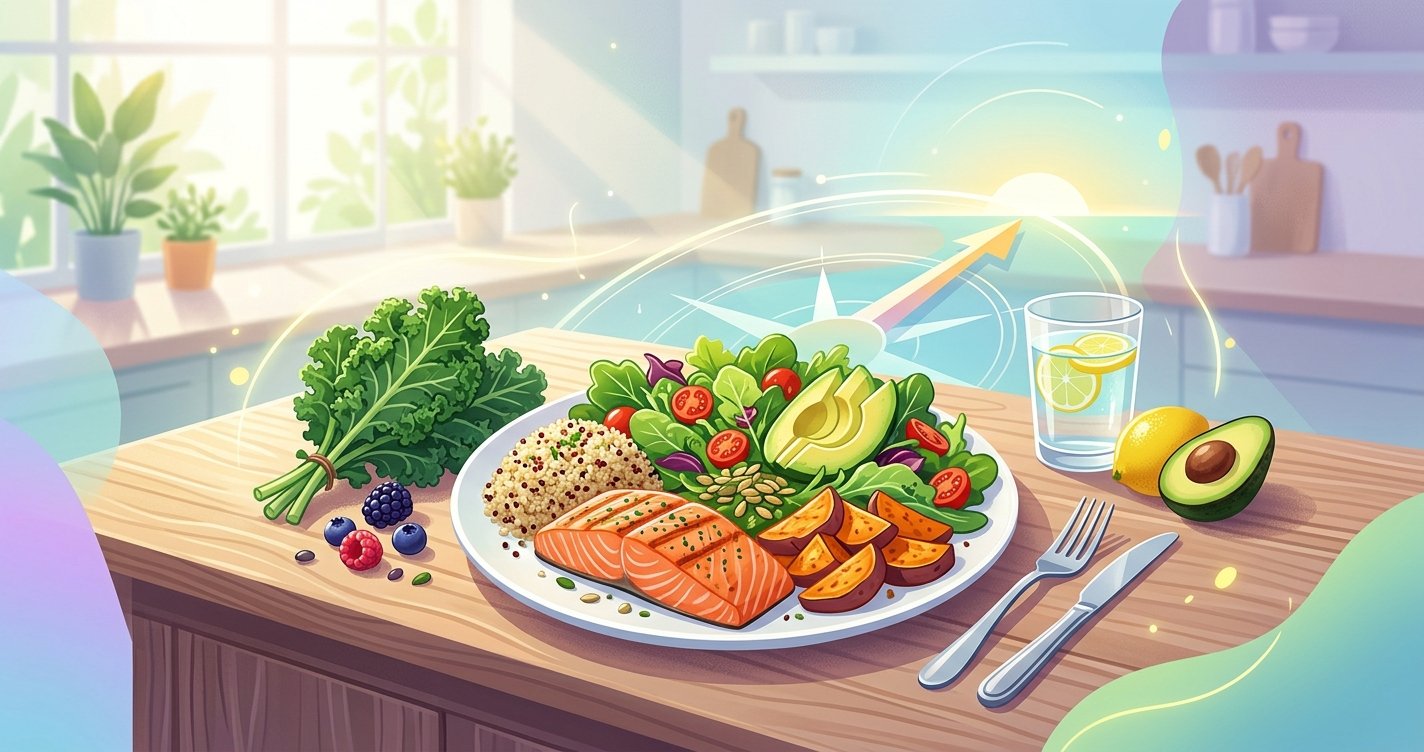
Are you tired of the endless cycle of restrictive diets, quick fixes, and the inevitable rebound? Many of us have been there, chasing the latest fad diet only to find ourselves back at square one, feeling frustrated and defeated. The truth is, sustainable fat loss isn't about deprivation; it's about building a healthy, balanced relationship with food that you can maintain for life. This isn't just about losing weight; it's about gaining health, energy, and confidence through smart, evidence-based nutrition strategies.
In this comprehensive guide, we'll ditch the quick fixes and dive deep into the principles of sustainable nutrition for fat loss. We'll explore how to nourish your body, understand your needs, and build habits that lead to lasting results, without feeling like you're constantly fighting against yourself. Get ready to transform your approach to eating and unlock a healthier, happier you! this excellent wellness product
Why "Dieting" Often Fails: Breaking the Cycle of Restriction
The traditional diet mentality often sets us up for failure. It typically involves drastic calorie cuts, eliminating entire food groups, and a rigid set of rules. While these approaches might yield rapid initial weight loss, they are rarely sustainable. Our bodies and minds rebel against extreme restriction, leading to intense cravings, nutrient deficiencies, and often, binge eating. This cycle of restriction and rebound, often called 'yo-yo dieting,' can harm our metabolism, mental health, and relationship with food.
Sustainable fat loss, on the other hand, focuses on creating a caloric deficit in a way that is enjoyable, nourishing, and adaptable to your lifestyle. It's about making small, consistent changes that accumulate over time, rather than drastic overhauls that are impossible to maintain.
The Cornerstone: Understanding Your Calorie Needs for Effective Fat Loss
At its core, fat loss boils down to a simple principle: consuming fewer calories than your body expends. This is known as a calorie deficit. However, 'fewer calories' doesn't mean starvation; it means finding the right balance that allows your body to tap into its fat stores for energy while still providing adequate nutrition.
Calculating Your Starting Point: TDEE and a Gentle Deficit
Your Total Daily Energy Expenditure (TDEE) is the estimated number of calories you burn in a 24-hour period, including basal metabolic rate (BMR), physical activity, and the thermic effect of food. Online calculators can provide a good estimate. Once you have your TDEE, aim for a modest deficit of 300-500 calories per day. This gradual approach promotes steady fat loss (typically 1-2 pounds per week) and helps preserve muscle mass, which is crucial for a healthy metabolism. Remember, these are estimates; your body's actual needs can vary, and consistent monitoring is key.
- Use a reliable TDEE calculator: Input your age, gender, weight, height, and activity level.
- Start with a moderate deficit: Don't cut too much too soon.
- Track, don't obsess: Use a food diary or app for a few days to get a sense of your intake, but avoid becoming overly fixated.
- Listen to your body: Adjust your intake based on hunger levels, energy, and progress.
The Power Players: Macronutrients for Optimal Fat Loss
While total calories are paramount, the composition of those calories—your macronutrients (protein, carbohydrates, and fats)—plays a vital role in satiety, energy levels, and muscle preservation during fat loss.
Protein: Your Satiety and Muscle Ally
Protein is arguably the most critical macronutrient for fat loss. It's highly satiating, meaning it helps you feel fuller for longer, reducing overall calorie intake. Furthermore, protein has a higher thermic effect of food (TEF) compared to carbs and fats, meaning your body burns more calories digesting it. Crucially, adequate protein intake helps preserve lean muscle mass during a calorie deficit, which is essential for maintaining a healthy metabolism.
- Aim for 0.7-1 gram of protein per pound of body weight: Spread intake throughout the day.
- Excellent sources: Lean meats (chicken, turkey, beef), fish, eggs, dairy (Greek yogurt, cottage cheese), legumes, tofu, tempeh, protein powder.
Carbohydrates: Fueling Your Body Smartly
Carbohydrates are your body's primary energy source. The key for fat loss is choosing the right types of carbs. Focus on complex carbohydrates rich in fiber, which provide sustained energy, promote satiety, and support digestive health. Limit refined sugars and highly processed carbs that offer little nutritional value and can spike blood sugar, leading to energy crashes and increased hunger.
- Prioritize complex carbs: Whole grains (oats, brown rice, quinoa), fruits, vegetables, legumes.
- Fiber is your friend: Aids digestion, promotes fullness, and helps regulate blood sugar.
- Timing matters: Consider consuming more carbs around your workouts to fuel performance and recovery.
Fats: Essential for Health and Hormones
Dietary fats are vital for hormone production, nutrient absorption, and overall health. While they are calorie-dense, healthy fats are crucial for satiety and can prevent cravings. The key is to choose healthy sources and consume them in moderation.
- Focus on unsaturated fats: Avocados, nuts, seeds, olive oil, fatty fish (salmon, mackerel).
- Limit saturated and trans fats: Found in processed foods, fried items, and some animal products.
- Portion control is key: A little goes a long way due to their high calorie density.
Beyond Macros: Quality, Mindful Eating, and Hydration
While calories and macros form the foundation, sustainable fat loss extends to the quality of your food, how you eat it, and often-overlooked factors like hydration.
Embrace Whole, Unprocessed Foods
Choose foods as close to their natural state as possible. Whole foods are packed with vitamins, minerals, and antioxidants, which are essential for overall health and optimal bodily function. They also tend to be more filling and less calorie-dense than their processed counterparts.
The Art of Mindful Eating: Savoring Every Bite
Mindful eating involves paying attention to your body's hunger and fullness cues, savoring your food, and noticing how different foods make you feel. This practice can help prevent overeating, improve digestion, and foster a healthier relationship with food.
- Eat slowly: Give your brain time to register fullness.
- Eliminate distractions: Put away your phone, turn off the TV.
- Pay attention to hunger cues: Eat when you're genuinely hungry, not just bored or stressed.
- Stop when satisfied, not stuffed: Tune into your body's signals.
Hydration: The Unsung Hero of Fat Loss
Often overlooked, adequate water intake is crucial. Water helps with metabolism, nutrient transport, and can even help manage hunger, as thirst is sometimes mistaken for hunger. Aim for at least 8 glasses (around 2 liters) of water per day, more if you're active.
Practical Strategies for Long-Term Success
Knowing what to eat is one thing; consistently applying it is another. Here are practical tips to integrate sustainable nutrition into your daily life.
Meal Prepping: Your Future Self Will Thank You
Planning and preparing meals in advance can save you time, money, and countless calories. When healthy options are readily available, you're less likely to grab convenient, less healthy alternatives when hunger strikes. Dedicate a few hours each week to cook staples like lean protein, whole grains, and chopped vegetables.
Smart Snacking and Dealing with Cravings
Snacks can be part of a healthy fat loss plan, provided they are nutrient-dense and portion-controlled. Opt for options like Greek yogurt with berries, a handful of nuts, or vegetables with hummus. When cravings hit, acknowledge them without judgment. Sometimes, a glass of water, a short walk, or a healthy distraction is all it takes. If you do indulge, do so mindfully and get back on track with your next meal.
Flexibility and Consistency: The Unsung Heroes
Perfection is the enemy of progress. Don't let an occasional indulgence derail your entire journey. The 80/20 rule (eating healthy 80% of the time and allowing for flexibility 20% of the time) can be a great guideline for sustainability. Consistency over time, not sporadic perfection, is what truly yields results.
Listening to Your Body and Adapting
Your body is an incredible machine, and it communicates with you constantly. Pay attention to your energy levels, sleep quality, mood, and how your clothes fit. These are all valuable indicators of how your nutrition plan is working. Be prepared to adjust your calorie intake or macronutrient ratios as your body changes and your needs evolve. Sustainable fat loss is a dynamic process, not a fixed destination.
Embrace Your Journey to Sustainable Fat Loss
Embarking on a sustainable fat loss journey is about more than just shedding pounds; it's about adopting a lifestyle that nurtures your body and mind for the long haul. By focusing on whole foods, understanding your calorie and macronutrient needs, practicing mindful eating, and embracing practical strategies like meal prep, you're setting yourself up for success. This isn't a race; it's a marathon towards a healthier, more vibrant you. Be patient, be consistent, and most importantly, be kind to yourself. Your journey to lasting well-being starts today!