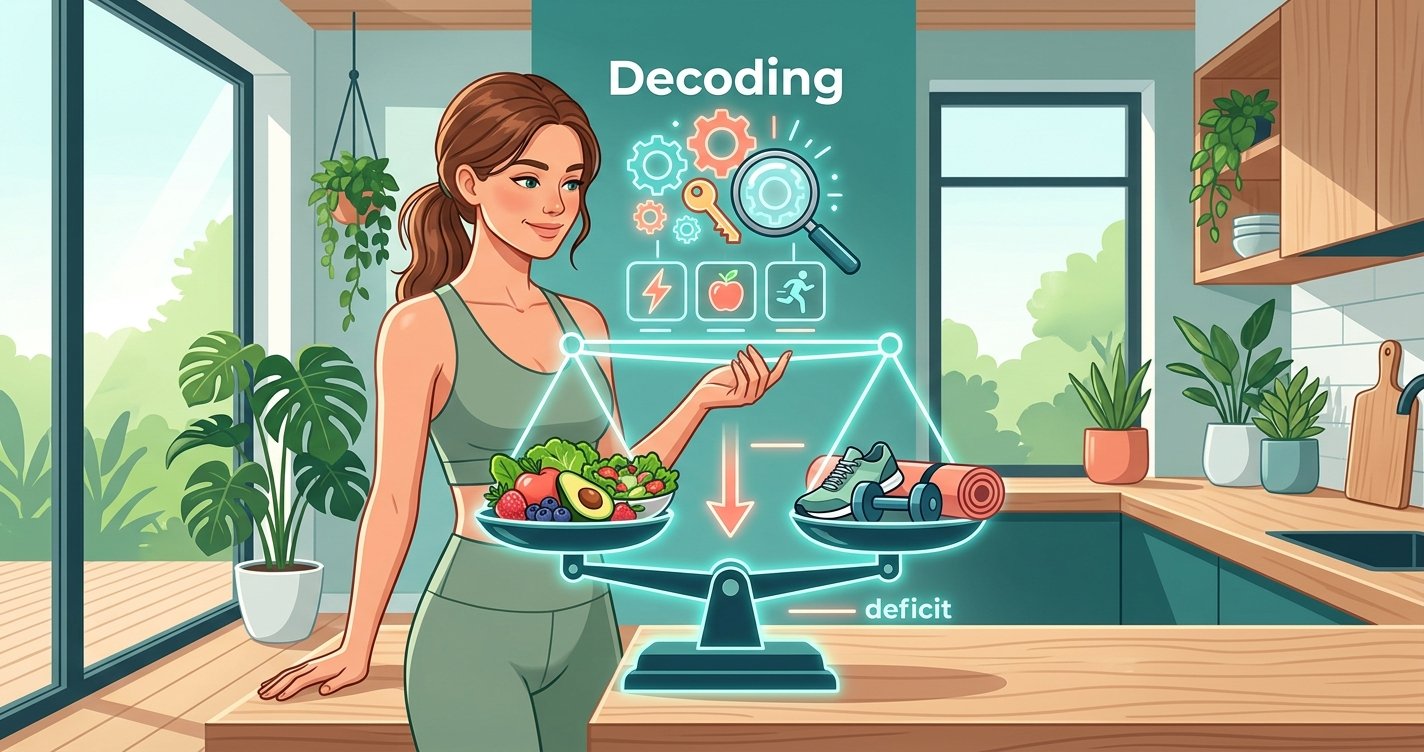
Unlock Sustainable Fat Loss: The Calorie Deficit Decoded
Are you tired of quick-fix diets that promise the world but deliver only frustration? Do you feel overwhelmed by conflicting information about fat loss? You’re not alone. Many people struggle to understand the fundamental principles behind losing weight and keeping it off. But what if we told you there’s one core concept that underpins almost every successful fat loss journey? It’s called the calorie deficit, and once you truly understand it, the path to sustainable fat loss becomes much clearer.
Forget complicated meal plans or grueling workouts you can’t maintain. While those play a role, the calorie deficit is the non-negotiable bedrock. In this friendly, evidence-based guide, we’re going to demystify the calorie deficit, help you understand how to implement it safely and effectively, and equip you with the knowledge to achieve lasting results. Let’s dive in! this excellent wellness product
What Exactly IS a Calorie Deficit? (And Why It Matters So Much)
At its core, a calorie deficit is simple: it means consuming fewer calories than your body burns in a day. Think of your body like a car. Calories are its fuel. If you put more fuel in than the car uses, the excess gets stored (as fat, in this analogy). If you put less fuel in than it needs to run, the car has to tap into its stored reserves to make up the difference. For your body, those reserves are primarily stored fat.
Every single process in your body – from breathing and thinking to walking and exercising – requires energy, measured in calories. Your Basal Metabolic Rate (BMR) is the number of calories your body needs just to perform basic functions at rest. Add to that the calories you burn through daily activities, exercise, and even digesting food, and you get your Total Daily Energy Expenditure (TDEE). To lose fat, you must consistently eat below your TDEE.
This isn't a fad; it's a fundamental law of thermodynamics applied to the human body. While hormones, metabolism, and food quality all influence the *efficiency* and *health* of this process, the calorie deficit remains the ultimate driver of fat loss.
How to Calculate Your Calorie Needs (No Guesswork!)
Estimating your TDEE is your first crucial step. While perfectly precise calculations are challenging, we can get a very good estimate. Here’s how:
- Calculate Your Basal Metabolic Rate (BMR): Your BMR is the energy your body needs at rest. You can use online calculators (like the Mifflin-St Jeor equation) by inputting your age, sex, height, and weight.
- Factor in Your Activity Level: Once you have your BMR, you'll multiply it by an activity factor to get your TDEE.
- Sedentary (little or no exercise): BMR x 1.2
- Lightly active (light exercise/sports 1-3 days/week): BMR x 1.375
- Moderately active (moderate exercise/sports 3-5 days/week): BMR x 1.55
- Very active (hard exercise/sports 6-7 days/week): BMR x 1.725
- Extra active (very hard exercise/physical job): BMR x 1.9
For example, if your BMR is 1500 calories and you’re moderately active, your TDEE would be 1500 x 1.55 = 2325 calories. This is the estimated number of calories you burn daily.
Pro Tip: Don't obsess over perfection. These are estimates. Your body is dynamic. Start with these numbers, track your progress, and adjust as needed.
Creating Your Deficit: How Much is Enough (But Not Too Much)?
Once you know your estimated TDEE, it’s time to create the deficit. A safe, sustainable, and effective deficit typically ranges from 250 to 500 calories below your TDEE. This usually translates to a fat loss of 0.5 to 1 pound per week, which is considered a healthy rate.
- 250-calorie deficit: Aim for your TDEE minus 250 calories. (~0.5 lb fat loss/week)
- 500-calorie deficit: Aim for your TDEE minus 500 calories. (~1 lb fat loss/week)
Why not more? While a larger deficit might seem appealing for faster results, it often backfires. Extreme deficits can lead to:
- Muscle Loss: Your body might start breaking down precious muscle tissue for energy, which is counterproductive as muscle burns more calories at rest than fat does.
- Nutrient Deficiencies: It becomes harder to get all the essential vitamins and minerals you need.
- Metabolic Adaptation: Your metabolism can slow down as your body tries to conserve energy, making further fat loss harder.
- Unsustainability: Extreme hunger, fatigue, and irritability make such diets impossible to stick to long-term, leading to rebound weight gain.
Remember, we're aiming for lasting fat loss, not a miserable sprint to the finish line.
The Pillars of a Successful Calorie Deficit (Beyond Just Eating Less)
While the calorie deficit is paramount, *how* you achieve it profoundly impacts your success, health, and well-being. Focusing on these pillars will make your journey much smoother:
1. Prioritize Protein
Protein is your best friend during a fat loss phase. It’s highly satiating, meaning it keeps you feeling full for longer, reducing cravings. More importantly, it’s crucial for preserving muscle mass when you’re in a deficit. Aim for 0.7-1 gram of protein per pound of your target body weight daily. Think lean meats, poultry, fish, eggs, dairy, legumes, and tofu.
2. Embrace Fiber-Rich Foods
Like protein, fiber contributes significantly to satiety. Foods high in fiber – fruits, vegetables, whole grains, and legumes – are typically lower in calories but high in volume, helping you feel full without overeating. They also support digestive health.
3. Stay Hydrated
Often overlooked, adequate water intake is vital. Sometimes, your body confuses thirst for hunger. Drinking plenty of water throughout the day can help manage appetite, support metabolic functions, and keep you energized.
4. Incorporate Strength Training
This is non-negotiable for sustainable fat loss. Strength training helps you build or maintain muscle mass. The more muscle you have, the higher your BMR, meaning you burn more calories at rest. It's also fantastic for body composition, making you look leaner and more toned.
5. Move Your Body (Beyond the Gym)
While structured exercise is great, increasing your Non-Exercise Activity Thermogenesis (NEAT) is just as important. Take the stairs, park further away, walk during calls, do household chores – all these small movements add up to burn extra calories and contribute to your TDEE without feeling like a 'workout.'
6. Prioritize Sleep
Lack of sleep can wreak havoc on your fat loss efforts. It disrupts hunger-regulating hormones (ghrelin and leptin), leading to increased appetite and cravings for unhealthy foods. Aim for 7-9 hours of quality sleep per night.
7. Manage Stress
Chronic stress elevates cortisol levels, which can promote fat storage, especially around the midsection. Find healthy ways to manage stress, whether through meditation, hobbies, spending time in nature, or connecting with loved ones.
Navigating Challenges and Staying Consistent
Your fat loss journey won't always be linear, and that's perfectly normal. Here are some common challenges and how to overcome them:
- Plateaus: If the scale stops moving, don't panic. This is often due to water retention, hormonal fluctuations, or metabolic adaptation. Re-evaluate your calorie intake, ensure accuracy, increase your NEAT, or consider a temporary 'diet break' (eating at maintenance for a week) to help reset your metabolism and mental state.
- Hunger: True hunger is part of a deficit, but extreme hunger shouldn't be. Ensure you're getting enough protein and fiber. Focus on high-volume, low-calorie foods. Drink water before meals. Practice mindful eating to truly savor your food.
- Social Situations: Plan ahead! Look at menus online, choose leaner options, or eat a small, protein-rich snack before you go. Don't let social events derail your progress; learn to navigate them strategically.
Remember, consistency is far more powerful than perfection. One 'bad' meal or even a 'bad' day won't undo weeks of effort. Get back on track with your next meal and keep moving forward with self-compassion.
Is It for Everyone? (When to Seek Professional Help)
While the calorie deficit is a universal principle for fat loss, its application should always be safe and healthy. If you have underlying health conditions, a history of disordered eating, or are unsure how to proceed, it's always best to consult with a healthcare professional, registered dietitian, or certified nutritionist. They can provide personalized guidance and ensure your approach is appropriate for your individual needs.
Your Journey to Lasting Fat Loss Starts Here
Understanding and implementing a calorie deficit is the most powerful tool you have for sustainable fat loss. It's not about deprivation; it's about making informed choices, fueling your body intelligently, and building habits that support your long-term health goals.
By prioritizing protein, fiber, hydration, strength training, sleep, and stress management, you're not just losing fat – you're building a healthier, stronger, and more resilient you. Be patient with yourself, celebrate small victories, and trust the process. You've got this!