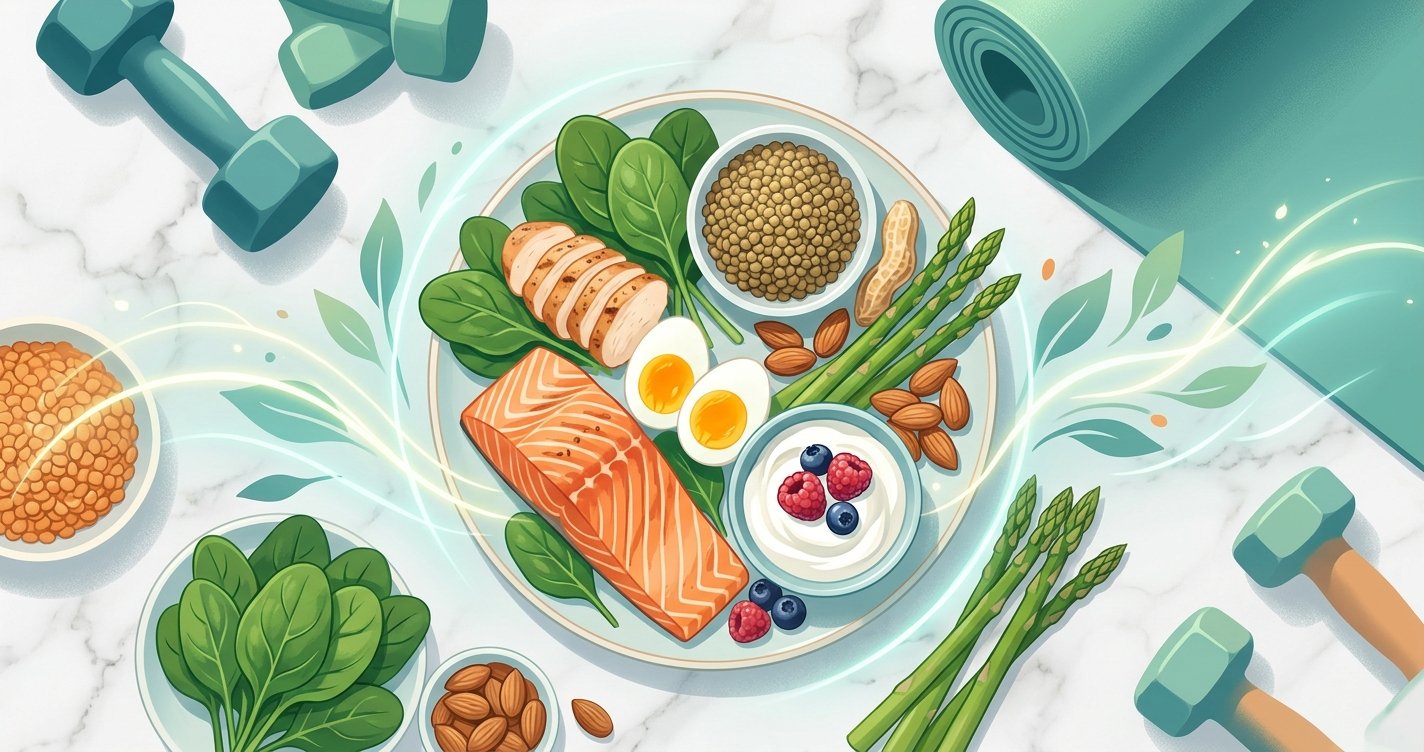
Are you on a journey to shed some unwanted body fat, but finding the path confusing, restrictive, or just plain exhausting? You're not alone. Many people cycle through various diets, only to feel deprived and eventually regain the weight. What if we told you there's a powerful, evidence-based ally that can make your fat loss journey smoother, more sustainable, and even more enjoyable? Enter protein – your secret weapon for effective and lasting fat loss.
Often overlooked in favor of calorie counting or carb cutting, protein is a macronutrient powerhouse with unique benefits that directly impact your ability to lose fat while preserving precious muscle. It's not just for bodybuilders; it's for anyone serious about optimizing their body composition and overall health. In this friendly, evidence-based guide, we'll dive deep into why protein is so crucial for fat loss and how you can easily incorporate more of it into your daily life. this excellent wellness product
Why Protein is Your Secret Weapon for Fat Loss
When it comes to losing fat, the goal isn't just to see the number on the scale drop. The real aim is to reduce body fat while maintaining or even building lean muscle mass. This is where protein shines. Unlike carbohydrates or fats, protein offers several distinct advantages that directly support a healthy, sustainable fat loss process. It's the nutrient that works with your body, not against it, to help you feel satisfied, burn more calories, and protect your metabolism.
The Satiety Superpower: Feeling Full, Eating Less
One of the biggest challenges in any fat loss journey is managing hunger and cravings. This is where protein truly excels. Protein is the most satiating of all the macronutrients, meaning it keeps you feeling fuller for longer compared to an equal amount of calories from carbs or fats. Imagine eating a meal and feeling genuinely satisfied, not just momentarily full. That's the protein effect!
How does it work? Protein influences several hormones that regulate appetite. For instance, it helps to reduce levels of ghrelin, the "hunger hormone," and increases the production of peptide YY (PYY) and cholecystokinin (CCK), hormones that signal fullness to your brain. This hormonal dance means fewer cravings, less snacking between meals, and ultimately, a more natural reduction in your overall calorie intake without feeling deprived. This makes sticking to your dietary goals significantly easier and more enjoyable.
Fueling Your Metabolism: The Thermic Effect of Food (TEF)
Did you know that your body expends energy just to digest, absorb, and metabolize the food you eat? This phenomenon is known as the Thermic Effect of Food (TEF), and it accounts for roughly 10% of your daily calorie expenditure. Here's the exciting part: protein has a significantly higher TEF than carbohydrates or fats.
While fats have a TEF of 0-3% and carbohydrates around 5-10%, protein boasts a TEF of 20-30%. This means that for every 100 calories of protein you consume, your body uses 20-30 of those calories just to process it. In simple terms, eating more protein effectively boosts your metabolism, allowing you to burn more calories throughout the day, even at rest. It's like giving your internal furnace a little extra fuel, helping you maximize your fat-burning potential with every meal.
Protecting Your Muscle: Why Lean Mass Matters for Fat Loss
When you're in a calorie deficit to lose fat, your body can sometimes break down muscle tissue for energy, especially if you're not consuming enough protein. This is highly undesirable because muscle is metabolically active – it burns more calories at rest than fat tissue does. Losing muscle means your resting metabolic rate decreases, making it harder to lose fat in the long run and easier to regain weight once you stop dieting.
Protein is essential for building and repairing muscle tissue. By ensuring an adequate protein intake, especially when combined with resistance training, you send a clear signal to your body to preserve your hard-earned muscle mass. This ensures that the weight you're losing is predominantly fat, not muscle. Maintaining or even increasing your lean muscle mass will keep your metabolism humming, making your fat loss journey more efficient and your results more sustainable.
How Much Protein Do You Really Need? Practical Guidelines
So, if protein is such a game-changer, how much should you be aiming for? While individual needs vary based on activity level, age, and specific goals, general evidence-based recommendations for fat loss typically range higher than the standard dietary guidelines.
- For most active individuals aiming for fat loss: A good starting point is often around 1.6 to 2.2 grams of protein per kilogram of body weight (or 0.7 to 1 gram per pound of body weight).
- If you're very active or engaged in intense resistance training: You might even benefit from slightly higher amounts, up to 2.5 grams per kilogram (1.1 grams per pound) to optimize muscle preservation and recovery.
Don't worry if these numbers seem high at first. The key is to distribute your protein intake throughout the day. Aim for 20-40 grams of protein per meal, along with protein-rich snacks, to maximize muscle protein synthesis and keep hunger at bay.
Delicious & Diverse: Top Protein Sources to Include
Incorporating more protein into your diet doesn't have to be bland or boring. There's a wide array of delicious and versatile protein sources to choose from, catering to various dietary preferences:
- Lean Meats: Chicken breast, turkey, lean beef, pork tenderloin. These are complete proteins, meaning they contain all nine essential amino acids.
- Fish and Seafood: Salmon, tuna, cod, shrimp. Excellent sources of protein, often with healthy fats (like omega-3s in salmon).
- Eggs: A complete protein, versatile, and affordable. Great for any meal of the day.
- Dairy Products: Greek yogurt, cottage cheese, milk, whey protein powder. Greek yogurt and cottage cheese are particularly high in protein and satisfying.
- Legumes: Lentils, chickpeas, black beans. Fantastic plant-based protein sources, also rich in fiber.
- Tofu and Tempeh: Soy-based products that are complete plant proteins, excellent for vegetarian and vegan diets.
- Nuts and Seeds: Almonds, peanuts, chia seeds, flax seeds. While also containing healthy fats, they contribute significantly to protein intake.
Getting enough protein is easier than you think. Start by making protein the centerpiece of your meals. Add a scoop of protein powder to your morning smoothie, choose Greek yogurt over regular yogurt, snack on cottage cheese, or add a handful of lentils to your soup.
Beyond the Plate: Protein Timing and Supplements
While the total daily protein intake is most important, how you distribute it throughout the day can also play a role in optimizing fat loss and muscle preservation. Aiming for protein in every meal and snack helps maintain a steady supply of amino acids, which is beneficial for satiety and muscle health.
Protein supplements, such as whey, casein, or plant-based protein powders, can be incredibly convenient, especially when you're busy or struggling to meet your protein targets through whole foods alone. They're not magic pills but effective tools to complement a well-balanced diet. Consider them for post-workout recovery or as a quick, protein-rich snack.
Embrace the Power of Protein for Lasting Results
Embarking on a fat loss journey can feel overwhelming, but by focusing on smart, evidence-based strategies, you can achieve sustainable and satisfying results. Protein is not just a nutrient; it's a cornerstone of effective fat loss, offering unmatched benefits for satiety, metabolic boost, and muscle preservation.
By consciously increasing your protein intake, choosing diverse sources, and distributing it wisely throughout your day, you're not just dieting; you're building a stronger, healthier, and more vibrant you. So, go ahead, power up your plate with protein, and watch as your body transforms, not just in size, but in strength, energy, and overall well-being. Your sustainable fat loss journey starts now!