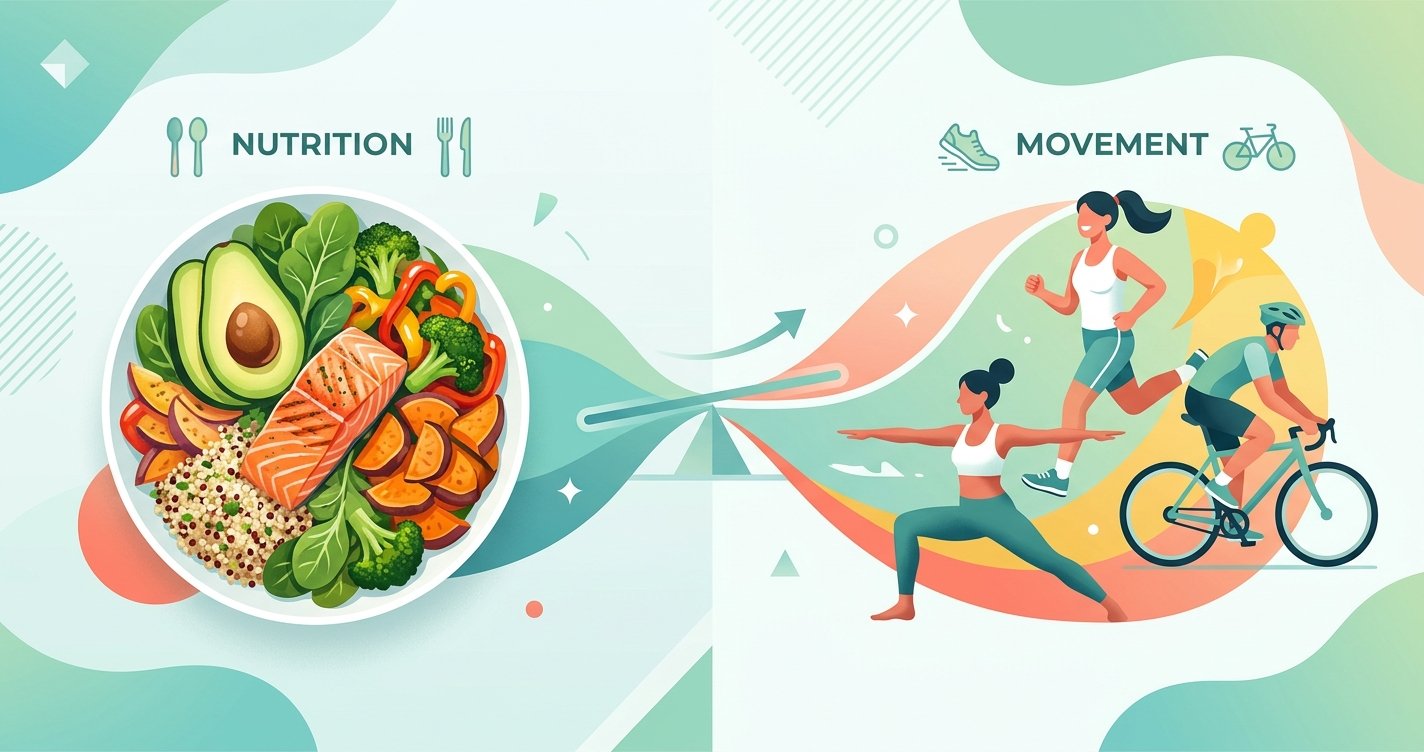
Are you tired of quick fixes, restrictive diets, and the endless cycle of losing weight only to gain it back? If so, you're not alone. The world of fat loss can feel overwhelming, filled with conflicting advice and marketing hype. But what if we told you there's a foundational principle that underpins all successful, sustainable fat loss, backed by science and incredibly empowering?
Welcome to the world of the caloric deficit. It's not a fad, a magic pill, or a complicated secret. It's simply how your body works, and understanding it is the key to unlocking lasting results. Forget the deprivation mindset; we're here to guide you through creating a healthy, achievable caloric deficit that helps you shed fat, boost your energy, and build a body you love. Let's dive in! this excellent wellness product
What Exactly is a Caloric Deficit? The Basics Explained
At its core, a caloric deficit is an energy imbalance where you consume fewer calories than your body burns over a given period. Think of your body like a car and calories as fuel. If you put less fuel in than the car uses to drive, eventually, it has to tap into its reserve tank. For your body, that 'reserve tank' is your stored fat.
Every day, your body burns a certain amount of calories just to keep you alive (this is your Basal Metabolic Rate or BMR), plus additional calories for all your activities, from walking to thinking to exercising (this adds up to your Total Daily Energy Expenditure or TDEE). When your calorie intake is consistently lower than your TDEE, your body is forced to use its stored energy (fat) to make up the difference. It's the only physiological way fat loss occurs.
Conversely, if you consume more calories than you burn, you're in a caloric surplus, and your body stores that excess energy, typically as fat. If your intake matches your expenditure, you're at maintenance, and your weight remains stable.
Why a Caloric Deficit is Your Best Friend for Sustainable Fat Loss
Unlike restrictive fad diets that often lead to rapid water weight loss and muscle depletion, focusing on a caloric deficit is a proven, evidence-based approach to fat loss. Here's why it's so powerful for sustainable results:
- It's a Universal Principle: Regardless of the specific diet you follow (keto, vegan, paleo, etc.), if you're losing fat, you're doing so because you're in a caloric deficit. Understanding this puts you in control.
- Focuses on Energy Balance: It shifts the focus from 'good' vs. 'bad' foods to overall energy balance, promoting a more flexible and less guilt-ridden approach to eating.
- Encourages Healthy Habits: To create a sustainable deficit, you naturally gravitate towards more nutrient-dense, whole foods that keep you feeling full and satisfied, rather than empty calories.
- Prevents Rebound Weight Gain: When done intelligently, a moderate deficit helps preserve lean muscle mass, which is crucial for maintaining a healthy metabolism and preventing the dreaded 'yo-yo' effect often seen with crash dieting.
How to Calculate Your Caloric Needs (And Create That Deficit!)
While precise calculations can be complex, you can get a very good estimate to start your journey. Remember, these are starting points, and your body will provide the ultimate feedback.
Step 1: Estimate Your Basal Metabolic Rate (BMR)
Your BMR is the number of calories your body burns at rest to perform basic functions like breathing, circulation, and cell production. You can use online calculators (like those based on the Mifflin-St Jeor or Harris-Benedict equations) that factor in your age, gender, height, and weight. For example, a common estimate for a sedentary individual might be around 1,500-2,000 calories.
Step 2: Account for Your Activity Level (TDEE)
Your Total Daily Energy Expenditure (TDEE) includes your BMR plus the calories you burn through physical activity. Once you have your BMR, multiply it by an activity factor:
- Sedentary: little or no exercise (BMR x 1.2)
- Lightly active: light exercise/sports 1-3 days/week (BMR x 1.375)
- Moderately active: moderate exercise/sports 3-5 days/week (BMR x 1.55)
- Very active: hard exercise/sports 6-7 days a week (BMR x 1.725)
- Extremely active: hard daily exercise/physical job (BMR x 1.9)
Be honest with yourself here! Most people overestimate their activity levels.
Step 3: Create Your Deficit – The Sweet Spot
Once you have your estimated TDEE, subtract a moderate number of calories to create your deficit. A common and sustainable recommendation is to aim for a 500-calorie daily deficit. This typically leads to about 1 pound of fat loss per week (since 3,500 calories equals roughly 1 pound of fat).
For example, if your TDEE is 2,500 calories, aiming for 2,000 calories per day would put you in a 500-calorie deficit. Avoid extreme deficits (e.g., more than 750-1000 calories below TDEE) as they can lead to muscle loss, nutrient deficiencies, fatigue, and are very difficult to sustain long-term, potentially slowing your metabolism.
Beyond the Numbers: Practical Strategies for a Healthy Caloric Deficit
While the numbers are important, how you achieve your deficit makes all the difference. Focusing on nutrient-dense foods and smart habits will make the process much easier and more enjoyable.
Prioritize Protein
- Protein is incredibly satiating, meaning it keeps you feeling full for longer, reducing the urge to snack.
- It has a higher thermic effect of food (TEF), meaning your body burns more calories digesting protein than carbs or fats.
- Crucially, adequate protein intake helps preserve lean muscle mass during fat loss, which is vital for maintaining a healthy metabolism.
Aim for a protein source at every meal: lean meats, fish, eggs, Greek yogurt, cottage cheese, legumes, and tofu are excellent choices.
Embrace Fiber-Rich Foods
- Fiber adds bulk to your meals without adding many calories, contributing to satiety.
- It supports digestive health and helps regulate blood sugar levels.
Load up on non-starchy vegetables (leafy greens, broccoli, bell peppers), fruits (berries, apples), and whole grains (oats, quinoa).
Don't Fear Healthy Fats (But Mind Portions!)
- Healthy fats are essential for hormone production, nutrient absorption, and overall health.
- They also contribute to satiety.
Include sources like avocados, nuts, seeds, and olive oil in moderation, as fats are calorie-dense (9 calories per gram vs. 4 for protein/carbs).
Hydration is Key
Often overlooked, drinking enough water can significantly impact your fat loss journey. Water can help you feel fuller, and sometimes thirst is mistaken for hunger. Aim for at least 8 glasses a day, more if you're active.
Mindful Eating Practices
Slow down, savor your meals, and pay attention to your body's hunger and fullness cues. Eating mindfully can help you recognize when you're truly satisfied, preventing overeating and making it easier to stick to your caloric goals.
Exercise: The Calorie Deficit Amplifier
While you can create a caloric deficit through diet alone, incorporating exercise makes the process more efficient, helps preserve muscle, and offers a host of other health benefits.
Exercise increases your TDEE, meaning you can either eat a bit more while still being in a deficit, or achieve a larger deficit with the same food intake. It's a powerful tool to amplify your fat loss efforts.
Strength Training
- Building and maintaining muscle mass is critical. Muscle tissue burns more calories at rest than fat tissue, meaning a more muscular body has a higher BMR.
- Strength training helps you preserve muscle during a deficit, ensuring that the weight you lose is primarily fat.
- It also shapes your body, giving you a toned and strong physique.
Cardiovascular Exercise
- Cardio directly burns calories during the activity, contributing to your daily energy expenditure.
- It improves heart health, boosts endurance, and can be a great stress reliever.
Find activities you genuinely enjoy, whether it's lifting weights, dancing, hiking, cycling, or swimming. Consistency is far more important than intensity when you're starting out.
Common Pitfalls to Avoid on Your Calorie Deficit Journey
Even with the best intentions, it's easy to stumble. Here are common mistakes and how to avoid them:
- Going Too Low on Calories: An extreme deficit is unsustainable, leads to muscle loss, nutrient deficiencies, and can trigger your body's 'starvation mode,' slowing your metabolism.
- Underestimating Calorie Intake: Hidden calories from sauces, oils, drinks, and snacks can quickly add up. Be diligent in tracking everything, especially initially.
- Overestimating Calorie Burn from Exercise: Fitness trackers can be helpful, but they often overestimate calories burned. Don't rely solely on them to justify extra food.
- Neglecting Sleep: Poor sleep disrupts hormones like ghrelin (hunger) and leptin (satiety), making you hungrier and more likely to crave unhealthy foods.
- Ignoring Stress Management: Chronic stress elevates cortisol, which can hinder fat loss and promote belly fat storage. Find healthy ways to manage stress.
- Obsessing Over the Scale: Weight fluctuates daily due to water retention, food in your system, and hormonal changes. Focus on weekly averages, non-scale victories (NSVs) like clothes fitting better, increased energy, and strength gains.
- Lack of Patience: Sustainable fat loss takes time. Trust the process and celebrate small victories.
The Takeaway: Consistency, Patience, and Self-Compassion
Mastering the caloric deficit isn't about perfection; it's about consistent effort and understanding how your body works. It's a journey of learning, adjusting, and celebrating progress, not just a destination.
Embrace a friendly, evidence-based approach to your fat loss goals. Prioritize whole foods, stay active, get enough sleep, and manage stress. Be patient with yourself, extend self-compassion when you have an off day, and remember that every small, consistent step forward contributes to your long-term success. You've got this!