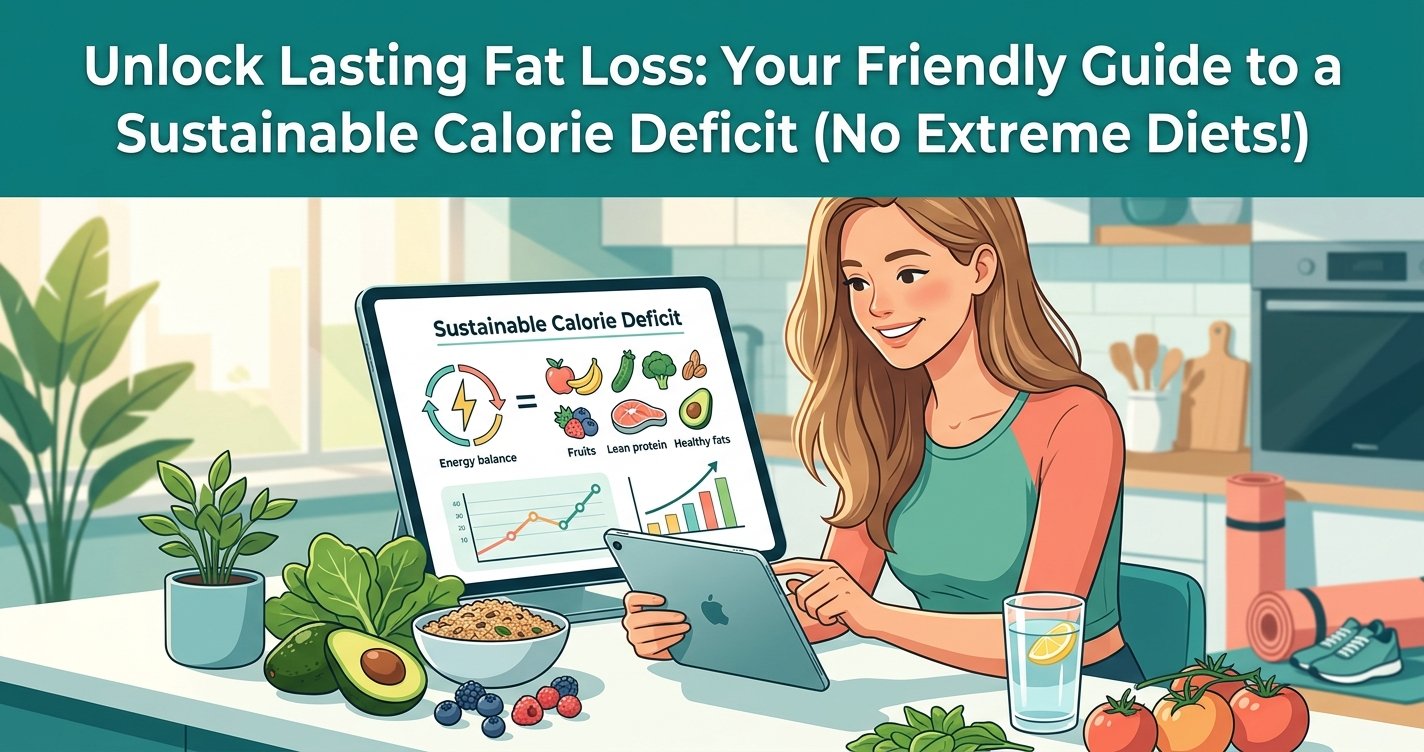
Are you tired of the endless cycle of restrictive diets, quick fixes, and the inevitable rebound? You're not alone. The world of fat loss is often cluttered with confusing advice, but one fundamental principle remains the cornerstone of success: creating a sustainable calorie deficit. Forget crash diets and deprivation; we're here to talk about a smarter, healthier, and more effective way to shed those unwanted pounds and keep them off for good.
This isn't about counting every single crumb or living on salads. It's about understanding your body, making informed choices, and building habits that support your goals without sacrificing your sanity. Ready to ditch the diet dogma and embrace a realistic path to lasting fat loss? Let's dive in! this excellent wellness product
What Exactly IS a Calorie Deficit, Anyway?
At its core, a calorie deficit is simple math: you consume fewer calories than your body expends. Think of your body as an engine. It needs fuel (calories) to function – to breathe, to think, to move, to digest food, and even to sleep. This daily energy expenditure is often referred to as your Total Daily Energy Expenditure (TDEE).
- If you eat more calories than your TDEE: Your body stores the excess energy, typically as fat.
- If you eat roughly the same calories as your TDEE: Your weight stays relatively stable.
- If you eat fewer calories than your TDEE: Your body has to tap into its stored energy reserves (i.e., fat) to make up the difference, leading to fat loss.
It sounds straightforward, right? And it is! The magic isn't in some secret pill or exotic food; it's in consistently consuming slightly less energy than your body needs. This forces your body to use its fat stores for fuel, leading to healthy, sustainable weight loss.
Ditching the Guesswork: How to Calculate YOUR Calorie Needs
While we won't get bogged down in complex equations here, understanding your approximate TDEE is a fantastic starting point. It’s like knowing the speed limit before you start driving – it gives you a guide.
Your TDEE is influenced by several factors:
- Basal Metabolic Rate (BMR): The calories your body burns just to keep you alive at rest.
- Activity Level: How much you move throughout the day (exercise, daily steps, even fidgeting!).
- Thermic Effect of Food (TEF): The energy your body uses to digest, absorb, and metabolize food.
Instead of trying to calculate this manually, we recommend using reputable online TDEE calculators. You'll typically input your age, gender, height, weight, and activity level. Remember, these calculators provide an estimate, a starting point – not an exact science. Your body is unique, and you'll fine-tune this number as you go.
The "Sweet Spot": Creating Your Sustainable Deficit
This is where many people go wrong. They slash calories drastically, aiming for a huge deficit. While this might lead to rapid initial weight loss, it's often unsustainable and can backfire:
- Muscle Loss: Your body might start breaking down muscle for energy, which is counterproductive as muscle burns more calories at rest than fat.
- Metabolic Slowdown: Extreme deficits can signal to your body that food is scarce, potentially slowing down your metabolism.
- Nutrient Deficiencies: It's harder to get all the essential vitamins and minerals when you're eating very little.
- Cravings & Bingeing: Intense hunger often leads to uncontrollable cravings and eventually, giving up altogether.
The "sweet spot" for a sustainable calorie deficit is usually between 250-500 calories below your TDEE. This moderate deficit allows for a steady, healthy rate of fat loss (typically 0.5-1 pound per week) without feeling overly deprived or risking your health. It's a pace you can maintain, turning temporary changes into lasting habits.
Practical Strategies for Eating Less, Feeling Fuller
Creating a calorie deficit doesn't mean eating tiny portions of bland food. It's about making smart, strategic choices that keep you satisfied and energized.
Prioritize Protein Power
Protein is your best friend for fat loss. It's incredibly satiating, meaning it keeps you feeling fuller for longer, which naturally reduces overall calorie intake. Furthermore, it's crucial for preserving muscle mass while you're in a deficit. Aim for a good source of lean protein at every meal:
- Chicken breast, turkey, lean beef
- Fish (salmon, cod, tuna)
- Eggs
- Greek yogurt, cottage cheese
- Legumes (beans, lentils)
- Tofu, tempeh
Embrace Fiber-Rich Foods
Fiber adds bulk to your meals without adding many calories. It slows down digestion, helping you feel full and stable your blood sugar. Load up on:
- Fruits (berries, apples, pears)
- Vegetables (broccoli, spinach, carrots, bell peppers)
- Whole grains (oats, quinoa, brown rice)
- Legumes
Hydrate, Hydrate, Hydrate
Sometimes, what feels like hunger is actually thirst. Drinking plenty of water throughout the day can help manage appetite, boost metabolism slightly, and keep you feeling refreshed. Try drinking a large glass of water before each meal.
Mindful Eating Matters
Slow down, savor your food, and pay attention to your body's hunger and fullness cues. Eating mindfully can help you recognize when you're truly satisfied, preventing overeating. Put down your fork between bites, chew thoroughly, and minimize distractions like screens.
Smart Snacking
If you need snacks, make them count. Opt for protein- and fiber-rich options that will keep you full, like a handful of almonds, Greek yogurt with berries, or veggie sticks with hummus, instead of empty-calorie processed treats.
Beyond the Plate: Lifestyle Factors That Support Your Journey
Fat loss isn't just about what you eat; it's a holistic process. These lifestyle factors play a huge role in supporting your calorie deficit and overall well-being.
Strength Training for Muscle Preservation
While cardio burns calories, strength training is essential for building and maintaining muscle mass. More muscle means a higher resting metabolism, making it easier to stay in a deficit and burn fat. Aim for 2-3 full-body strength training sessions per week.
Adequate Sleep
Don't underestimate the power of sleep! Poor sleep can wreak havoc on your hunger hormones (ghrelin and leptin), making you feel hungrier and crave unhealthy foods. Aim for 7-9 hours of quality sleep per night.
Stress Management
Chronic stress increases cortisol levels, a hormone that can promote fat storage, especially around the belly. Find healthy ways to manage stress, whether it's meditation, yoga, spending time in nature, or hobbies you enjoy.
Patience and Consistency are Your Superpowers
Fat loss is rarely a linear journey. There will be weeks when the scale doesn't budge, or even goes up slightly. Don't get discouraged! Consistency over time, even with small daily efforts, will lead to significant results. Trust the process, stay patient, and celebrate non-scale victories like increased energy or clothes fitting better.
Troubleshooting & Staying on Track
Even with the best intentions, you might hit a plateau or feel like giving up. Here's how to navigate common challenges:
- Reassess Your Deficit: If the scale hasn't moved for a few weeks, your TDEE might have changed (e.g., you've lost weight, so your body needs fewer calories). Consider a slight adjustment to your intake or increase your activity.
- Track Accurately (Temporarily): If you're unsure where you stand, try tracking your food intake precisely for a few days to ensure you're actually in a deficit. Many people underestimate their calorie consumption.
- Listen to Your Body: If you're constantly ravenous or feeling run down, your deficit might be too aggressive. It's okay to slightly increase your calories for a few days to recover, then resume your deficit.
- Focus on Progress, Not Perfection: One "off" meal or day won't derail your entire journey. Get back on track with your next meal and move forward.
Building a sustainable calorie deficit is about creating a lifestyle, not just a temporary diet. It’s about empowering yourself with knowledge and making choices that nourish your body and support your long-term health goals. By focusing on whole foods, prioritizing protein and fiber, and integrating healthy lifestyle habits, you can achieve lasting fat loss without the misery of extreme restriction.
Remember, this is your journey. Be kind to yourself, celebrate every step forward, and enjoy the process of becoming a healthier, happier you!