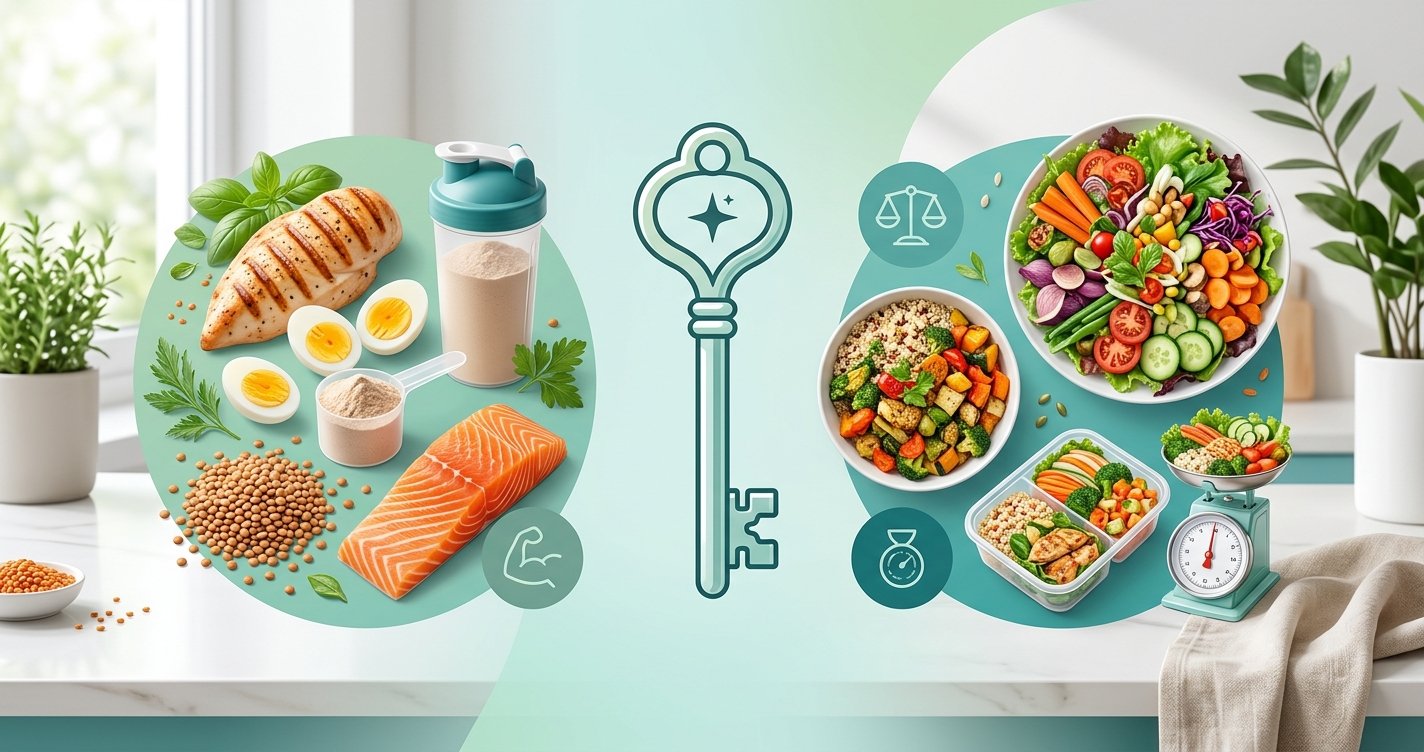
Welcome to Your Sustainable Fat Loss Journey!
Are you tired of the yo-yo diet cycle? Do you feel overwhelmed by conflicting information about how to lose weight and keep it off? You're not alone. Many people embark on fat loss journeys with enthusiasm, only to hit plateaus, feel deprived, and ultimately revert to old habits. The good news? Sustainable fat loss doesn't have to be a mystery or a battle. It’s about understanding a few fundamental principles and applying them consistently.
Today, we're diving deep into two of the most powerful, evidence-based pillars for achieving and maintaining your ideal body composition: a smart calorie deficit and adequate protein intake. These aren't just buzzwords; they are the bedrock upon which lasting results are built. Forget quick fixes and extreme restrictions; we're talking about a balanced, effective, and most importantly, sustainable approach that nourishes your body and fuels your progress. this excellent wellness product
By the end of this guide, you'll have a clear understanding of how these two elements work in synergy, practical strategies to implement them into your daily life, and the confidence to embark on a fat loss journey that truly sticks.
Understanding the Basics: The Calorie Deficit Explained
What is a Calorie Deficit and Why Does It Matter?
At its core, fat loss boils down to a simple equation: you need to consume fewer calories than your body expends. This is known as a calorie deficit. Think of your body as a car and calories as fuel. If you put less fuel in than the car uses, it starts tapping into its reserves – in our case, stored body fat. There's no magic pill or secret exercise; the laws of thermodynamics are always at play.
However, the term 'calorie deficit' often conjures images of extreme deprivation. This couldn't be further from the truth for a sustainable approach. A smart calorie deficit is about creating a moderate energy gap that allows your body to burn fat without causing excessive hunger, energy crashes, or nutrient deficiencies. It's about being strategic, not suffering.
How to Calculate Your Calorie Needs (Without Obsession)
While precise calorie counting can be helpful for some, it's not essential for everyone, especially when starting out. The goal is awareness, not obsession. Here’s a practical approach:
- Estimate Your Maintenance Calories: Online calculators (search for 'TDEE calculator' – Total Daily Energy Expenditure) can give you a good starting point. Input your age, sex, height, weight, and activity level. This number represents roughly how many calories you need to maintain your current weight.
- Create a Moderate Deficit: Once you have an estimate, aim to reduce your daily intake by 300-500 calories. This typically translates to 0.5-1 pound of fat loss per week, which is a healthy and sustainable rate. For instance, if your maintenance is 2200 calories, aim for 1700-1900 calories daily.
- Track for Awareness (Initially): For a few days or a week, use a food tracking app (like MyFitnessPal or LoseIt!) to log everything you eat and drink. This isn't forever, but it provides invaluable insight into your current eating habits and where you might be unknowingly consuming extra calories (e.g., sugary drinks, large portions, frequent snacks).
- Listen to Your Body: The numbers are guides, not strict rules. If you feel constantly drained, excessively hungry, or your performance in workouts suffers, your deficit might be too aggressive. Adjust accordingly.
The Protein Advantage: Your Secret Weapon for Fat Loss
Why Protein is Non-Negotiable for Fat Loss
When you're in a calorie deficit, your body needs all the help it can get to preserve muscle and burn fat. This is where protein shines, acting as your ultimate ally:
- Satiety Superstar: Protein is renowned for its ability to keep you feeling fuller for longer compared to carbohydrates or fats. This means fewer cravings, less snacking, and an easier time adhering to your calorie goals.
- Thermic Effect of Food (TEF): Protein has a higher thermic effect than other macronutrients. This means your body expends more energy (burns more calories) just to digest, absorb, and metabolize protein. While not a massive calorie burner on its own, every little bit helps in a deficit!
- Muscle Preservation: When you lose weight, especially quickly, there's a risk of losing valuable muscle mass along with fat. Adequate protein intake, especially when combined with strength training, signals to your body to hold onto that muscle, which is crucial for a healthy metabolism and a toned physique.
- Repair and Recovery: Protein is the building block for muscle repair and growth. If you're exercising, sufficient protein helps your muscles recover faster, allowing you to train consistently and effectively.
How Much Protein Do You Really Need?
While the Recommended Dietary Allowance (RDA) for protein is 0.8 grams per kilogram of body weight, this is often considered the minimum to prevent deficiency, not the optimal amount for active individuals or those aiming for fat loss. For fat loss, current evidence suggests aiming higher:
- General Guideline: Aim for 1.6 to 2.2 grams of protein per kilogram of body weight (or approximately 0.7 to 1 gram per pound of body weight). For example, if you weigh 150 lbs (approx. 68 kg), you might aim for 105-150 grams of protein per day.
- Distribute It: Try to spread your protein intake throughout the day, aiming for 20-40 grams per meal. This helps maximize muscle protein synthesis and keeps you feeling satisfied.
Smart Ways to Boost Your Protein Intake
Incorporating more protein into your diet can be delicious and straightforward:
- Lean Meats & Poultry: Chicken breast, turkey, lean beef, pork tenderloin.
- Fish & Seafood: Salmon, tuna, cod, shrimp.
- Eggs: A versatile and complete protein source.
- Dairy: Greek yogurt, cottage cheese, milk, whey protein powder.
- Legumes & Plant-Based: Lentils, chickpeas, black beans, tofu, tempeh, edamame.
- Protein Snacks: Protein bars (check sugar content), jerky, a handful of almonds (in moderation due to calories).
Synergy in Action: Combining Protein and a Smart Deficit
Crafting Your Fat Loss Plate
Now, let's put it all together! Visualize your plate at each meal:
- Half Your Plate: Fill with non-starchy vegetables (broccoli, spinach, bell peppers, green beans). They're low in calories, high in fiber, and packed with nutrients.
- One Quarter of Your Plate: Dedicate to a lean protein source (chicken, fish, tofu, beans).
- The Remaining Quarter: Include a controlled portion of complex carbohydrates (quinoa, brown rice, sweet potato, whole-grain bread) and a small amount of healthy fats (avocado, nuts, olive oil).
This simple visual guide ensures you're getting adequate protein and fiber for satiety within your calorie goals, without overly restricting any food group.
Sample Meal Ideas for a Protein-Rich Deficit
- Breakfast: Scrambled eggs (3-4) with a generous serving of spinach and mushrooms, or a large bowl of Greek yogurt (plain, high protein) with a handful of berries and a sprinkle of chia seeds.
- Lunch: Large salad with grilled chicken or chickpeas, plenty of mixed greens, colorful veggies, and a light vinaigrette; or a bowl of lentil soup with a side of whole-grain toast.
- Dinner: Baked salmon with roasted asparagus and a small sweet potato; or a tofu and vegetable stir-fry with a modest portion of brown rice.
- Snacks (if needed): Cottage cheese, a protein shake, a hard-boiled egg, or a handful of edamame.
Beyond the Plate: Holistic Habits for Sustainable Success
The Role of Strength Training
While nutrition is paramount for fat loss, don't underestimate the power of strength training. Lifting weights helps you build and maintain muscle mass, which is critical for two reasons:
- Metabolism Boost: Muscle tissue is metabolically active, meaning it burns more calories at rest than fat tissue. More muscle = higher resting metabolism.
- Body Composition: Strength training helps reshape your body, giving you a toned, athletic physique rather than just being 'skinny-fat.'
Aim for 2-4 strength training sessions per week, focusing on compound movements that work multiple muscle groups.
Hydration and Sleep: The Unsung Heroes
- Hydration: Drinking plenty of water is often overlooked but crucial. Water can help you feel full, aids in metabolic processes, and prevents mistaking thirst for hunger. Aim for 8-10 glasses daily.
- Sleep: Poor sleep can wreak havoc on your fat loss efforts by disrupting hunger-regulating hormones (ghrelin and leptin) and increasing cortisol (a stress hormone that can promote fat storage). Prioritize 7-9 hours of quality sleep each night.
Mindset and Patience
Sustainable fat loss is a journey, not a destination. There will be good days and challenging days. Cultivate a mindset of patience, persistence, and self-compassion. Focus on building consistent habits rather than chasing perfection. Celebrate non-scale victories like increased energy, better sleep, stronger workouts, or clothes fitting better. Remember, progress isn't linear.
Troubleshooting Common Pitfalls
Why Am I Not Losing Weight? (Plateauing)
If you've been consistently in a deficit and the scale isn't moving, consider these points:
- Honest Tracking: Are you accurately tracking *everything*? Hidden calories in sauces, oils, or "just a bite" can add up.
- Metabolic Adaptation: As you lose weight, your body needs fewer calories to maintain its new, smaller size. You may need to slightly adjust your calorie target or increase activity.
- Non-Scale Victories: Are your clothes fitting better? Do you feel stronger? Sometimes fat loss happens while muscle gain or water retention masks it on the scale.
Avoiding Extreme Restrictions
While a deficit is necessary, extreme calorie restriction is counterproductive. It can lead to nutrient deficiencies, muscle loss, metabolic slowdown, and ultimately, an unsustainable cycle of binging and restricting. Focus on nourishing your body with whole foods within a moderate deficit, allowing for occasional treats in moderation.
Your Path to Lasting Results
You now have the tools and knowledge to embark on a truly sustainable fat loss journey. By consistently focusing on a smart calorie deficit and prioritizing protein intake, you're not just losing weight; you're building a healthier, stronger you. Combine this with regular strength training, ample hydration, quality sleep, and a resilient mindset, and you'll unlock lasting results that go far beyond the number on the scale.
Remember, every small, consistent choice adds up. Start today, be patient with yourself, and celebrate every step of your progress. Your sustainable success story begins now!