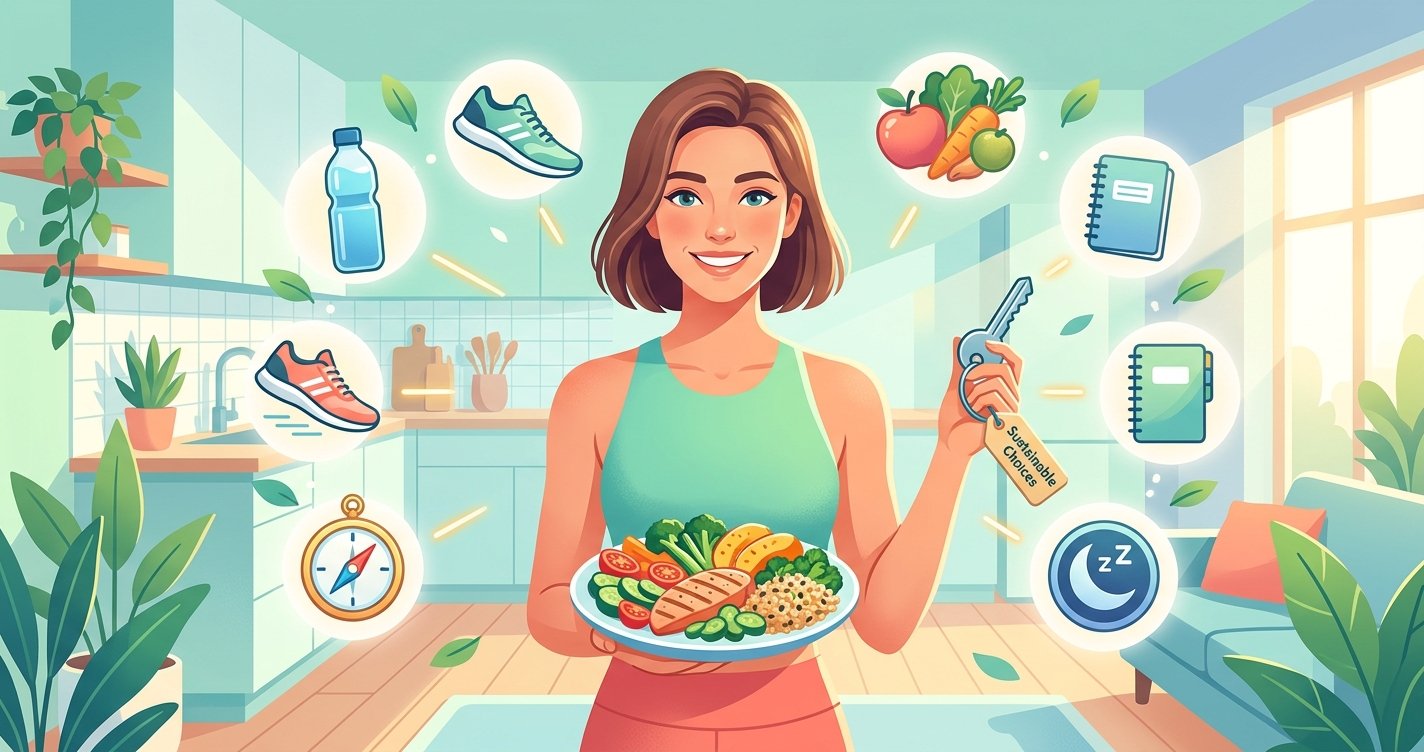
Tired of the weight loss roller coaster? Frustrated by extreme diets that promise the moon but deliver only deprivation and rebound weight gain? You're not alone. The world of fat loss can feel overwhelming, filled with conflicting advice and quick fixes that rarely last. But what if we told you there's a foundational principle, backed by science, that can empower you to achieve sustainable fat loss without sacrificing your sanity or your favorite foods? Welcome to the powerful, yet often misunderstood, world of the calorie deficit.
Forget the fads and the expensive supplements. Understanding and applying the calorie deficit is the most crucial step towards lasting fat loss. It's not about starvation; it's about smart choices, consistency, and building habits that support your body and your goals. Let's dive in and demystify this essential concept, so you can finally take control of your fat loss journey in a friendly, evidence-based, and encouraging way. this excellent wellness product
What Exactly *Is* a Calorie Deficit? (And Why It Matters So Much)
At its core, a calorie is simply a unit of energy. Our bodies need energy to perform every single function, from breathing and thinking to exercising and digesting food. This energy comes from the food and drinks we consume. Think of your body like a car and calories as fuel.
Energy balance is the relationship between the calories you consume (energy in) and the calories your body expends (energy out). There are three states of energy balance:
- Calorie Maintenance: You consume roughly the same number of calories your body burns. Your weight remains stable.
- Calorie Surplus: You consume more calories than your body burns. The excess energy is stored, primarily as body fat, leading to weight gain.
- Calorie Deficit: You consume fewer calories than your body burns. To make up the difference, your body taps into its stored energy reserves – primarily body fat – leading to fat loss.
It sounds simple, and in principle, it is! For your body to lose fat, it absolutely *must* be in a calorie deficit. There are no magical shortcuts around this fundamental biological law. Understanding this is liberating because it shifts the focus from complex rules to a clear, actionable strategy.
How Big Should Your Deficit Be? Finding Your "Sweet Spot"
While the concept of a calorie deficit is straightforward, the execution requires a nuanced approach. The goal isn't to create the largest deficit possible; that's a recipe for muscle loss, nutrient deficiencies, constant hunger, and eventual burnout. The key is to find your sustainable sweet spot.
For most people, a moderate deficit of 300-500 calories per day below your maintenance level is ideal for healthy, sustainable fat loss. This typically translates to losing about 1-2 pounds of fat per week. Why 1-2 pounds? Because this rate allows your body to primarily burn fat for energy, while largely preserving precious muscle mass, which is crucial for a healthy metabolism and body composition.
Estimating Your Maintenance Calories: A Starting Point
You can use online calculators (search for 'TDEE calculator' - Total Daily Energy Expenditure) to get an estimate of how many calories your body burns in a day, based on your age, sex, weight, height, and activity level. Remember, these are estimates, and your body is unique. The best way to determine your true maintenance is to track your intake and weight for a couple of weeks without making changes. If your weight is stable, that's roughly your maintenance.
Once you have an estimate, subtract 300-500 calories to set your daily target. Listen to your body and adjust as needed. If you're constantly ravenous or your energy levels plummet, your deficit might be too aggressive.
Beyond Just "Eating Less": The Quality of Your Calories Matters
While the calorie deficit is the mechanism for fat loss, the *type* of calories you consume profoundly impacts how you feel, your energy levels, and your overall health. Not all calories are created equal! A 100-calorie cookie and 100 calories of spinach both count as 100 calories, but their impact on your body is vastly different.
Focusing on nutrient-dense foods is paramount. These are foods that pack a lot of vitamins, minerals, fiber, and protein into fewer calories. Think:
- Lean proteins (chicken breast, fish, tofu, beans)
- Plenty of vegetables (especially non-starchy ones like broccoli, spinach, bell peppers)
- Fruits (berries, apples, bananas)
- Whole grains (oats, quinoa, brown rice)
- Healthy fats (avocado, nuts, seeds, olive oil)
Prioritizing these foods will help you feel fuller and more satisfied on fewer calories, making adherence to your deficit much easier. It also ensures your body gets the essential nutrients it needs to function optimally, even while losing fat.
The Role of Protein: Your Secret Weapon for Fat Loss
If there's one macronutrient to prioritize when you're in a calorie deficit, it's protein. Protein is an absolute game-changer for fat loss for several compelling reasons:
- Satiety: Protein is the most satiating macronutrient. Eating enough protein helps you feel fuller for longer, reducing cravings and the urge to snack unnecessarily.
- Muscle Preservation: When you're in a calorie deficit, your body can sometimes break down muscle tissue for energy, not just fat. Adequate protein intake, combined with strength training, helps signal your body to hold onto muscle, ensuring that the weight you lose is primarily fat.
- Thermic Effect of Food (TEF): Your body expends energy to digest and process food. Protein has a higher TEF than carbs or fats, meaning you burn more calories simply by digesting it.
Aim for roughly 0.7-1 gram of protein per pound of your target body weight. Spread your protein intake throughout the day across all your meals and snacks to maximize its benefits.
Don't Forget Activity: Moving Your Body Matters (But Doesn't Have to Be Extreme)
While diet is king for creating a calorie deficit, incorporating physical activity is the queen. Exercise complements your diet beautifully, accelerating fat loss and providing a host of other health benefits.
- Increased Calorie Burn: Any movement burns calories. Regular physical activity, whether it's walking, jogging, cycling, or dancing, contributes to your daily energy expenditure, making it easier to achieve your deficit.
- Muscle Preservation & Building: Strength training is particularly powerful. It helps you maintain and even build muscle mass, which boosts your metabolism. The more muscle you have, the more calories your body burns at rest.
- Improved Mood & Stress Reduction: Exercise is a natural mood booster and stress reliever. Managing stress is crucial for fat loss, as chronic stress can lead to increased cortisol levels, which can hinder progress.
- Overall Health: Beyond fat loss, regular activity improves cardiovascular health, bone density, sleep quality, and energy levels.
You don't need to become a gym fanatic overnight. Start with what you enjoy and can stick with. Aim for a mix of strength training 2-3 times a week and regular cardiovascular activity. Even daily walks can make a significant difference!
Practical Tips for Creating Your Calorie Deficit (Without Feeling Deprived)
Now that you understand the science, let's look at actionable strategies to implement a sustainable calorie deficit in your daily life:
- Prioritize Protein & Fiber: As discussed, protein is key for satiety. Fiber (found in fruits, vegetables, and whole grains) also helps you feel full and supports digestive health.
- Volume Eating: Fill up on low-calorie, high-volume foods like non-starchy vegetables, broth-based soups, and berries. You can eat a lot of these without consuming many calories.
- Hydrate, Hydrate, Hydrate: Sometimes, thirst is mistaken for hunger. Drink plenty of water throughout the day. A glass of water before meals can also help with satiety.
- Mindful Eating: Slow down, savor your food, and pay attention to your body's hunger and fullness cues. Avoid distractions like screens while eating. This helps you recognize when you've had enough.
- Portion Control: Use measuring cups, a food scale, or simply smaller plates to become aware of appropriate portion sizes.
- Cook at Home More: Restaurant meals are often loaded with hidden calories, fats, and sugars. Cooking at home gives you full control over ingredients and portion sizes.
- Plan Your Meals & Snacks: Having a plan reduces impulsive, unhealthy choices. Prepare healthy snacks in advance.
- Limit Liquid Calories: Sugary drinks, specialty coffees, and alcohol can add hundreds of empty calories without providing much satiety. Opt for water, unsweetened tea, or black coffee.
- Track (Initially): For a few weeks, use a food tracking app (like MyFitnessPal or Cronometer) to get an accurate understanding of your current intake. This isn't forever, but it's an invaluable learning tool.
- Don't Aim for Perfection: Life happens. Some days you'll go over your target. Don't let one slip-up derail your entire journey. Get back on track at your next meal.
Building Sustainable Habits: It's a Marathon, Not a Sprint
Sustainable fat loss isn't about quick fixes; it's about building lasting habits that support your health and well-being. Think of this as a lifestyle evolution, not a temporary diet.
- Patience is Key: Fat loss is a non-linear process. There will be plateaus, fluctuations, and weeks where the scale doesn't move. Stay consistent, trust the process, and don't get discouraged.
- Celebrate Non-Scale Victories: Focus on improvements in energy, sleep, fitness levels, clothes fitting better, and overall mood. These are equally, if not more, important than the number on the scale.
- Listen to Your Body: Your body gives you signals. Pay attention to hunger, fullness, energy levels, and mood. Adjust your approach based on what works best for *you*.
- Seek Support: Share your goals with a trusted friend, family member, or join a supportive community. Accountability can be a powerful motivator.
- Focus on Health First: When your primary focus is on nourishing your body, feeling good, and improving your health, fat loss often becomes a positive side effect.
Conclusion: Your Journey to Sustainable Fat Loss Starts Now
The calorie deficit might sound like a simple concept, but it's the bedrock of all successful and sustainable fat loss journeys. By understanding how your body uses energy and making informed, consistent choices about what you eat and how you move, you gain the power to transform your body and your health.
Remember, this isn't about deprivation; it's about empowerment. It's about finding a balanced approach that fits into your life, allows you to enjoy food, and helps you achieve your goals without the misery of extreme dieting. Start today by making small, consistent changes. Your sustainable fat loss journey awaits!