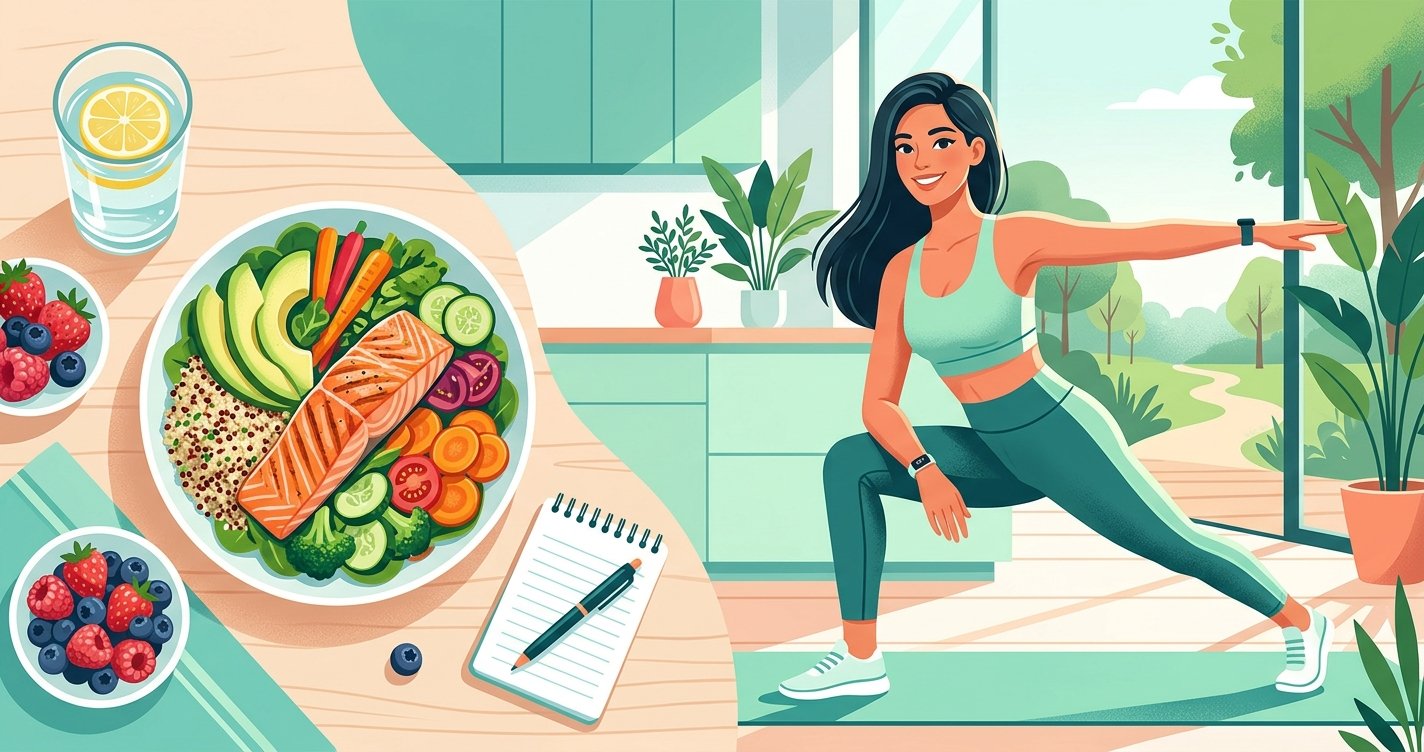
Tired of Fat Loss Frustration? It’s Time to Master the Calorie Deficit!
Have you ever felt like you’re doing everything “right”—exercising regularly, trying to eat healthy—yet the scale barely budges, or worse, your fat loss journey feels like a constant uphill battle? You’re not alone. The world of fat loss is often filled with conflicting advice, quick fixes, and overwhelming information. But what if we told you there’s one fundamental principle that underpins all successful fat loss, a concept so crucial it’s non-negotiable? We’re talking about the calorie deficit.
Understanding and consistently applying a calorie deficit isn’t just another diet trend; it’s the bedrock of physiological fat loss. It’s about working with your body’s natural energy balance, not against it. In this comprehensive, evidence-based guide, we’ll demystify the calorie deficit, teach you how to calculate your needs, provide practical strategies for creating a sustainable deficit, and help you navigate common pitfalls. Get ready to unlock the secrets to lasting fat loss, fueled by knowledge and empowerd by a friendly, encouraging approach! this excellent wellness product
What Exactly is a Calorie Deficit? The Energy Equation Explained
Let’s start with the basics. A “calorie” is simply a unit of energy. The food and drinks we consume provide our bodies with calories, which are used for everything from breathing and thinking to exercising and digesting. Our bodies are constantly burning calories just to keep us alive and functioning.
The Energy Balance Equation: Calories In vs. Calories Out
Think of your body like a bank account for energy. You deposit energy (calories) through food, and you withdraw energy (burn calories) through your daily activities. The concept of energy balance is straightforward:
- Energy Balance: Calories consumed = Calories burned (Weight maintenance)
- Energy Surplus: Calories consumed > Calories burned (Weight gain, typically fat)
- Energy Deficit: Calories consumed < Calories burned (Weight loss, typically fat)
When you consistently consume fewer calories than your body expends, your body has to tap into its stored energy reserves, primarily body fat, to make up the difference. This is the essence of a calorie deficit, and it’s the only way your body will release stored fat.
Why It’s Non-Negotiable for Fat Loss
Despite what some fad diets might claim, there’s no magic pill, food, or exercise that can bypass the fundamental principle of energy balance. Whether you’re following a low-carb, high-fat, or intermittent fasting diet, if you’re losing fat, it’s because you’re ultimately creating a calorie deficit. These different dietary approaches simply offer various methods to help you achieve that deficit more easily or sustainably for your lifestyle. Without a deficit, your body has no physiological reason to burn stored fat.
How to Calculate Your Calorie Needs for Effective Fat Loss
Now that we understand the “what,” let’s dive into the “how.” To create a calorie deficit, you first need to know approximately how many calories your body burns daily. This isn’t an exact science, but we can get a very good estimate.
Estimating Your Basal Metabolic Rate (BMR)
Your BMR is the number of calories your body burns at rest, just to perform basic life-sustaining functions like breathing, circulation, and cell production. It’s the largest component of your daily energy expenditure. While complex equations exist, you can find many reliable online BMR calculators that use factors like your age, sex, weight, and height to give you a good starting point.
Factoring in Activity Levels: Your Total Daily Energy Expenditure (TDEE)
Your BMR is just the baseline. To get your Total Daily Energy Expenditure (TDEE), you need to factor in your activity levels. This includes:
- Non-Exercise Activity Thermogenesis (NEAT): Calories burned through daily movements not considered exercise (walking, fidgeting, household chores).
- Exercise Activity Thermogenesis (EAT): Calories burned during structured exercise.
- Thermic Effect of Food (TEF): Calories burned digesting and absorbing food (roughly 10% of total intake).
Online TDEE calculators often ask you to select an activity level (e.g., sedentary, lightly active, moderately active, very active) and multiply your BMR by an activity factor to estimate your TDEE. Be honest about your activity level to get the most accurate estimate.
The “Deficit” Sweet Spot: How Much to Cut
Once you have your estimated TDEE, you’ll want to subtract a certain number of calories to create your deficit. For sustainable and healthy fat loss, a moderate deficit is generally recommended. Aim to subtract 300-500 calories from your TDEE. This typically results in a fat loss of about 1-2 pounds per week, which is considered a safe and sustainable rate.
- Example: If your TDEE is 2,500 calories, a 500-calorie deficit would mean aiming for 2,000 calories per day.
Cutting too drastically (e.g., more than 750-1000 calories below TDEE) can be counterproductive, leading to excessive hunger, nutrient deficiencies, muscle loss, and metabolic adaptation that makes further fat loss harder.
Creating a Sustainable Calorie Deficit: Practical Strategies
Knowing your numbers is one thing; consistently hitting them is another. Here are practical, friendly, and evidence-based tips to help you create and maintain a sustainable calorie deficit without feeling deprived:
Focus on Nutrient-Dense, Whole Foods
This is arguably the most impactful strategy. Prioritize foods that offer a high amount of nutrients for relatively few calories. Think lean proteins, fruits, vegetables, and whole grains. These foods are generally more filling and provide essential vitamins and minerals, helping you feel satisfied on fewer calories.
The Power of Protein and Fiber
Protein and fiber are your best friends in a calorie deficit. Both are incredibly satiating, meaning they help you feel fuller for longer. Protein also helps preserve lean muscle mass during fat loss, which is crucial for maintaining a healthy metabolism. Fiber, found in fruits, vegetables, and whole grains, adds bulk to your meals without adding many calories, aiding digestion and promoting fullness.
Smart Snacking and Portion Control
Snacks can be a double-edged sword. Choose smart snacks like Greek yogurt, a piece of fruit, a handful of nuts, or vegetable sticks with hummus. Be mindful of portion sizes, even with healthy foods. Using smaller plates, measuring servings, and being present during meals can help prevent overeating.
Hydration is Key
Often overlooked, drinking enough water is vital for fat loss. Water can help you feel fuller, sometimes reducing the urge to snack when you’re actually just thirsty. It also plays a role in numerous metabolic processes. Aim for at least 8 glasses (2 liters) a day, and more if you’re active.
Don’t Forget Movement and Strength Training
While diet is the primary driver of a calorie deficit, increasing your activity level certainly helps. Regular exercise, especially strength training, increases your TDEE and helps preserve or even build muscle mass. More muscle means a higher BMR, making it easier to maintain a deficit long-term. Even small increases in NEAT, like taking the stairs or parking further away, add up!
Common Pitfalls and How to Avoid Them
The journey to fat loss isn’t always linear. Here are some common traps people fall into and how you can sidestep them:
Cutting Too Drastically
As mentioned, extreme calorie restriction is rarely sustainable. It can lead to intense hunger, cravings, nutrient deficiencies, fatigue, and muscle loss. It also often triggers a “rebound effect” where people regain lost weight (and sometimes more) once they can no longer maintain the severe restriction. Slow and steady wins the race.
Underestimating Calorie Intake (Hidden Calories)
Many people unknowingly consume more calories than they think. A “splash” of oil, a “taste” of a friend’s dessert, sugary drinks, sauces, and condiments can add hundreds of calories without much satiety. Be diligent in tracking everything you consume, at least initially, to gain awareness.
Ignoring Non-Scale Victories
The scale doesn’t tell the whole story. Weight fluctuates daily due to water retention, hormones, and bowel movements. Focusing solely on the number on the scale can be demotivating. Celebrate non-scale victories: clothes fitting better, increased energy, improved mood, better sleep, strength gains in the gym, or clearer skin. These are powerful indicators of progress!
Lack of Consistency
Fat loss is not about perfection; it’s about consistency over time. One “bad” meal or day won’t derail your progress, just as one “good” meal won’t make you reach your goal. The key is getting back on track immediately and not letting minor setbacks become major derailments. Aim for consistency 80-90% of the time.
Tracking Your Progress and Adjusting Your Strategy
To ensure you’re on the right track and to make necessary adjustments, monitoring your progress is essential. Remember, your body adapts, and what worked initially might need tweaking over time.
Weighing In (and When Not To)
While the scale isn’t the only metric, it can be a useful tool. Weigh yourself once or twice a week, at the same time of day (e.g., first thing in the morning after using the restroom). Focus on the trend over several weeks rather than daily fluctuations. If the scale isn’t moving after 2-3 weeks, it might be time to slightly reduce your calories or increase your activity.
Measuring Body Composition and Other Metrics
Beyond the scale, consider:
- Body Measurements: Use a tape measure to track changes in your waist, hips, arms, and thighs every 2-4 weeks.
- Progress Photos: Take photos every few weeks. Visual changes can be incredibly motivating and often reveal progress the scale misses.
- How Your Clothes Fit: A great indicator of fat loss and body recomposition.
- Energy Levels and Performance: Notice improvements in your daily energy, sleep quality, and exercise performance.
Listening to Your Body
Pay attention to your hunger cues, energy levels, and mood. If you’re constantly ravenous, lethargic, or irritable, your deficit might be too aggressive. If you’re feeling great and seeing progress, you’re likely in a good spot. Adjust your calorie intake or activity as needed, always prioritizing your well-being.
Your Sustainable Fat Loss Journey Starts Now!
Mastering the calorie deficit isn’t about deprivation; it’s about empowerment through understanding your body’s energy needs. It’s the fundamental key to unlocking sustainable fat loss and achieving the results you’ve been striving for. By focusing on nutrient-dense foods, prioritizing protein and fiber, staying hydrated, and incorporating movement, you can create a deficit that feels manageable and healthy.
Remember, this is a journey, not a race. There will be ups and downs, but with consistency, patience, and a friendly, evidence-based approach, you can transform your body and build healthier habits for life. Embrace the process, celebrate every victory, and trust that by respecting the science of energy balance, you are setting yourself up for lasting success. You’ve got this!