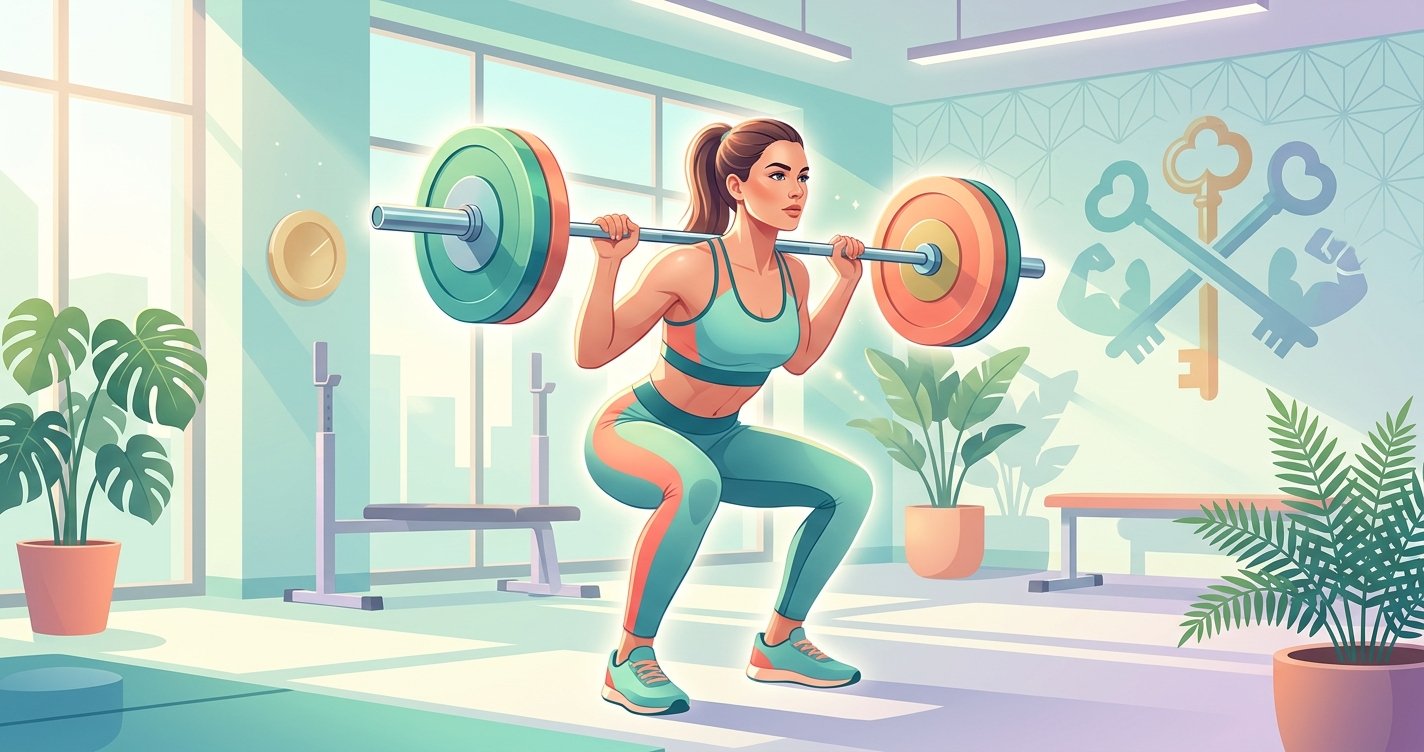
For years, the go-to advice for fat loss has revolved around endless hours on the treadmill, sweating it out in cardio classes, and counting every single calorie. While cardio certainly has its place in a healthy lifestyle, it’s often overemphasized as the *sole* solution for shedding unwanted body fat. What if we told you there's a more efficient, body-sculpting, and metabolism-boosting secret weapon that many people overlook? It's time to lift the veil (and some weights!) on the incredible power of strength training for sustainable fat loss.
If your fat loss journey has felt like an uphill battle, perhaps it's time to change your approach. This comprehensive guide will explain why strength training isn't just for bodybuilders or athletes; it's a powerful ally for anyone looking to transform their body, boost their metabolism, and achieve lasting results beyond what the scale shows. Get ready to discover how building muscle can actually help you burn more fat, even at rest, and sculpt the strong, confident physique you've always wanted. this excellent wellness product
Why Strength Training Is Your Ultimate Fat Loss Secret Weapon
Forget the myth that lifting weights will make you "bulky." For most individuals, especially women, building significant muscle mass requires a very specific training and dietary regimen that goes far beyond general strength training. Instead, think of strength training as your body's best friend for fat loss, offering a multitude of benefits that cardio alone simply can't match.
Boost Your Metabolism: The Afterburn Effect and Muscle Mass
One of the most compelling reasons to embrace strength training is its profound impact on your metabolism. When you engage in intense strength training, your body experiences something called EPOC (Excess Post-exercise Oxygen Consumption), often referred to as the "afterburn effect." This means your body continues to burn calories at an elevated rate for hours, even up to 48 hours, *after* your workout as it recovers and repairs muscle tissue. Cardio, while burning calories during the activity, typically has a much shorter afterburn effect.
But the metabolic boost doesn't stop there. Muscle tissue is metabolically more active than fat tissue. This means that the more muscle you have, the more calories your body burns at rest, simply to maintain that muscle. By increasing your muscle mass through strength training, you effectively turn your body into a more efficient fat-burning machine 24/7, making it easier to create and sustain a calorie deficit.
Preserve Muscle, Burn Fat: The Key to a Leaner Physique
When you're in a calorie deficit (eating fewer calories than you burn) to lose weight, your body doesn't always discriminate between fat and muscle. Without strength training, a significant portion of the weight you lose can come from precious muscle tissue. This is detrimental because losing muscle slows your metabolism, making it harder to keep the weight off in the long run. Strength training sends a powerful signal to your body: "Keep this muscle!" This helps ensure that a greater percentage of the weight you lose comes from body fat, leading to a leaner, more toned appearance.
Shape Your Body and Enhance Aesthetics
While fat loss reduces the overall size of your body, strength training is what truly sculpts it. Imagine losing fat but still feeling "soft" or undefined. By building muscle, you can create curves where you want them, firm up areas that might feel loose, and achieve that coveted toned look. Strength training allows you to actively shape your physique, creating definition in your arms, shoulders, back, glutes, and legs in a way that cardio simply cannot.
Beyond the Scale: A Wealth of Health Benefits
- Improved Bone Density: Lifting weights puts healthy stress on your bones, encouraging them to become stronger and denser, reducing the risk of osteoporosis as you age.
- Enhanced Insulin Sensitivity: Muscle cells are major sites for glucose uptake. More muscle can improve your body's ability to process carbohydrates, which is crucial for overall health and managing blood sugar levels.
- Better Mood and Reduced Stress: Like all forms of exercise, strength training releases endorphins, natural mood elevators. It can also be a fantastic way to relieve stress and boost self-confidence.
- Increased Functional Strength: Everyday tasks become easier, from carrying groceries to playing with your kids. You'll feel stronger, more capable, and more resilient.
Getting Started: Your Strength Training Plan for Fat Loss
Ready to embrace the weights? Here’s how to integrate strength training into your fat loss strategy effectively.
Frequency and Volume: How Often and How Much?
For optimal fat loss and muscle preservation, aim for 3-4 strength training sessions per week. This allows for adequate recovery while providing enough stimulus for muscle growth and metabolic benefits. A full-body routine performed 3 times a week is an excellent starting point for beginners, as it hits all major muscle groups consistently. As you progress, you might explore split routines (e.g., upper/lower body splits).
Exercise Selection: Focus on Compound Movements
Prioritize compound exercises. These are movements that involve multiple joints and muscle groups working together, like squats, deadlifts, bench presses, overhead presses, and rows. Why? They recruit more muscle fibers, burn more calories during and after your workout, and are more effective for overall strength and muscle development compared to isolation exercises (e.g., bicep curls, tricep extensions).
- Lower Body: Squats, Deadlifts, Lunges, Leg Press, Glute Bridges
- Upper Body Push: Bench Press (barbell/dumbbell), Overhead Press, Push-ups, Dips
- Upper Body Pull: Rows (barbell/dumbbell/cable), Pull-ups (assisted if needed), Lat Pulldowns
- Core: Planks, Crunches, Leg Raises
The Principle of Progressive Overload: The Key to Continued Progress
Your muscles adapt. To keep getting stronger and stimulating muscle growth (and thus, boosting your metabolism), you need to continuously challenge them. This is called progressive overload. It means gradually increasing the demands placed on your muscles over time. This can be achieved by:
- Increasing the weight you lift.
- Performing more repetitions with the same weight.
- Doing more sets.
- Reducing rest time between sets.
- Improving your form and control.
- Increasing the frequency of your workouts.
Without progressive overload, your body will eventually plateau. Always prioritize good form over lifting heavy weights prematurely.
Warm-up and Cool-down: Non-Negotiable for Safety and Recovery
Start each session with a 5-10 minute dynamic warm-up (e.g., arm circles, leg swings, light cardio) to prepare your muscles and joints. Finish with 5-10 minutes of static stretching to improve flexibility and aid recovery. This helps prevent injuries and keeps you feeling good for your next session.
Integrating Nutrition for Optimal Fat Loss and Muscle Preservation
While strength training is powerful, it works best when paired with smart nutrition. Remember, you can't out-train a poor diet.
Protein is King for Muscle and Satiety
When aiming for fat loss, adequate protein intake is crucial. Protein helps preserve muscle mass during a calorie deficit, supports muscle repair and growth after your workouts, and is highly satiating, helping you feel fuller for longer. Aim for 0.7-1 gram of protein per pound of your target body weight per day, distributed across your meals.
Calorie Deficit, Smartly
To lose fat, you still need to consume fewer calories than you burn. However, with strength training, you can afford a slightly smaller deficit (e.g., 250-500 calories below maintenance) compared to solely relying on cardio, as your metabolism will be elevated. Focus on whole, unprocessed foods, plenty of vegetables, and healthy fats. Avoid crash diets, as they often lead to muscle loss and rebound weight gain.
Common Myths About Strength Training for Fat Loss Debunked
Myth: Women Will Get Bulky
Reality: Women naturally have much lower levels of testosterone than men, making it extremely difficult to build large, "bulky" muscles without specific, intense training and often dietary support aimed at hypertrophy. Instead, women who lift weights typically develop a lean, toned, and strong physique.
Myth: Cardio is Better for Fat Loss
Reality: While cardio burns more calories *during* the exercise session, strength training offers a superior "afterburn" effect and builds metabolically active muscle, which burns more calories 24/7. For sustainable, long-term fat loss and body recomposition, strength training is more effective.
Myth: You Have to Lift Heavy to See Results
Reality: While lifting heavy is beneficial, "heavy" is relative to the individual. What matters most is challenging your muscles sufficiently to stimulate adaptation (progressive overload), whether that's with heavier weights for fewer reps or lighter weights for more reps, as long as you're pushing yourself towards failure in your chosen rep range.
Consistency is Your Greatest Strength
Like any worthwhile goal, achieving sustainable fat loss through strength training requires consistency. There will be days you don't feel like going, but showing up, even for a shorter session, is what builds momentum and long-term habits. Celebrate small victories, track your progress (not just the scale – consider strength gains, body measurements, and how your clothes fit), and be patient with the process. Your body is capable of amazing transformations, and strength training is the most powerful tool you have to sculpt it.
Embrace the Journey
Stepping into the world of strength training for fat loss can feel daunting at first, but it's an incredibly rewarding journey. You're not just lifting weights; you're building a stronger, healthier, more resilient you. You're boosting your metabolism, preserving precious muscle, and shaping your body in ways that cardio alone simply can't achieve. So, ditch the endless cardio sessions as your sole fat loss strategy, pick up those weights, and unlock your true fat loss potential. Your body, mind, and confidence will thank you for it!